
 Some national participations at this year’s Venice Biennale engage with history. This involves personal experiences as well as national and global sensibilities. In the Serbian Pavilion, Predrag Djaković presents contemporary documents from the 20th and 21st centuries that deal with the global conflicts of these periods and their consequences. Whereas the works by Sung Tieu and Henrike Naumann in the German Pavilion focus on the final years of the former GDR and the subsequent years in the early 1990s. A period whose effects are still present today. While Roberto Diago’s large-size sculptures in the Cuban Pavilion portray a possible current condition, he also refers to Cuban history.
The Serbian Pavilion – An Archive of the 20th Century Tragedies
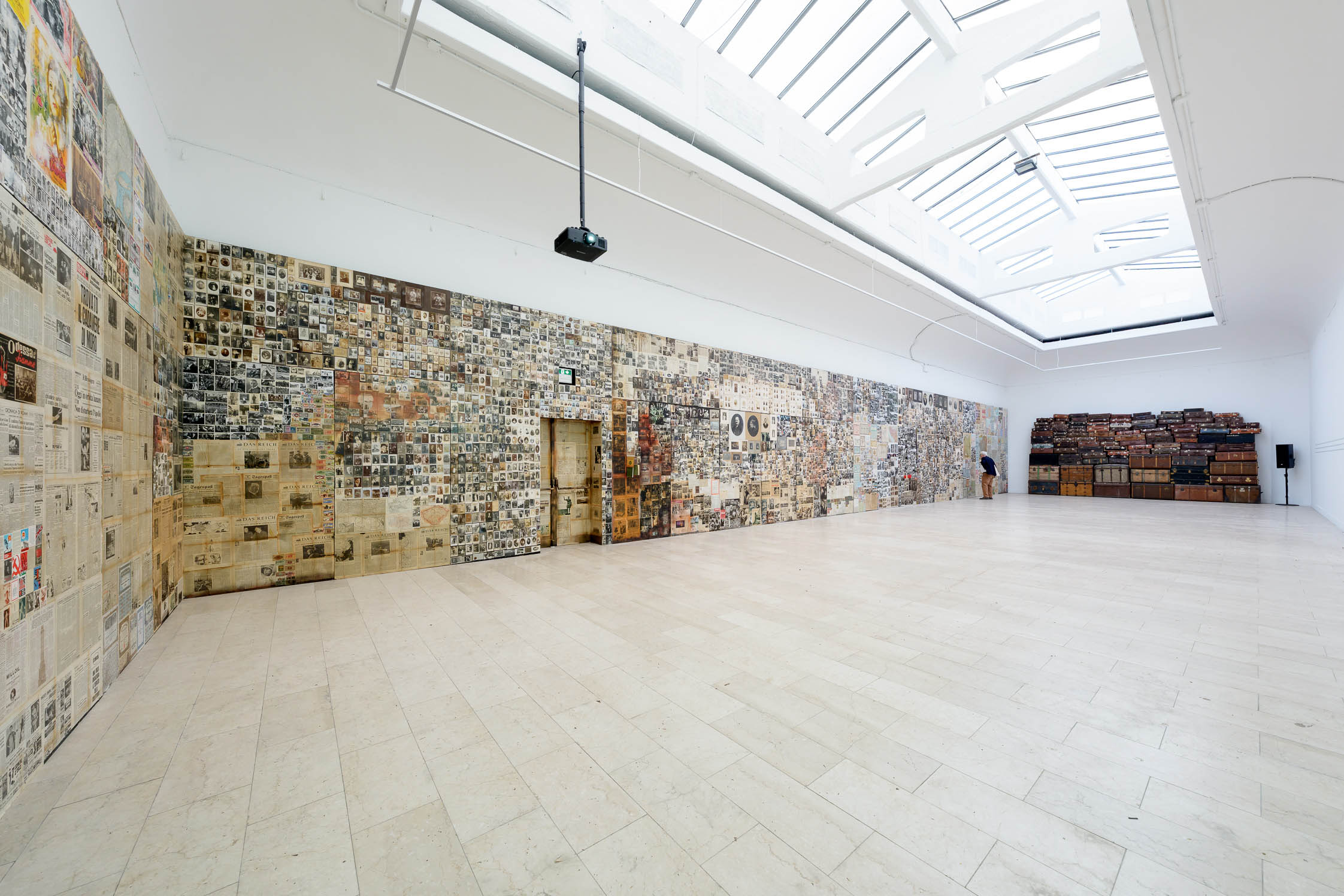
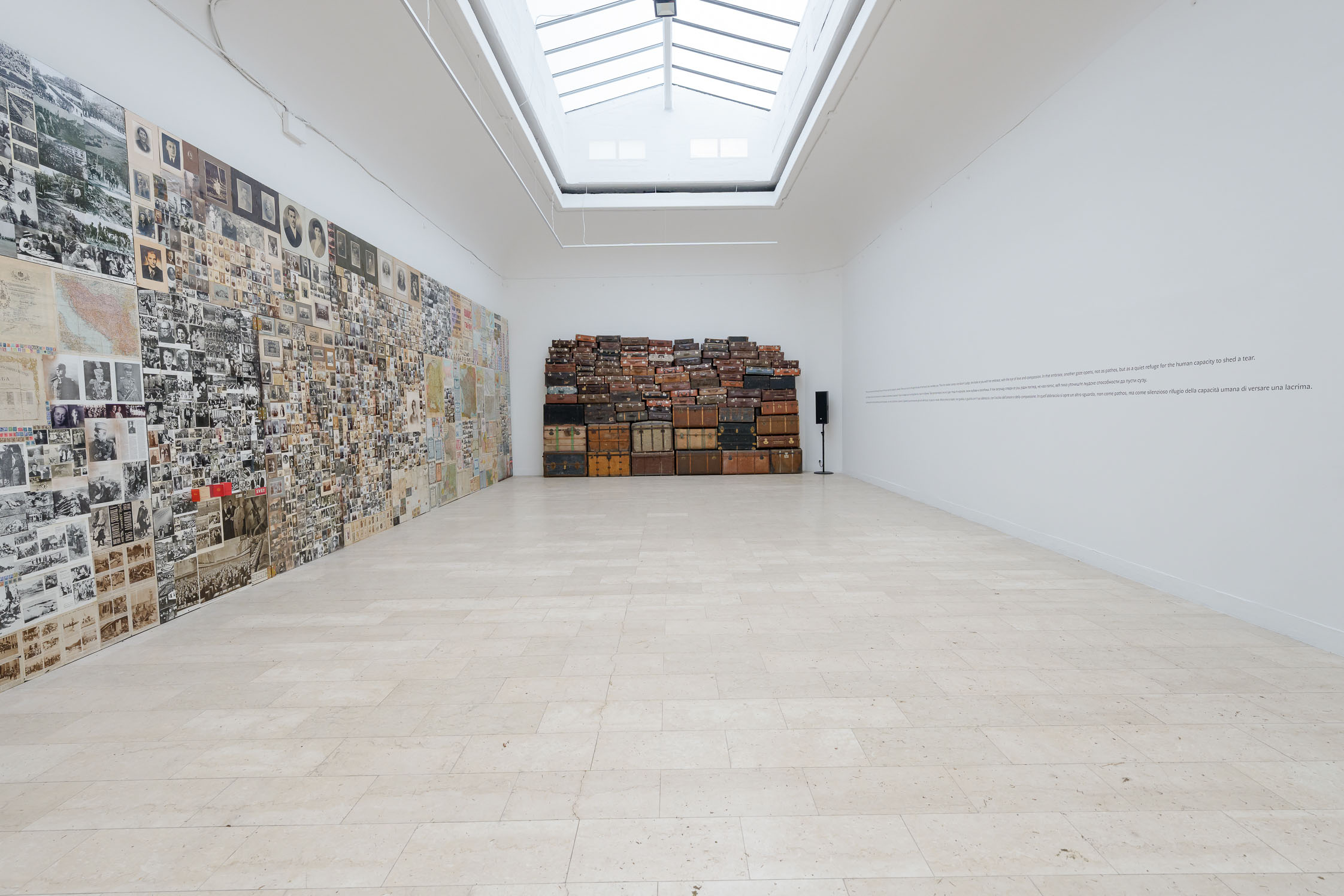
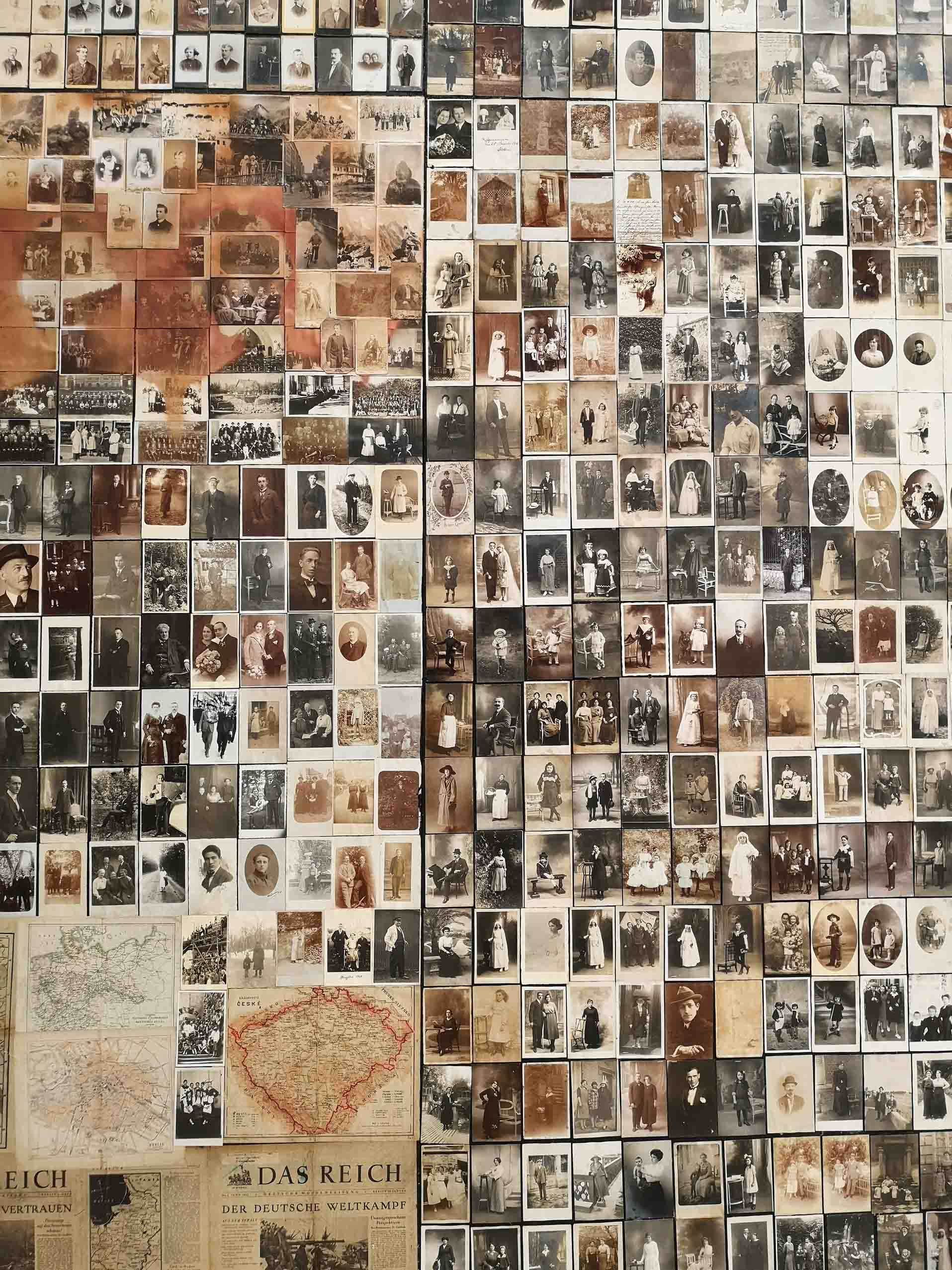
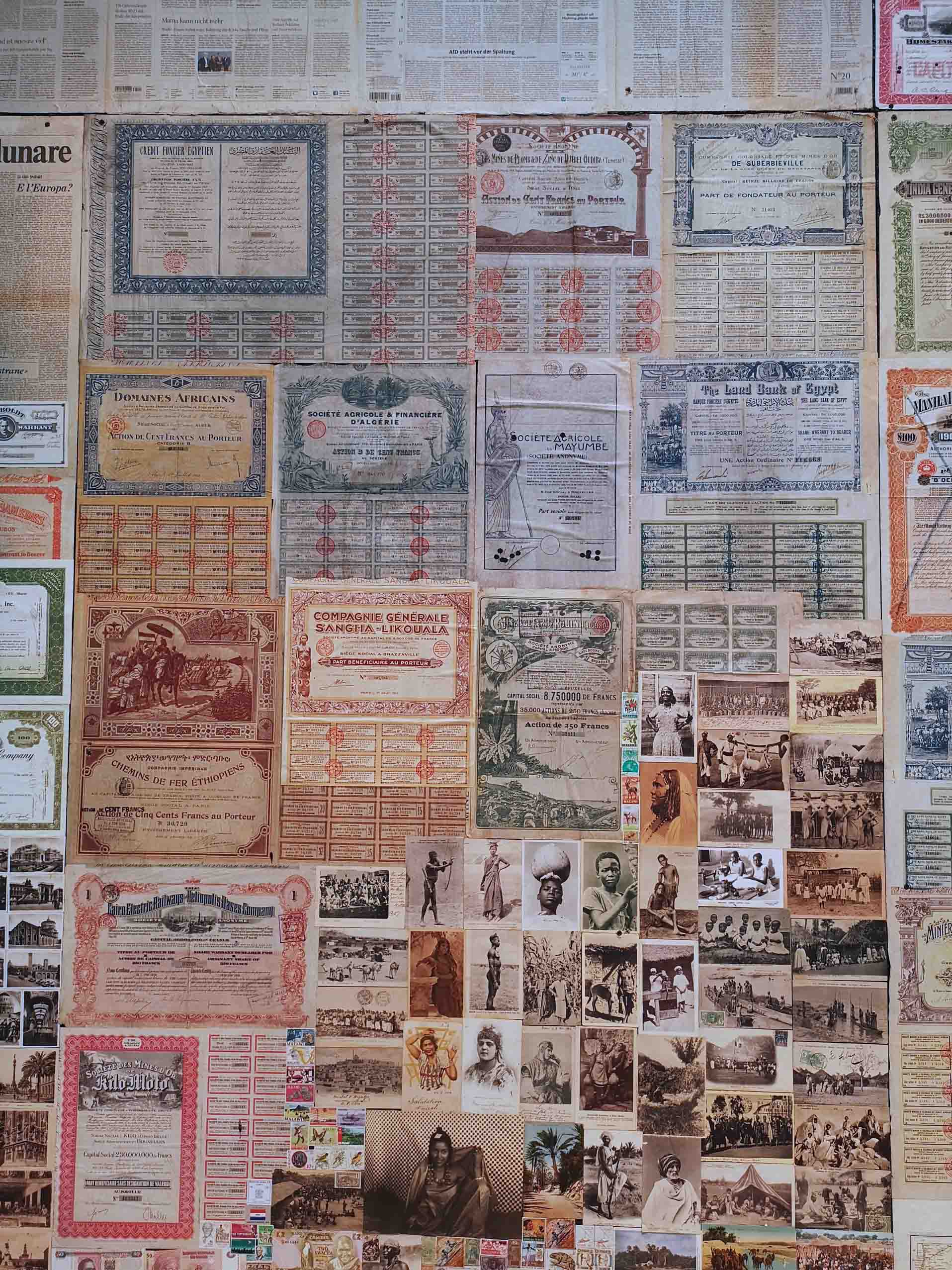
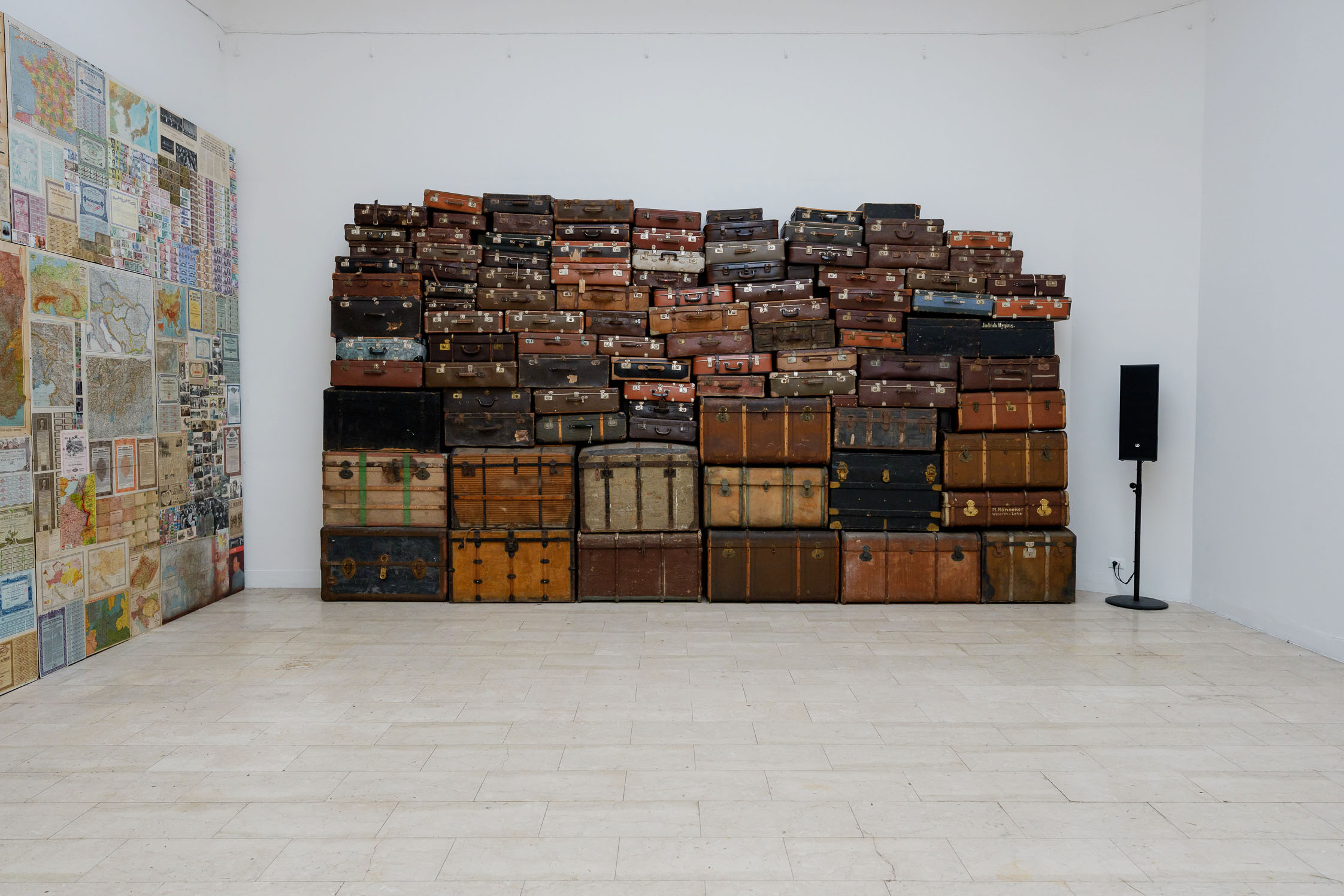
For “Through Golgotha to Resurrection” in the Serbian Pavilion in the Giardini, Predrag Djaković collected over 17.000 documents from the first decades of the 20th century until present times. Coming from more than 80 countries, there are original photographs, newspapers, books, maps, postcards, stamps and banknotes, which constitute a visual and written history of the 20th century. Without any chronology, they are featuring events like wars, revolutions, invasions, the creation of new states and meetings of world leaders. Herewith this mosaic portrays global wounds, characterised by ideological fractures, mass manipulation and violence culminated in two world wars and other armed conflicts.
Resulting from these threats, were displacements of populations, due to flight, expulsion, deportation and exile. For the artist, the suitcase is THE symbol for this forced mobility, because it is the box where refugees carry what little they can take with them. Therefore, Predrag Djaković installed on one wall authentic suitcases of various sizes, which were at time the baggage of people who manged successfully to escape. The low number may be because many refugees chose to keep this important item. At the same time, it could also be an allusion to those many who did not succeed.
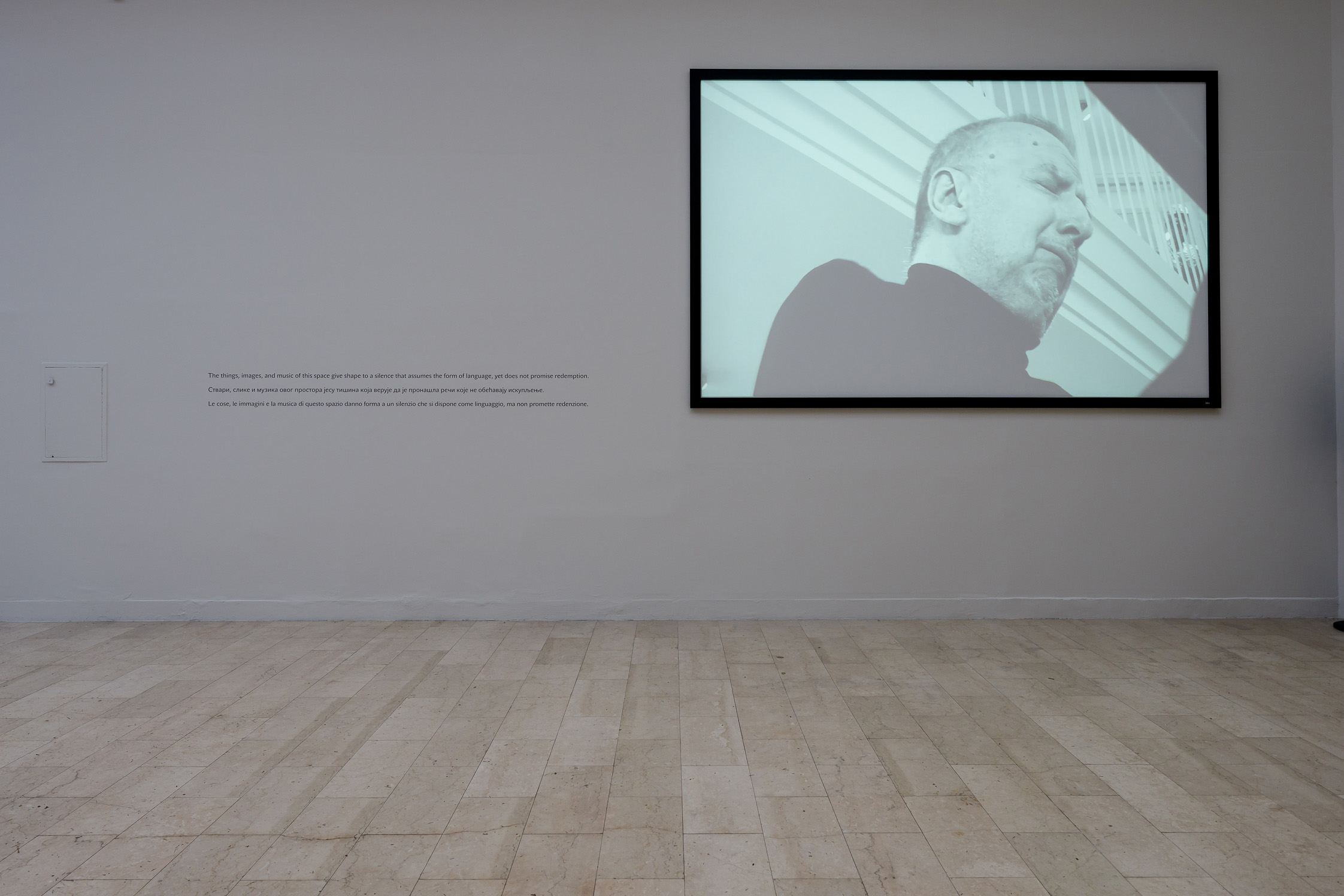
In addition, to these installations, Predrag Djaković composed a jazz étude entitled “Nocturne in A Minor”. His performance of the piece is projected as video in the exhibition. Moving between melancholy and meditation, it is for the artist “Like a nocturne suspended in time, the piece opens a space where memory, loss and hope coexist.” (1)
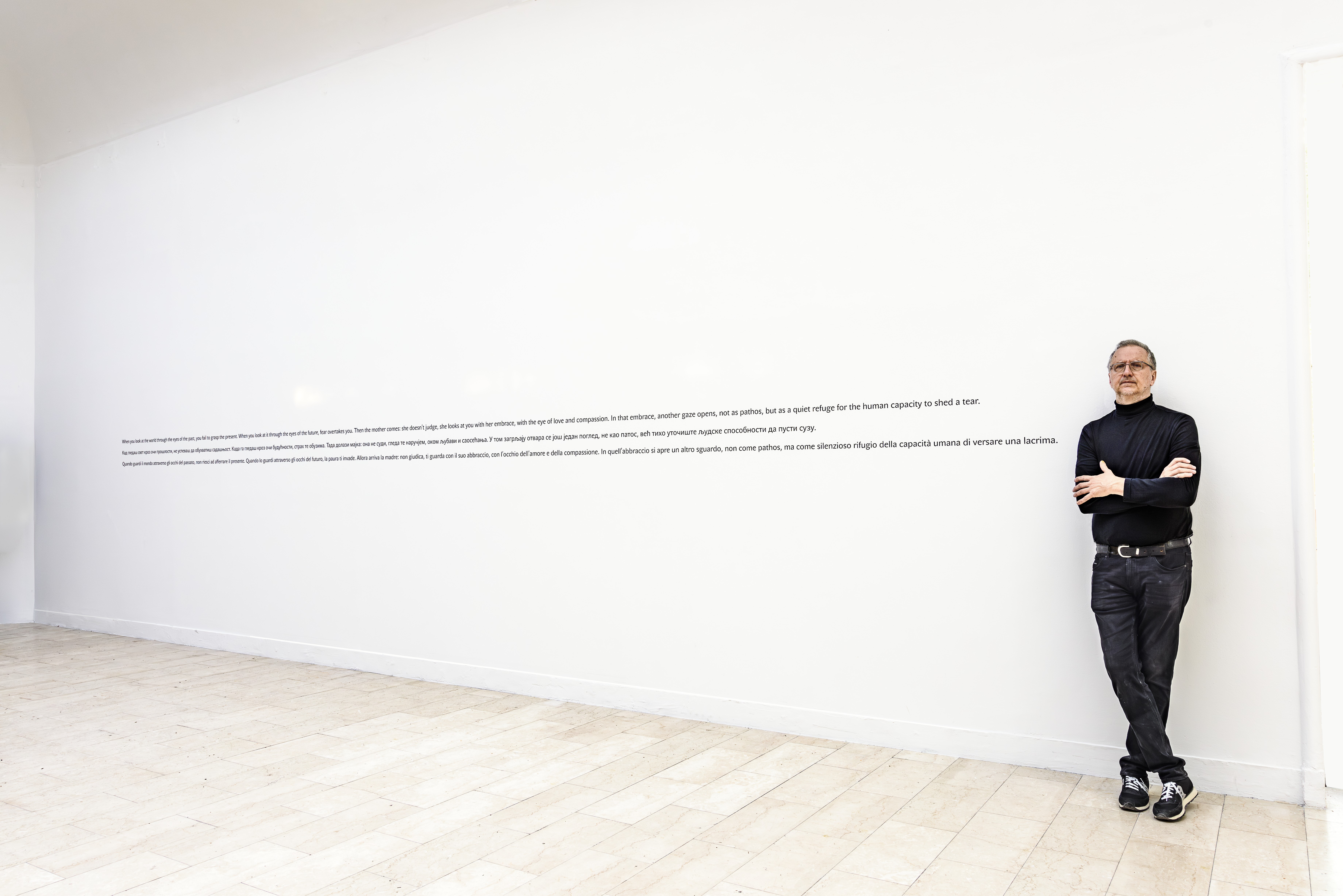
At one wall of the pavilion, there is a poem by the curator, Tomáš Koudela. It is written in English, Serbian (Cyrillic) and Italian. Since it is inscribed each in one line, visitors have to walk along the text to read it. Perhaps this is a hint to the long road refugees often must travel. In the poem, the author expresses some hope that mankind could reach compassion and humanity, despite the all the disasters around:
“When you look at the world through the eyes of the past, you will fail to grasp the present. When you look at it through the eyes of the future, fear overtakes you. Then the mother comes: she doesn’t judge, she looks at you with her embrace, with the eye of love and compassion. In that embrace, another gaze opens, not as pathos, but as a quiet refuge for the human capacity to shed a tear.”
Also, the two artists of the German Pavilion located in the Giardini, explore the past, which continues to have an impact to this day.
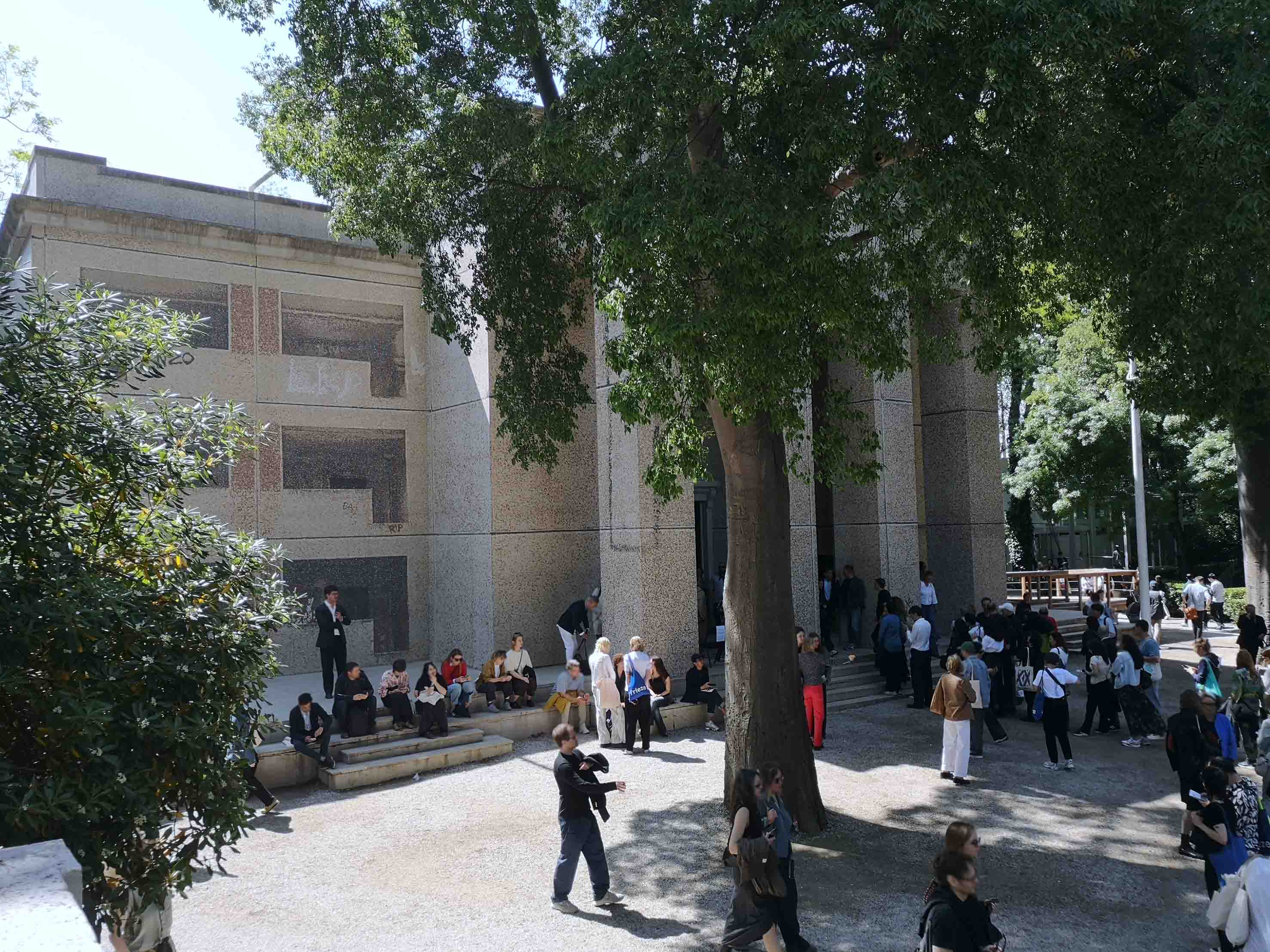
It is not a novelty that artists of the German Pavilion struggle with the architecture of the building and its Nazi past. In 2007, Isa Genzken covered the entire façade with orange scaffolding netting. In 2022, Maria Eichhorn removed the country name from the exterior and transformed the interior into an archaeological excavation site. To this end, the plaster was stripped from the walls and the floor was broken up. This year, Sung Tieu transformed the neoclassical façade dating from 1938 into an East German prefabricated block of flats. This by millions of mosaic tiles reproduced front, is not just from any building, but a portray of the high-rise block where she grew up with her parents. They were Vietnamese contract workers. The bleakness of the façade reflects the dreariness of the living conditions of East German contract workers. These were housed ghetto-like, with little contact to the local population and often with restricted rights and of her own childhood.
However, “Human Dignity Shall Be Inviolable” also extends beyond the artist’s very personal connection. Similar prefabricated blocks of flats could be found throughout the GDR, for example in Rostock-Lichtenhagen. In 1992, the so-called “Sonnenblumenhaus” (Sunflower House) was the spot of the first pogrom in Germany after the Second World War.
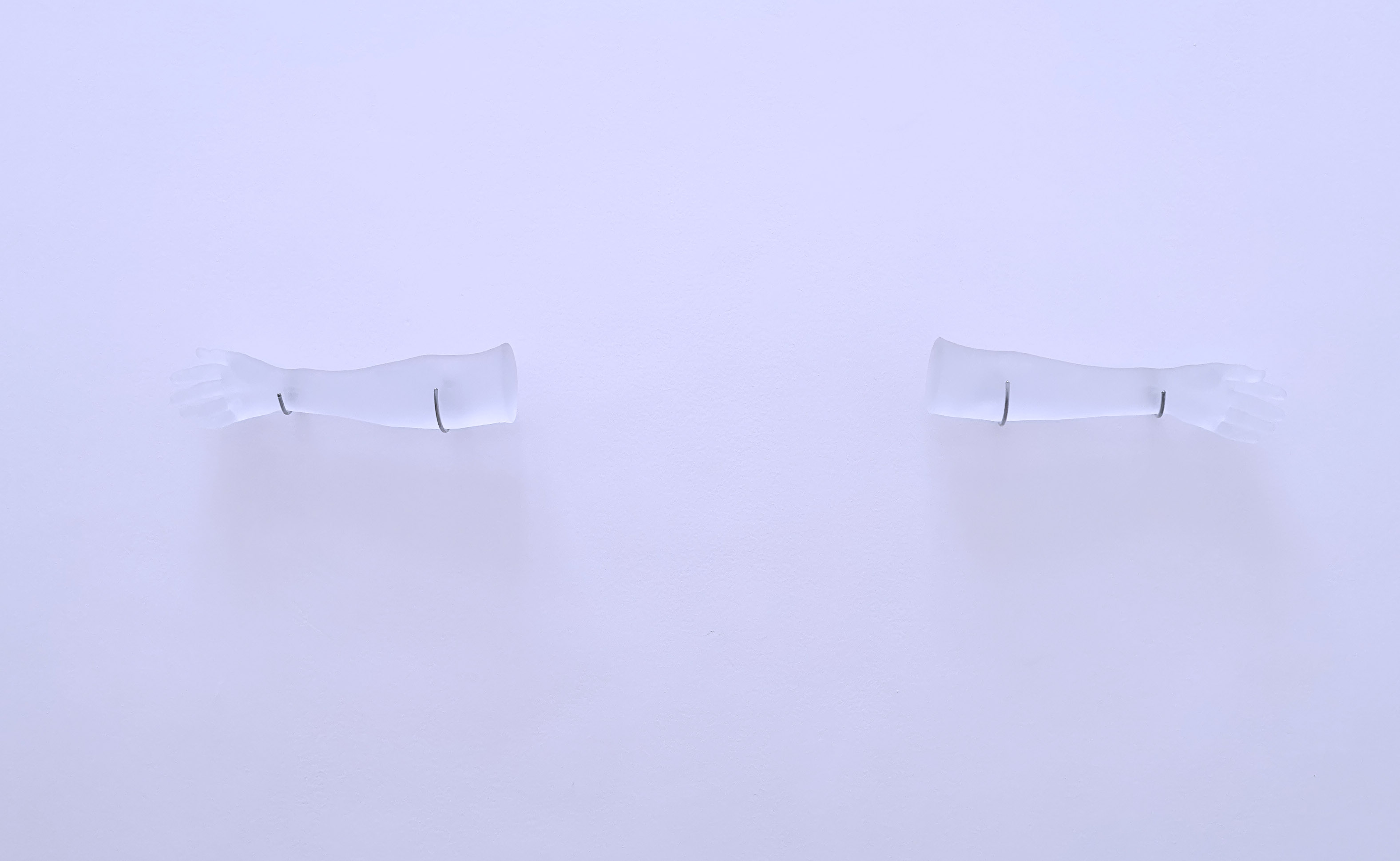
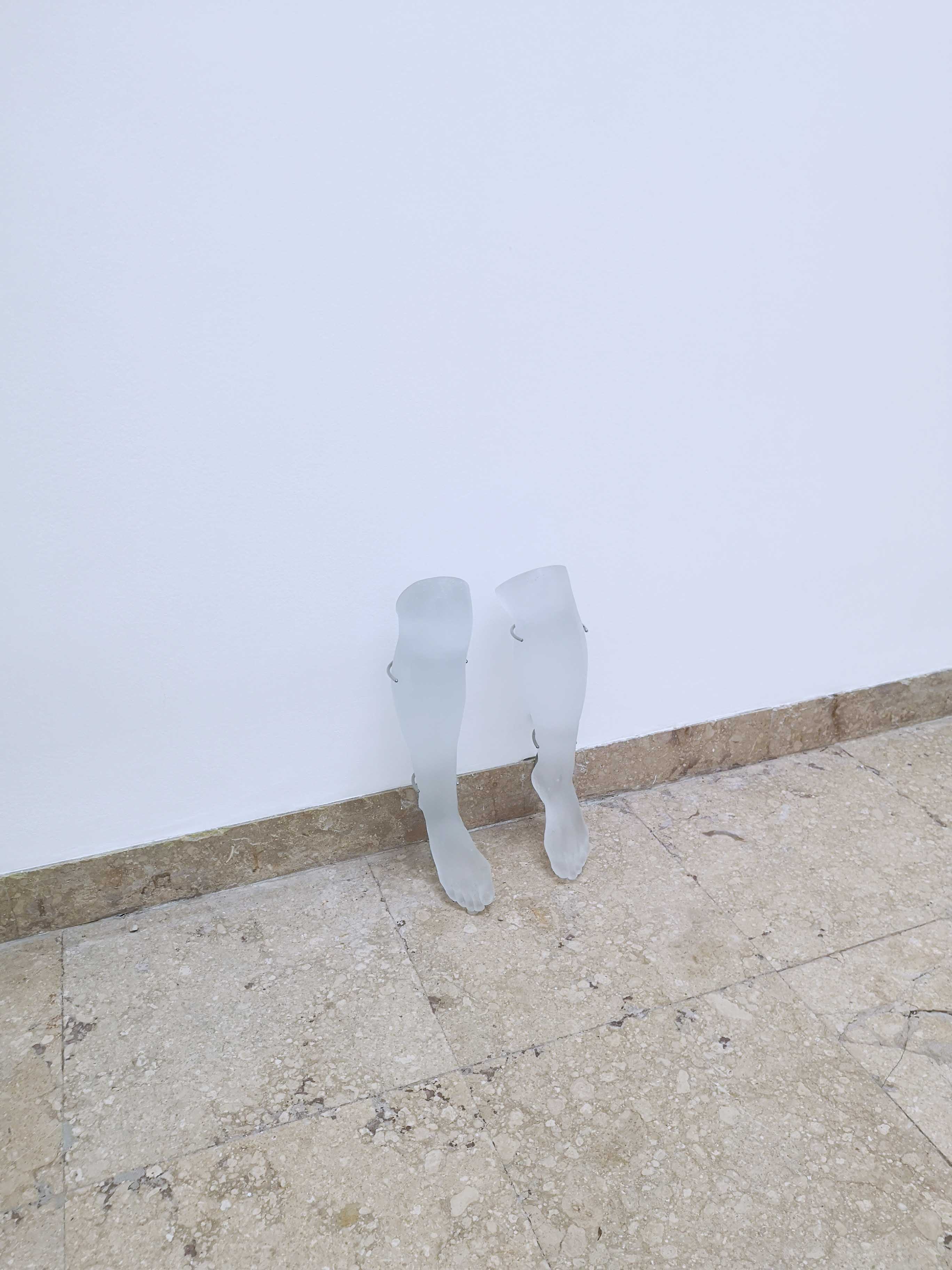
In the inside, Sung Tieu points to the working and living conditions of the contract workers: being there but remaining invisible. Since glass has similar properties, the artist reproduced the arms and legs of her mother in this material. It is a homage to her mother, who worked hard every day in a launderette.
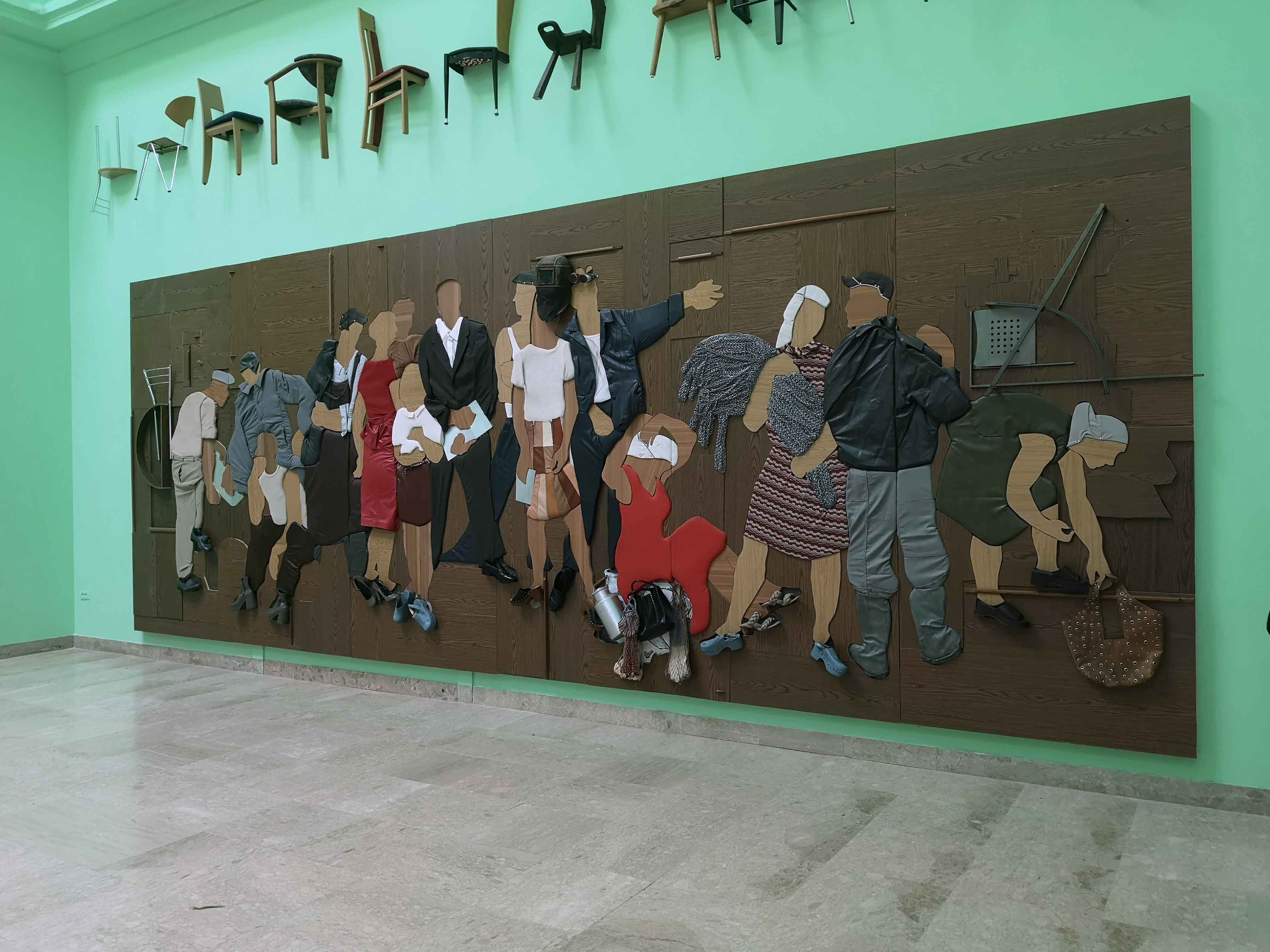
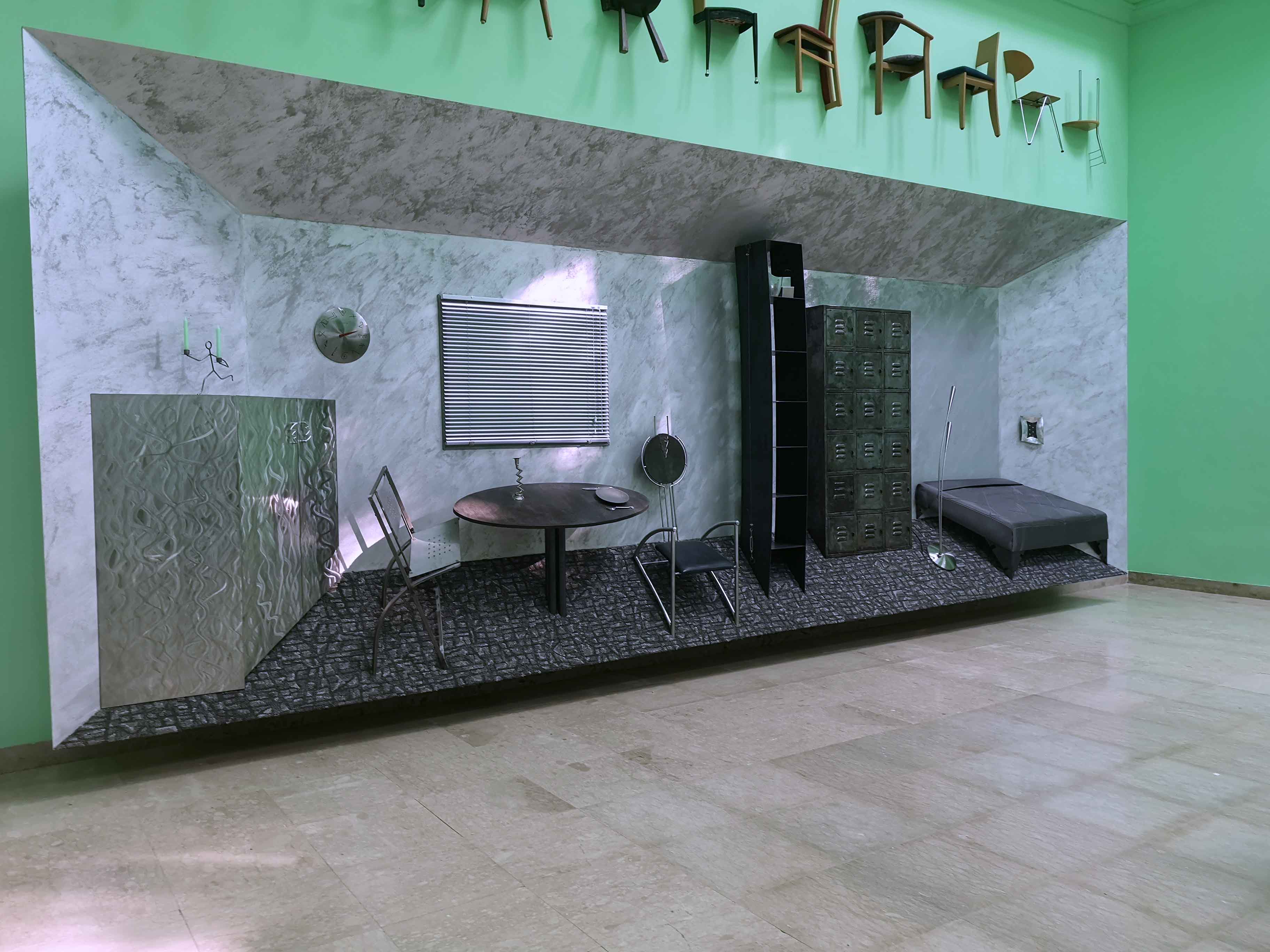
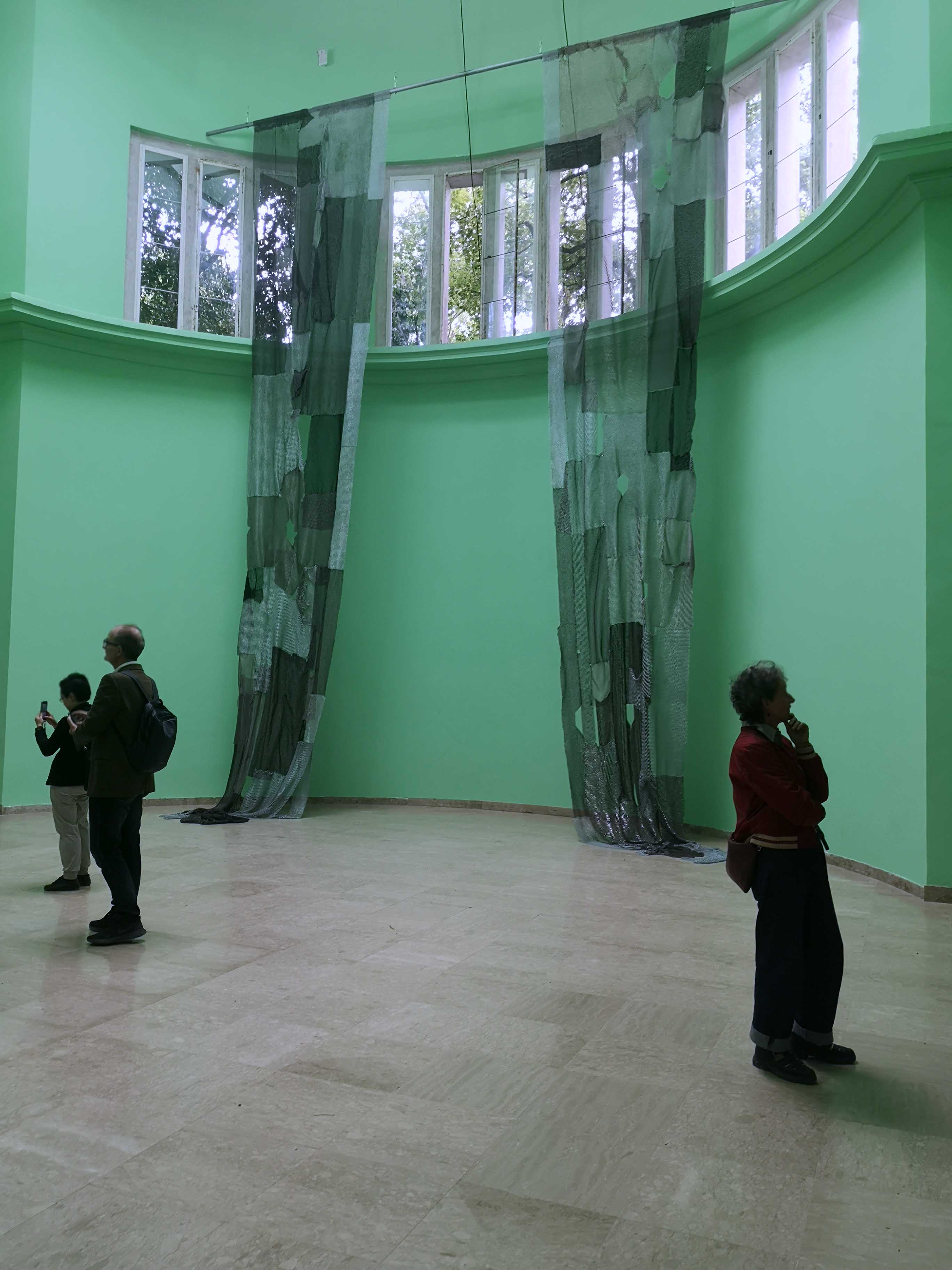
Also, the late Henrike Naumann explores East German history. Striking is the green wall colour in the central room. It is an allusion to the deployed Soviet troops in the GDR, since this was typical for the interiors of their military barracks. Despite this citation, the artist pretended to make the room feel somewhat homely, for example by hanging curtains in front of the windows or displaying a wall painting. This collage, “Nachkrieg I – Ostdeutsche Kunstgeschichte” (Post-War I – East German Art History), refers to the state-promoted Socialist Realism in the art of the GDR. Moving on to the period of political transition in the early 1990s, Henrike Naumann presents a room furnished in the late-postmodern style that swept through East Germany at that time. Things take a more martial turn with “1990 / Vorkrieg” (1990 / Pre-war), a curtain made of chain mail. As a whole, is this ensemble, “Die Innere Front” (The Inner Front), a kaleidoscope of East German cultural history, which led to the so-called “Baseballschlägerjahre” (baseball bat years) in the early 1990s. With her reference to the pogroms in Rostock-Lichtenhagen Sung Tieu also evokes this conveniently forgotten period of the German history.
With “Ruin”, the two artists are explicitly referring to the GDR. This is the first time in the German Pavilion, even though the accession of the East German federal states, and thus the so-called reunification, took place as early as 1990, that is, 36 years ago. Moreover, the chosen title “Ruin” is ambiguous. It can refer to the decay of a building, but also to financial, political or moral decline. Interpretations that may also apply to the end of the GDR and the period that followed, perhaps until today.
The Cuban Pavilion looks to the present, without losing sight of the past.
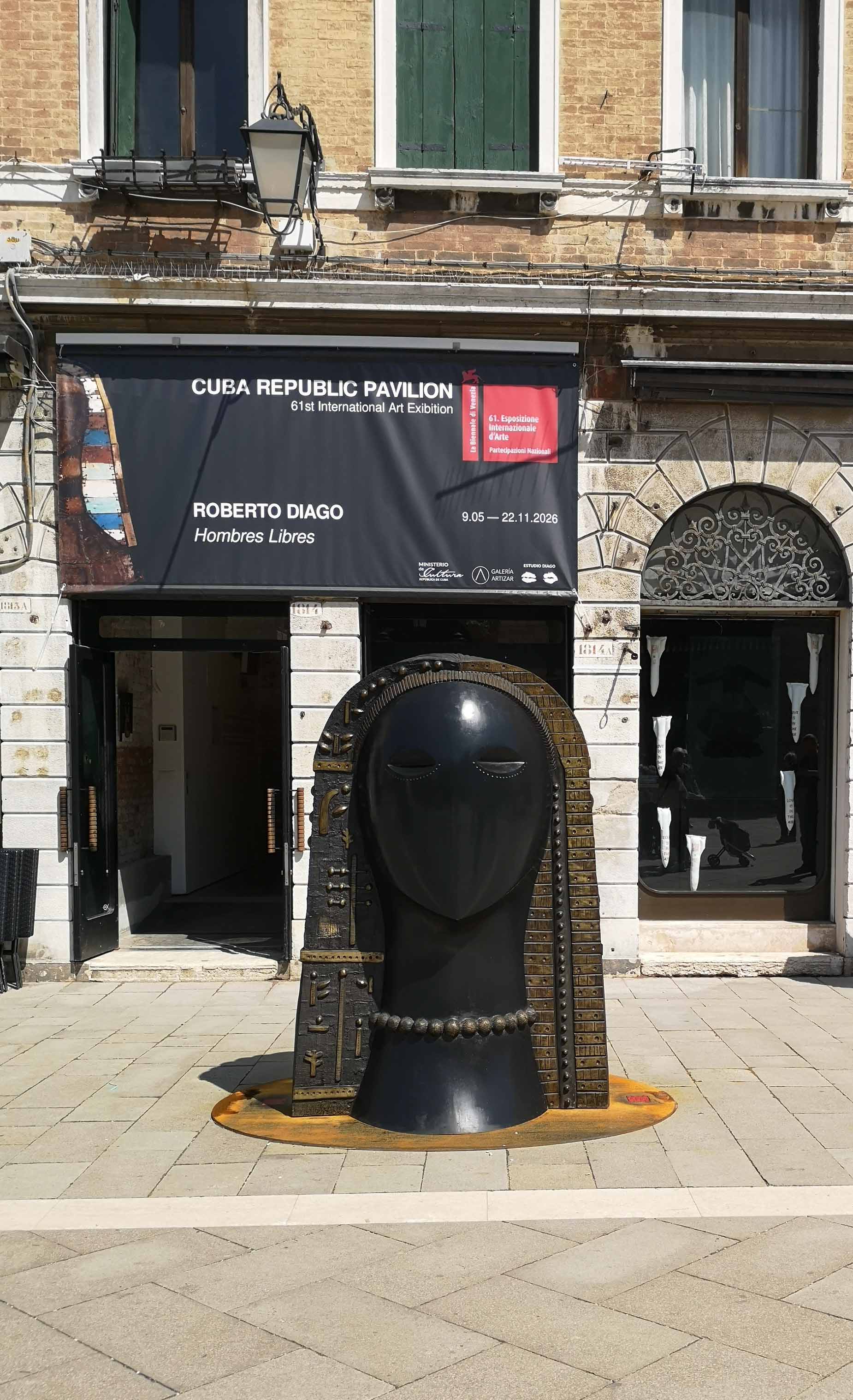
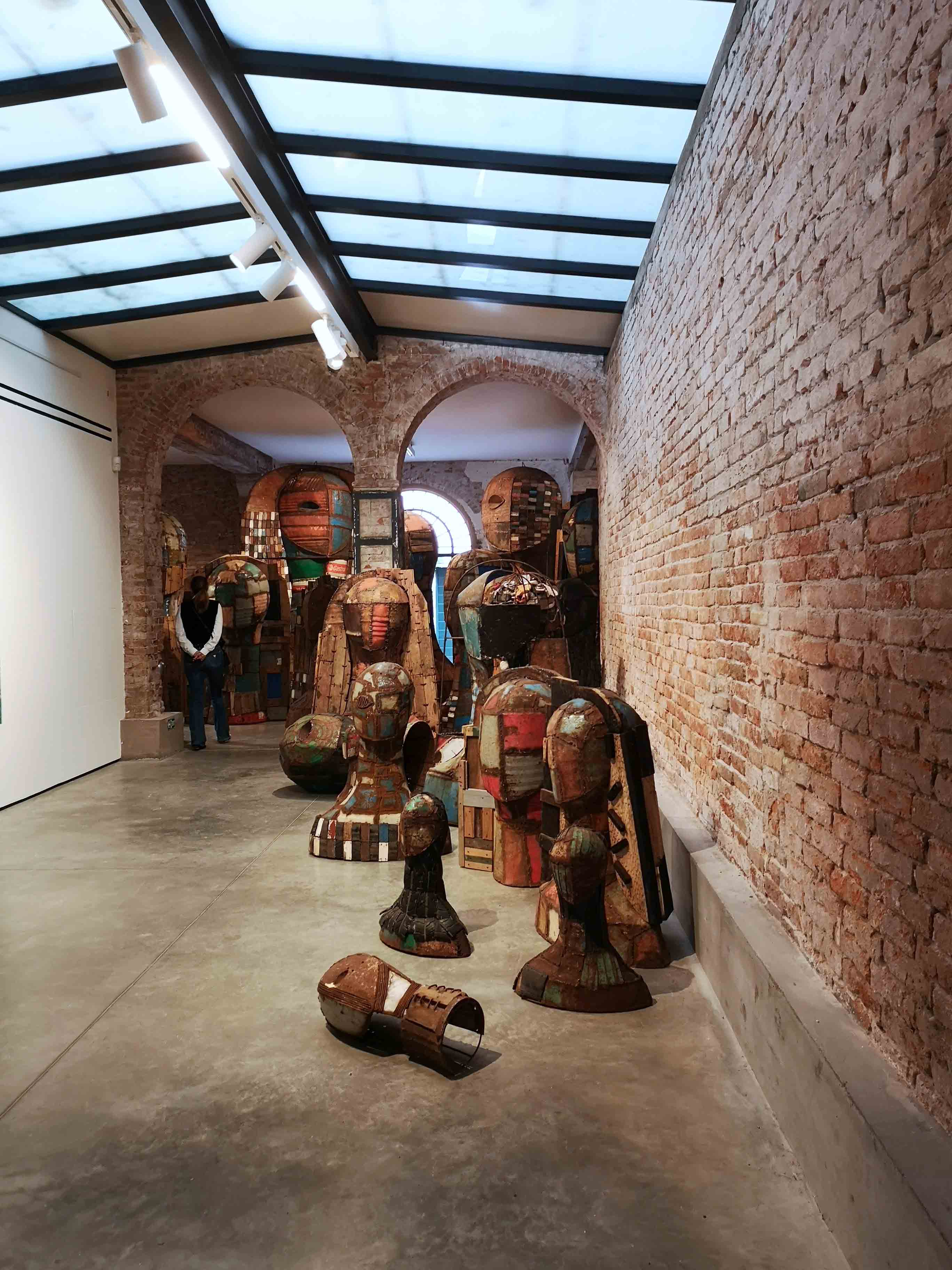
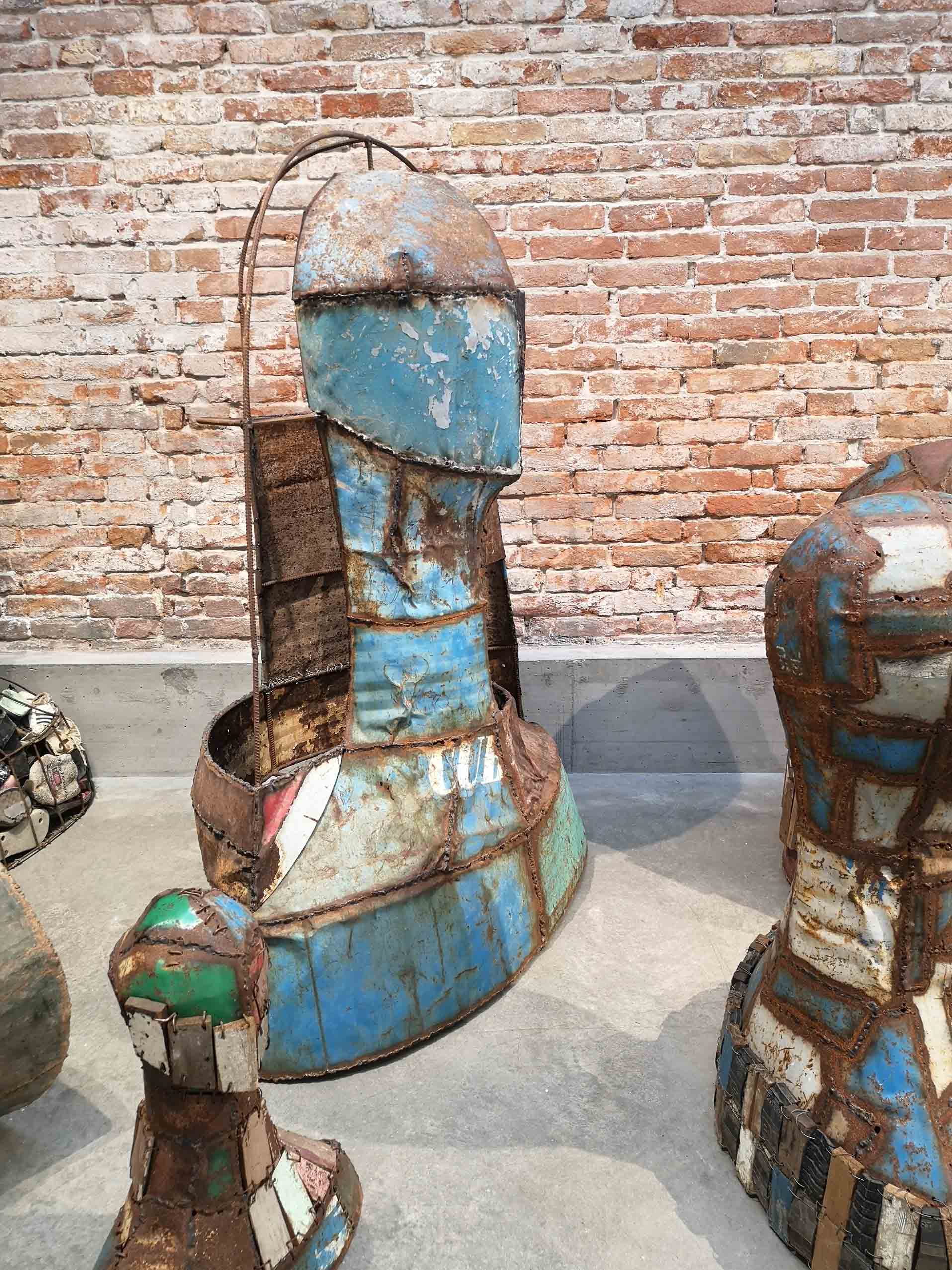
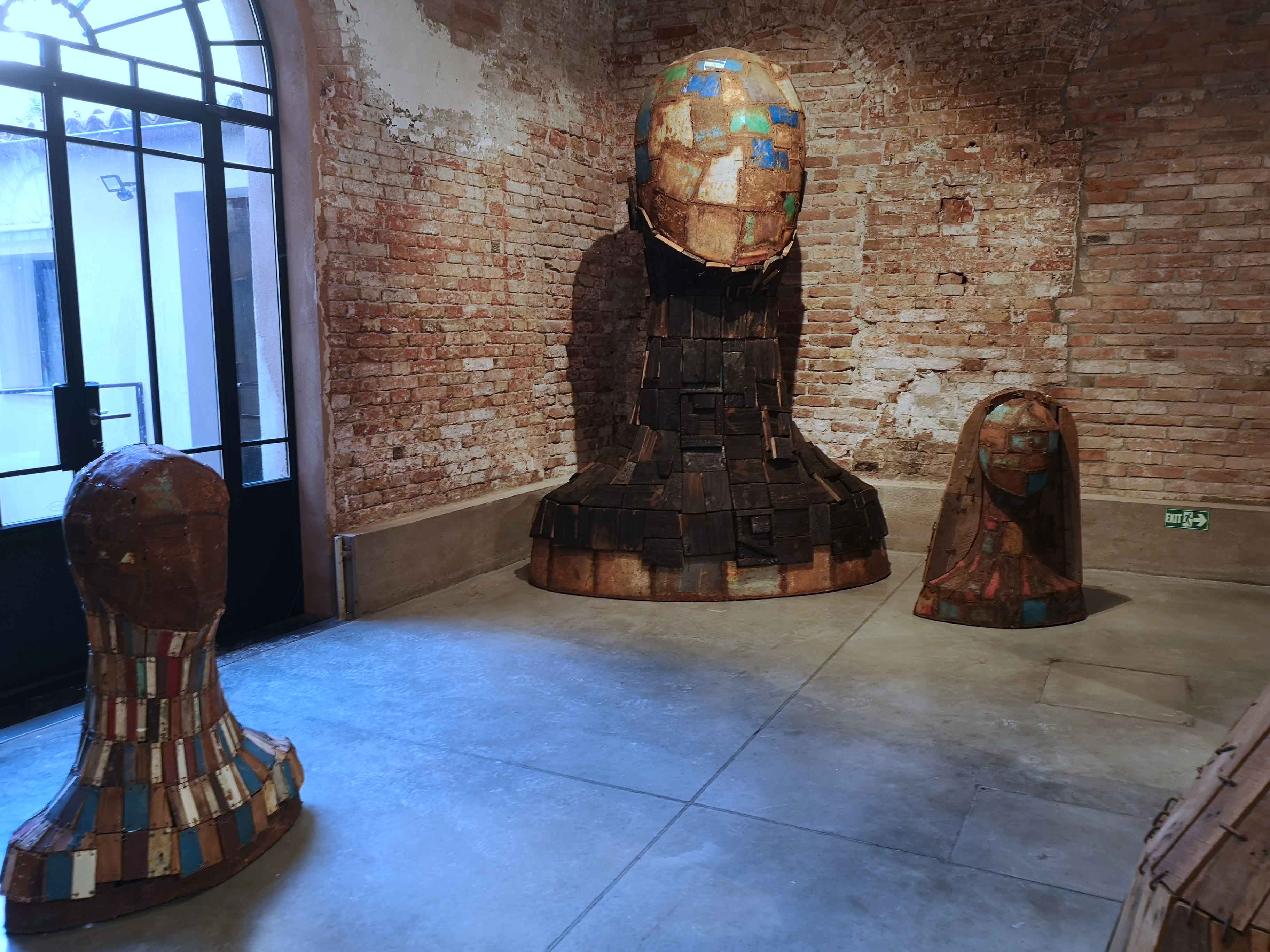
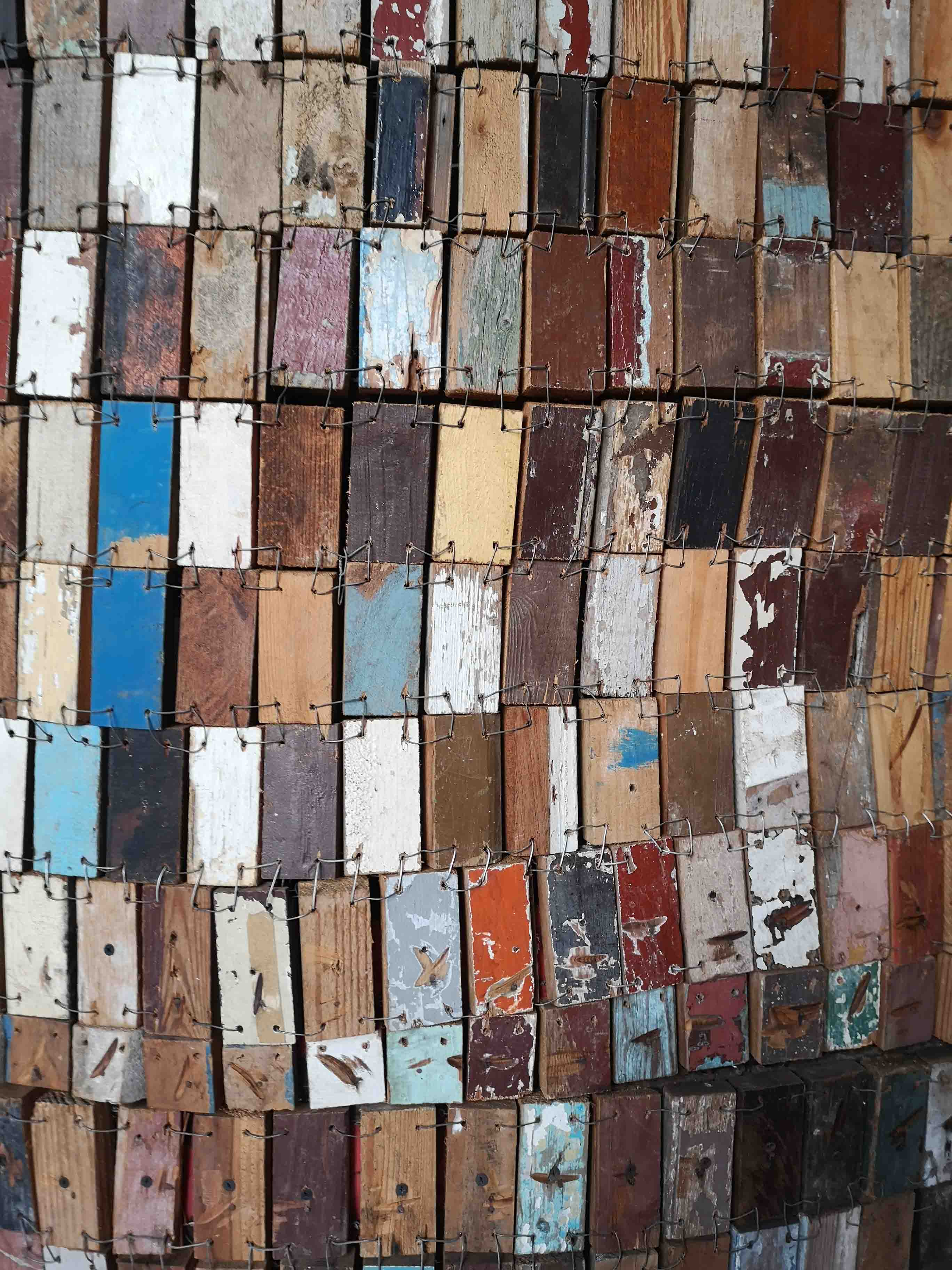
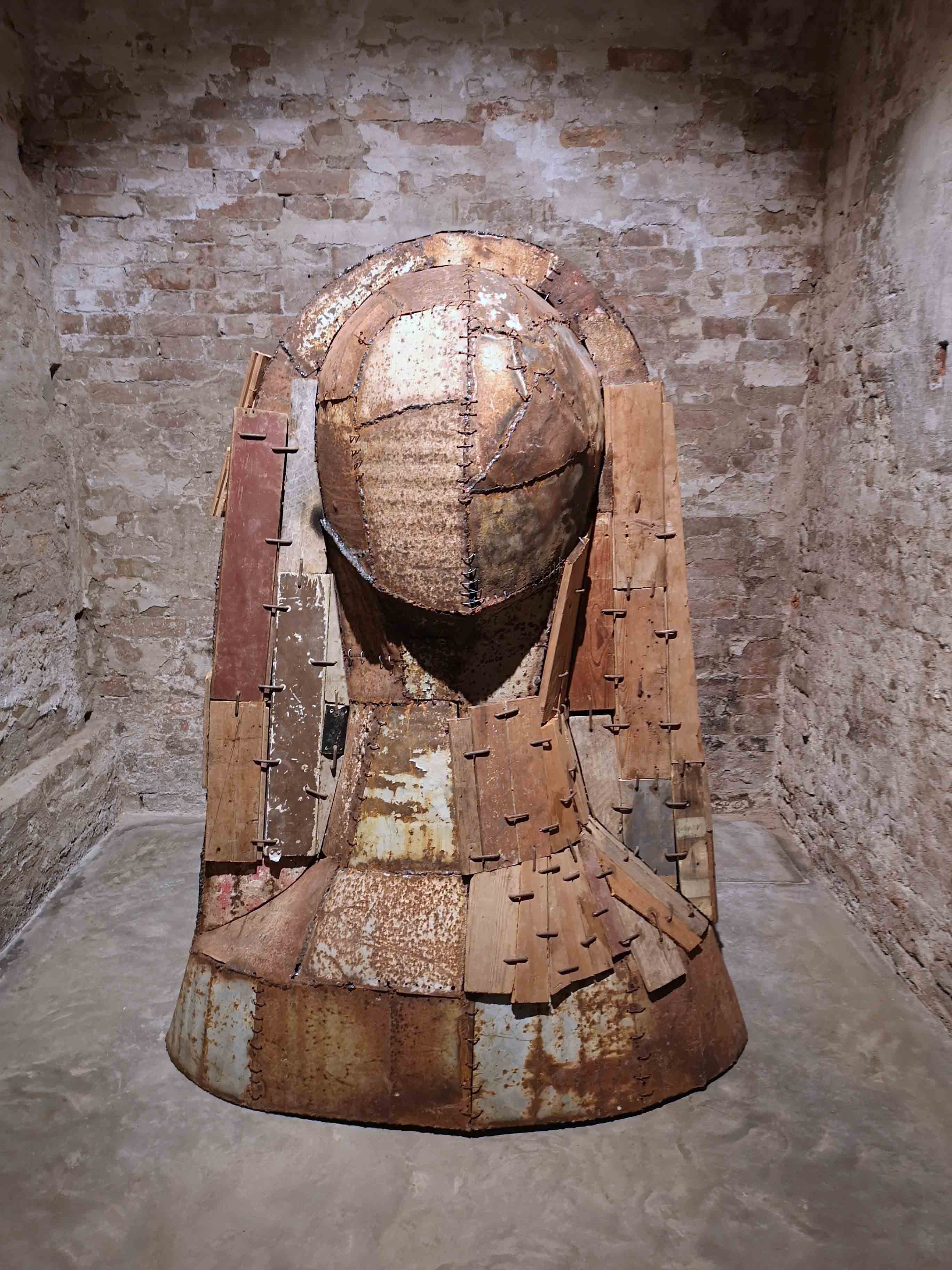
Roberto Diago’s “Hombres Libres” (Free Men) bears the past in mind, while encouraging for the present. Located in an Art Space between the Arsenale and the Giardini, the sculptures and pictures describe a current condition of the Cuban people. His larger-than-life busts are made from a variety of found materials, mostly metal plates and wood. These are roughly clamped together or joined by clearly visible weld seams. For the artist, they represent the scars inflicted on the Cuban people, due to external influences and claims to the island. These injuries are part of the collective memory
Freedom is for Roberto Diago expressed by the fact that the wounds are not hidden but are confidently displayed. In this way, these scars become part of the identity. They point to the pride in having survived the humiliations and are an expression of a sovereignty that leads to freedom. At the same time, the sculpture ensemble recalls that freedom is not given, it has to be gained. It is therefore not a passive concept, but an ongoing process that keeps the memory alive and preserves dignity.
In view of the current threat of appropriation, such a collective sense of identity and sovereignty is essential for the Cuban people. This sense of community leads to solidarity, which is perhaps more vital than ever before.
(1) https://artreview.com/predrag-djakovic-on-representing-serbia-at-the-61st-venice-biennale/, visited 20 July 2026
Text: Astrid Gallinat
Photos © Astrid Gallinat & Stephan Goseberg, if not mentioned otherwise