
 Interview with Patricia Jacomella Bonola about the Nauru-Pavilion “AIM Inundated, Imagining Life After Land” at this years’ Venice Biennale*
In a narrow alleyway, not far from the Riva degli Schiavoni, visitors to this year’s Venice Biennale will find a rather surprising national pavilion. Close to the participations from New Zealand and Zimbabwe is the country contribution from the small island nation of Nauru. Many visitors may well be scratching their heads. “Nauru? Never heard of it.” This is hardly surprising, as the microstate in the Pacific Ocean is rarely mentioned in the media. Nevertheless, this country does exist, and this time it is represented at the International Art Exhibition – with no fewer than ten international artists. Their artworks are gathered in the exhibition “AIM Inundated, Imagining Life After Land” at the Spazio Castello 3683 in the Calle Bosello 3683 in the quarter of Castello. We asked Swiss artist Patricia Jacomella Bonola how this came about and what there is on view. Naturally, Patricia explained her own contribution and told us about a satellite event of the Nauru-Pavilion.
Chief curator: Khaled Ramadan
Associate curators: Camilla Boemio and Stefano Cagol
Artists: Kauw Tsitsi (Nauru), CPS – Chamber of Public Secrets (Alfredo Cramerotti, Khaled Ramadan), Patricia Jacomella Bonola (Switzerland), Tedo Rekhviashvili (Georgia), Sylvia Grace Borda (Canada), Ron Laboray (USA), Dorian Batycka (Poland), Khaled Hafez (Egypt), Iv Toshain (Austria), Stefano Cagol (Italy)
Where is Nauru?
 Astrid Gallinat: Since not many people know the Republic of Nauru, could you tell us a little bit about Nauru?
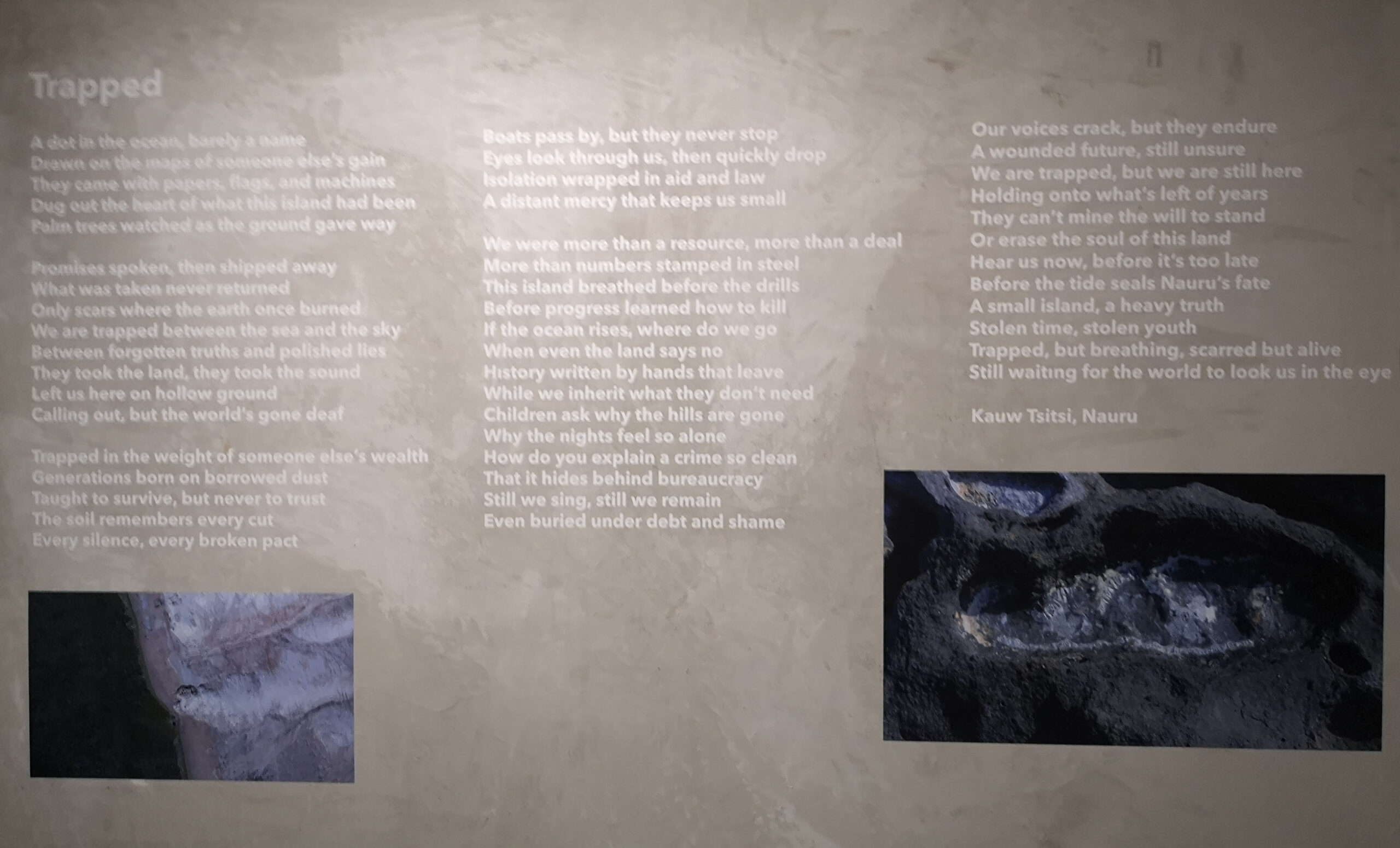
Patricia Jacomella Bonola: Nauru is a small island nation in the Pacific Ocean and holds the distinction of being the world’s smallest republic, both in terms of land area and population. Its recent history has been profoundly shaped by phosphate mining, an activity that brought considerable economic prosperity for several decades. However, with the depletion of phosphate reserves, the country has had to face a severe economic, environmental, and ecological crisis. The consequences of mining have rendered much of the territory unsuitable for agriculture, forcing the population to rely almost entirely on imported and highly processed foods, mainly from Australia.
This transformation has contributed to a dramatic increase in obesity rates, with significant repercussions for public health. Nauru is also one of the countries most vulnerable to the effects of climate change, including sea-level rise, coastal erosion, flooding, and periods of drought.
 A.G.: How did it become possible that Nauru is for the first time represented at the Venice Biennale?
P.J.B.: The initiative to establish a National Pavilion at the Venice Biennale originated directly from the Government of the Republic of Nauru. The Ministry of National Heritage, Culture and Tourism launched an international competition open to curators from around the world. The selection was won by Khaled Ramadan, together with associate curators Stefano Cagol and Camilla Boemio.
In addition to selecting the participating artists, Commissioner Isabella Dageago entrusted the curatorial team with defining the pavilion’s concept and artistic direction, identifying the exhibition venue, overseeing logistical and organizational management, coordinating communication activities and institutional relations, as well as securing funding and sponsorships. The curatorial team is also responsible for representing the Pavilion in all its professional and public engagements.
A sinking State and a sinking City
 A.G.: Apart from the fact that an appearance in Venice attracts attention, are there other reasons why Venice is particularly well suited for reflecting on Nauru?
P.J.B.: The Venice Biennale is one of the most important international platforms for contemporary art and offers a unique opportunity to bring crucial issues such as colonialism, extractivism, and their environmental and social consequences to the attention of the public.
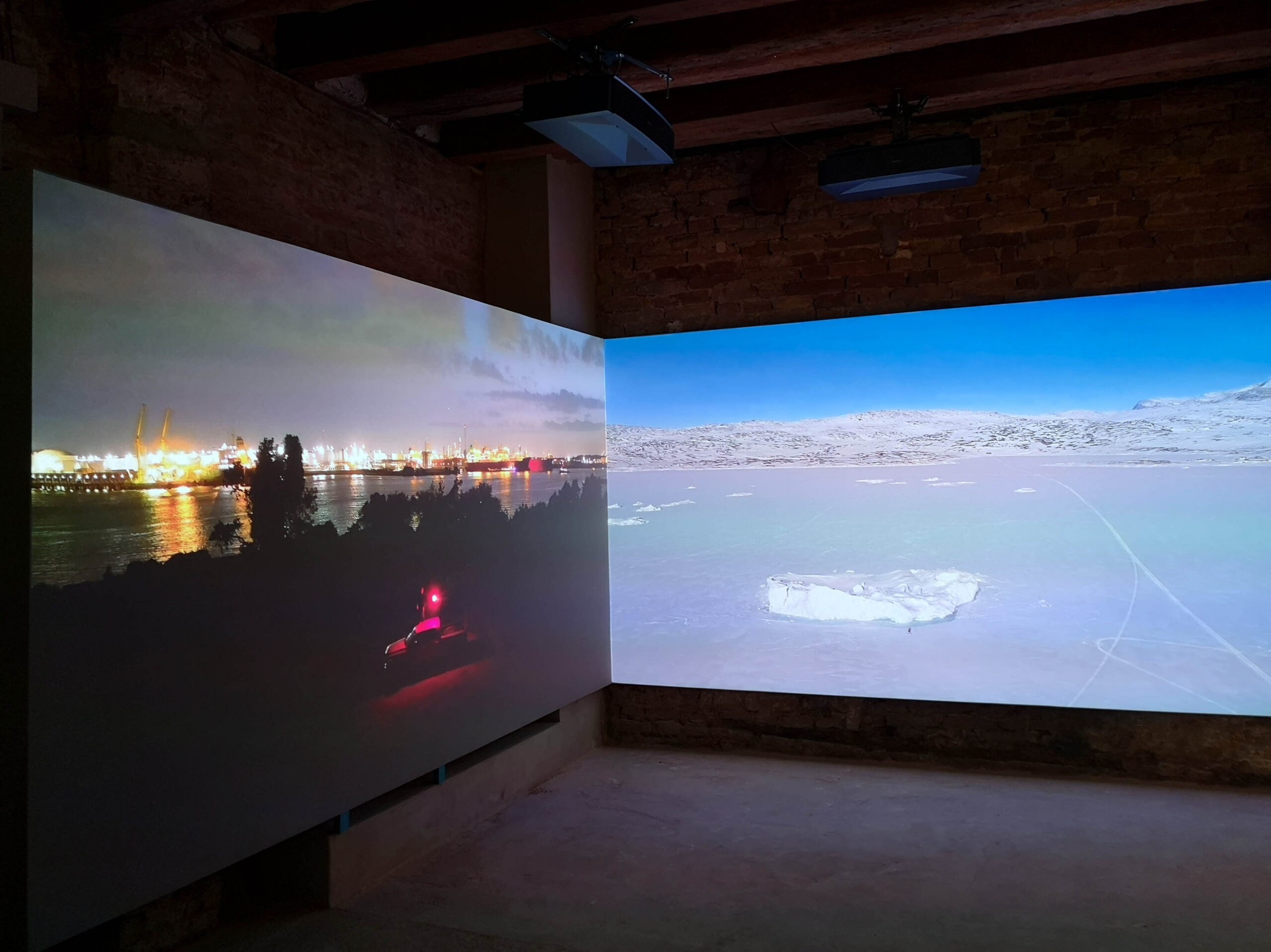
The participation of Nauru’s National Pavilion also represents a rare opportunity for transnational cooperation. The project is not merely an artistic initiative but also carries a significant geopolitical dimension. Indeed, the pavilion addresses all communities that are vulnerable to the effects of the climate crisis, including Venice itself, whose future is threatened by rising sea levels and by the decisions of major political and economic powers.
Diverse Artists with a shared vision
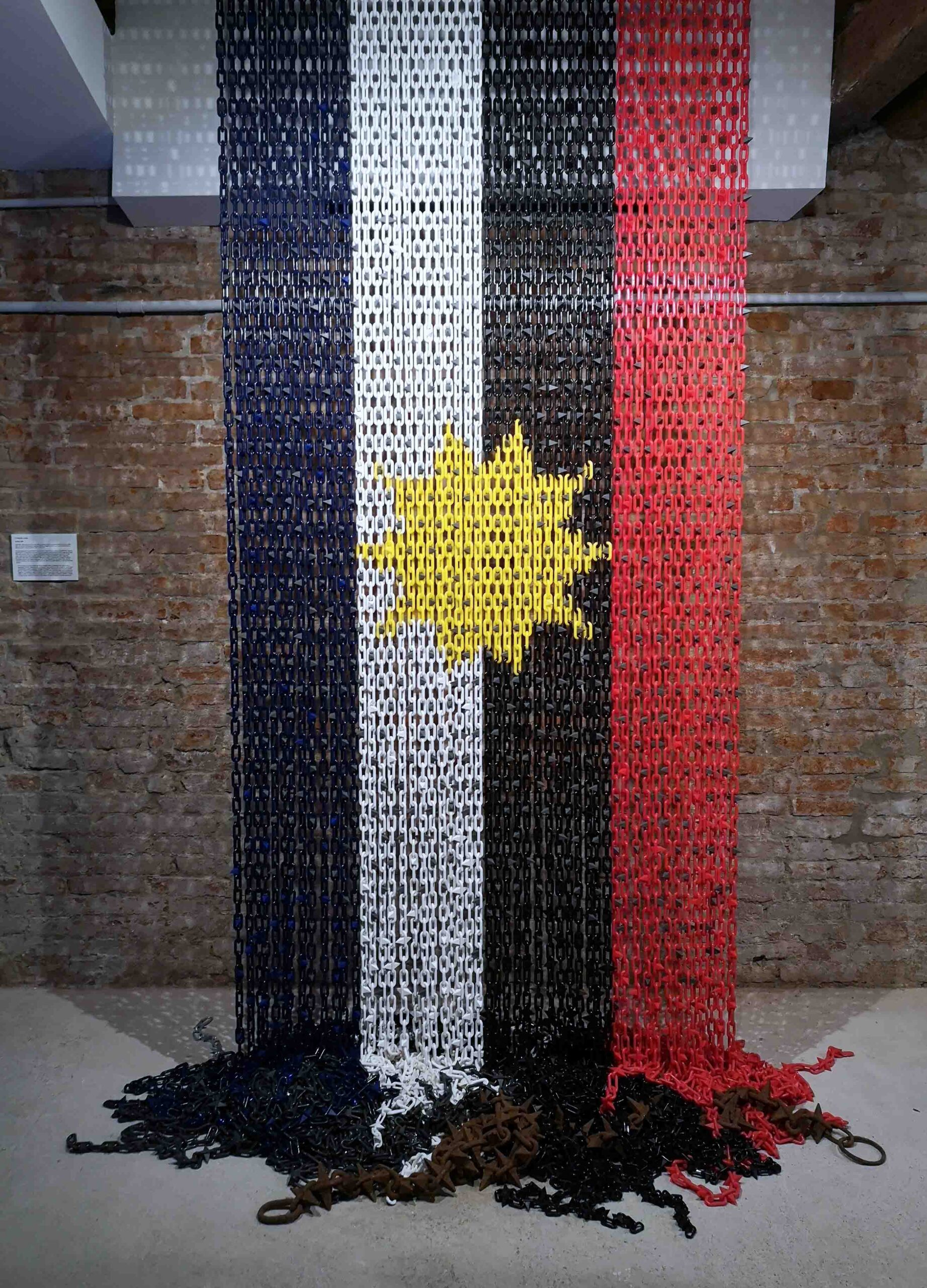 A.G.: The ten participating artists come from a wide variety of countries and belong to different generations. Accordingly, there are artworks employing a broad range of media. What does the artworks on display link together?
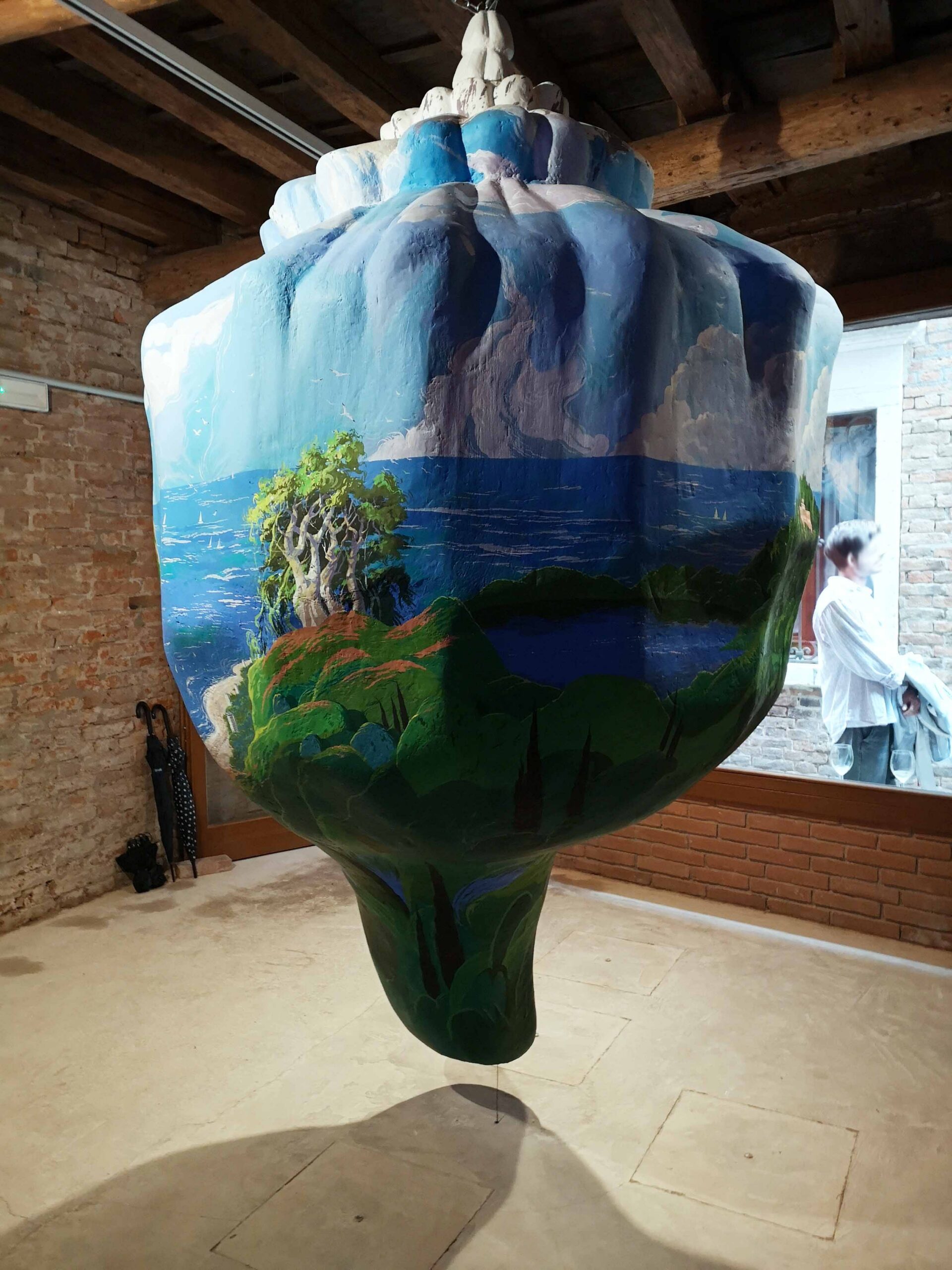
P.J.B.: Inspired by Édouard Glissant’s theory of archipelagic thought, the Pavilion positions itself in opposition to singular and totalizing narratives, presenting instead a constellation of voices and perspectives. Artists, writers, and theorists converge in an exhibition pathway that addresses themes such as ecological justice, Indigeneity, extractivism, oceanic epistemologies, and climate migration.
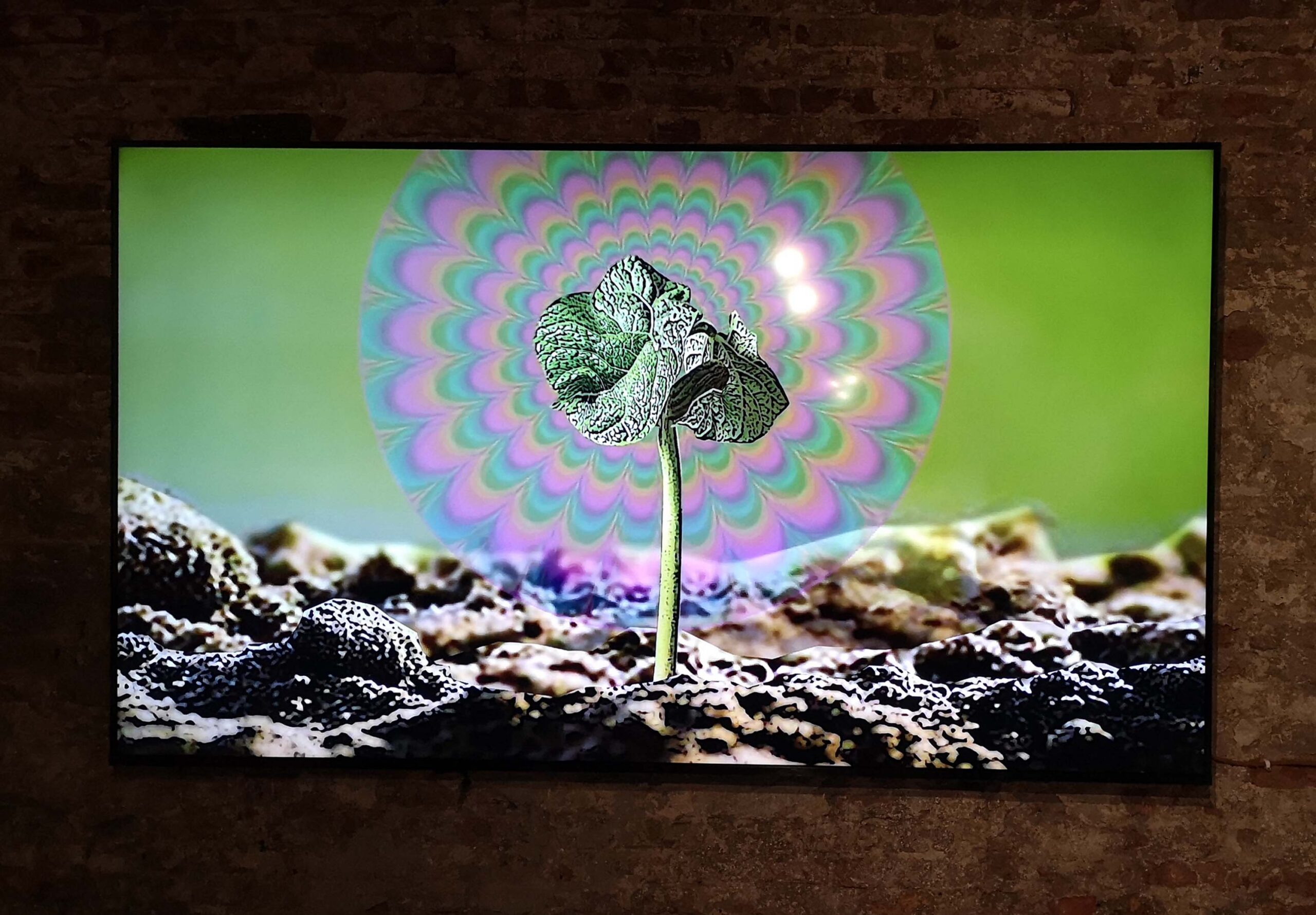 The works on display do not merely represent the environmental crisis; rather, they critically examine the structures that produce it, make its effects visible, and suggest alternative imaginaries. The artistic practices unfold through the use of reclaimed, ephemeral, or organic materials that reflect the fragility and instability of territories most exposed to the impacts of climate change. At the same time, the works engage with future scenarios that are already a reality in Nauru, challenging the artificial distinction between a world considered “developed” and one deemed “at risk.” What emerges is a post-extractive aesthetic that regards landscapes marked by exploitation not only as sites of loss but also as spaces of potential transformation, where repair is understood not as simple restoration but as a process of reimagining the future.
I Used to Go to the Beach
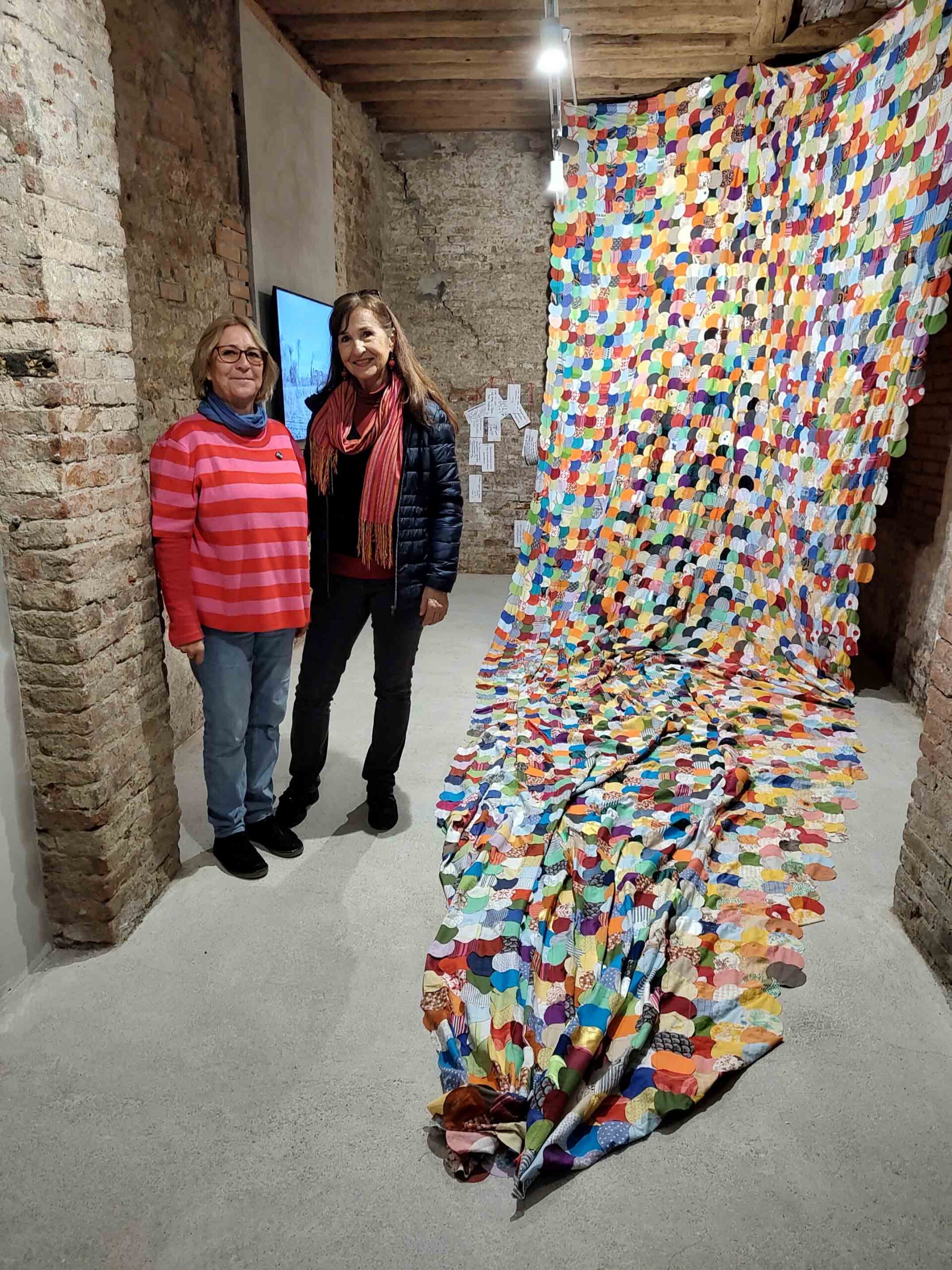
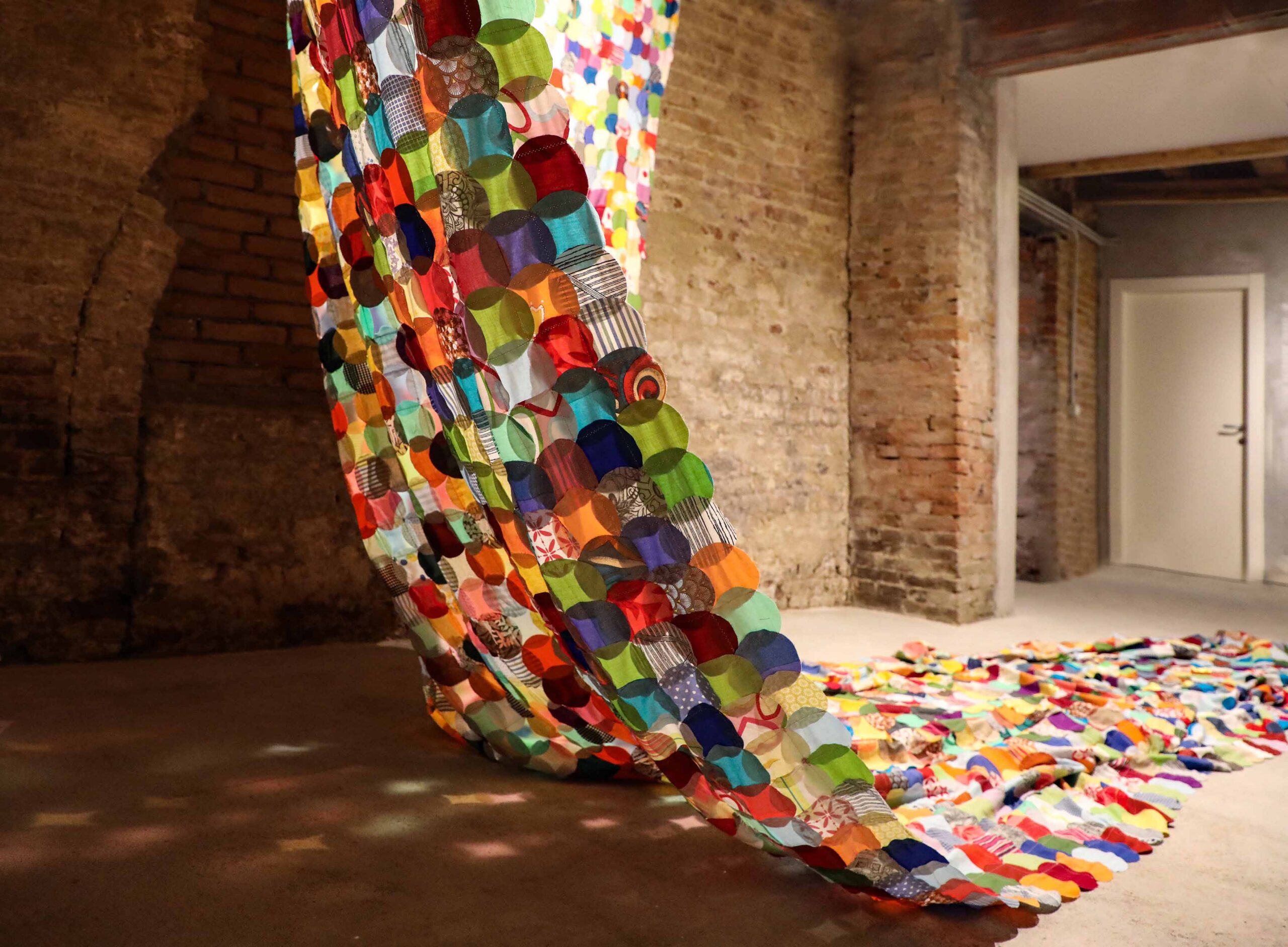 A.G.: Your contribution is “I Used to Go to the Beach”. It is a monumental sail composed of an assemblage of fragments. What kind of pieces did you use to create the fabric? And why have you chosen this material?
P.J.B.: The title “I Used to Go to the Beach” draws on the original meaning of the name Nauru, derived from the Nauruan word “Naoero», meaning «I go to the beach», which I have translated into the past tense. In this way, an everyday action is transformed into a memory marked by loss. The beach, once a natural and unquestioned part of daily life, becomes a symbol of something that has disappeared forever. At the same time, a form of collective nostalgia emerges, one that transcends geographical and temporal boundaries.
My installation takes the form of a large sail. For me, it is a symbol of resistance against adverse forces and a metaphor for a kind of resilience that is not based on dominance, but on sharing and solidarity.
The sail is composed of many different fragments: fabrics, plastics, and texts sent by people from various parts of the world.
I began the creative process by involving friends and family, then asked them to expand the network of participation and send me small fragments of their everyday lives—whether physical materials, written texts, or messages capable of imagining possible changes in response to Nauru’s environmental and social situation.
 I received contributions from several countries, including France, Italy, and Germany. Some participants sent texts by email, while others contributed tangible objects such as coffee, snack, and soap packaging, plastic cases, and household fabrics taken from tablecloths, shirts, nightgowns, and other everyday items. These materials reflect the diversity and plurality of individual experiences.
I cut these materials into circular shapes and then stitched them together, creating a surface that evokes fish scales or the scales of armor, suggesting ideas of protection, adaptation, as well as transformation and healing.
Stitching is the central element of the work. It is not merely a craft activity, but becomes a practice of attention and care. By connecting the fragments to one another, a new shared structure takes shape—a kind of planetary geography founded not on borders, but on relationships.
The work, therefore, is not intended solely as a representation of loss. Rather, it suggests an act of symbolic repair: a topography of solidarity composed of dispersed parts. In this sense, my sail becomes an image of movement and hope—and of the possibility of creating new connections through collective action.
Concept and Implementation
A.G.: You told me that you originally planned a different installation. What was it supposed to look like?
P.J.B.: There is always a degree of adaptation between the conception of an artwork, its production, and its installation, shaped by the characteristics of the exhibition space and the practical conditions of installation. In my case, I had designed the work on the basis of the floor plan provided by the curator, adjusting its proportions and dimensions to the measurements indicated. However, once I arrived on site, I discovered that the ceiling had two different heights and that the higher section was located on the opposite side from what had been expected. This required me to reconsider the orientation of the sail and to abandon the fully suspended configuration originally envisioned, as it would have obstructed the visitors’ circulation through the space. Although this represented a significant formal modification, it did not alter the meaning of the work or the conceptual core of the project, which I consider essential.
Visitors are welcome to get involved
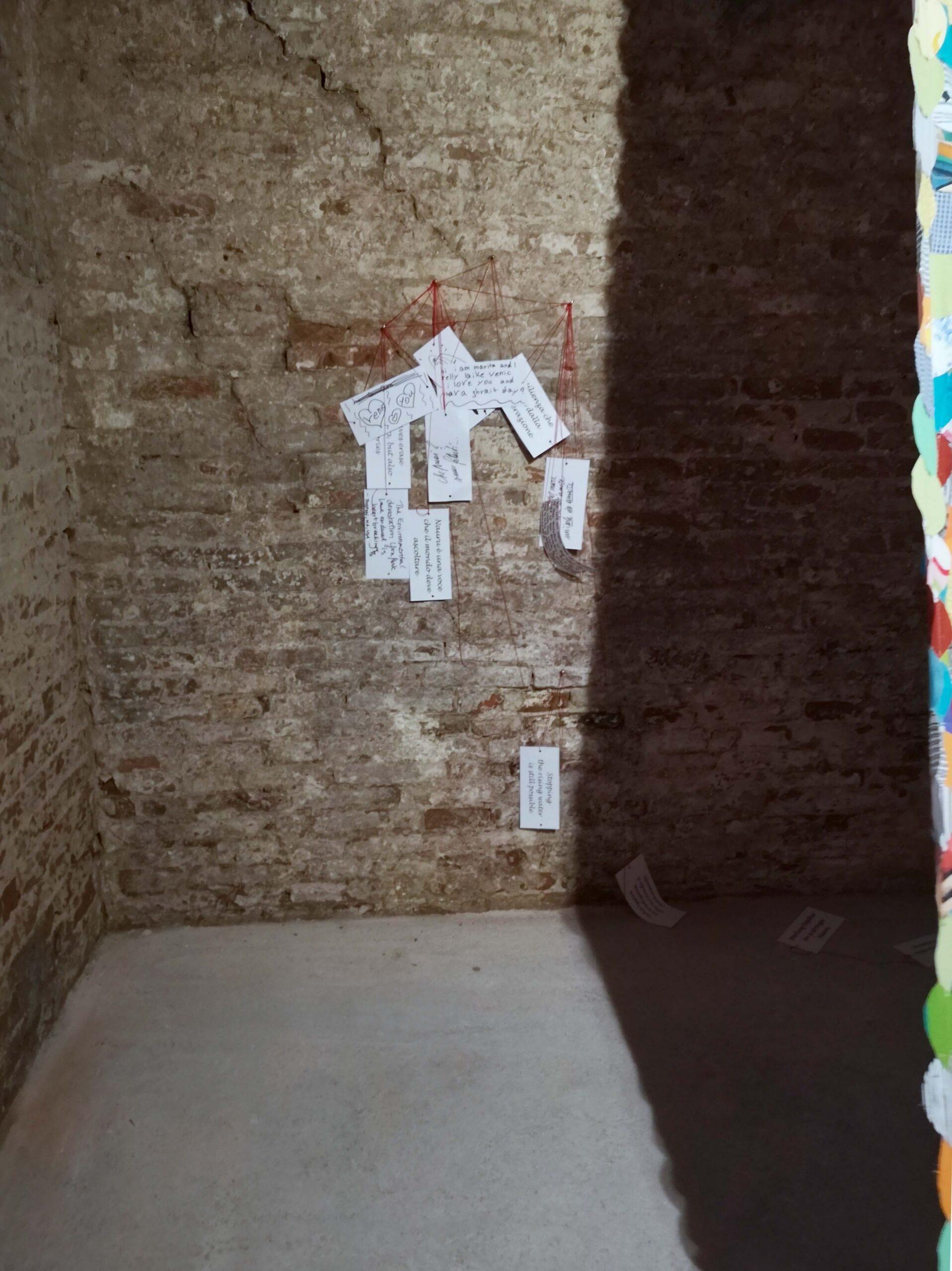 A.G.: “I Used to Go to the Beach” is by no means static; rather, it is intended to change over the course of the exhibition. Visitors are encouraged to get involved. What exactly should they do?
P.J.B.: In the exhibition space, the sail takes on an additional dimension, becoming a mobile body that embodies the ideas of journey, passage, and transformation. It presents itself as an open work in constant evolution, a process that unfolds over time.
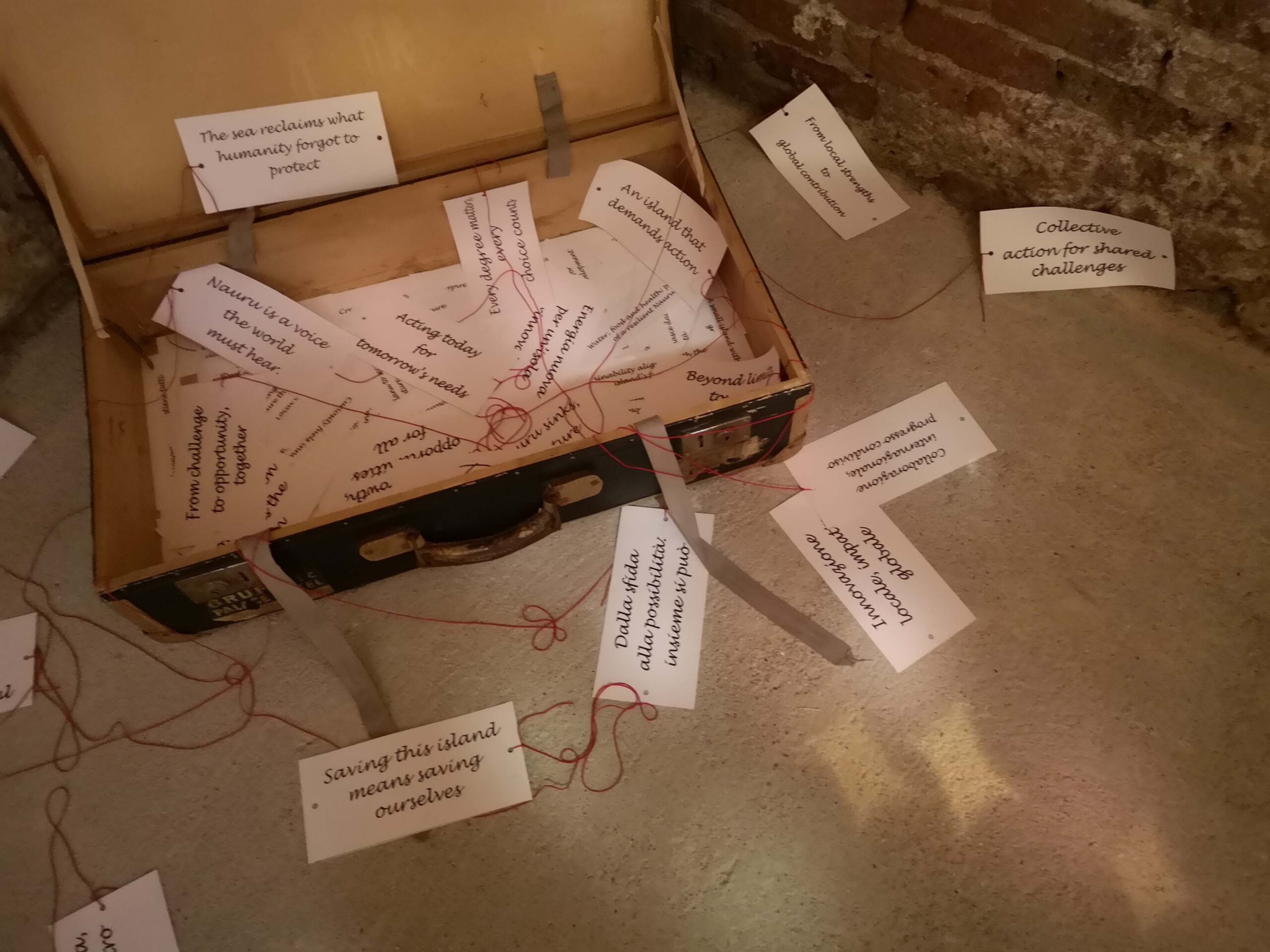
Throughout the duration of the exhibition, visitors are invited to actively participate, contributing to the expansion of the work through new textual interventions imagining the future of the people of Nauru. I have provided blank sheets of paper, a marker, and red thread for visitors to use: they write a message and then hang it wherever they choose. With each new contribution, the installation continues to grow and transform.
In this way, a collective and emotional atlas emerges, in which individual voices converge into a shared narrative.
Signal from the Ground – A Satellite
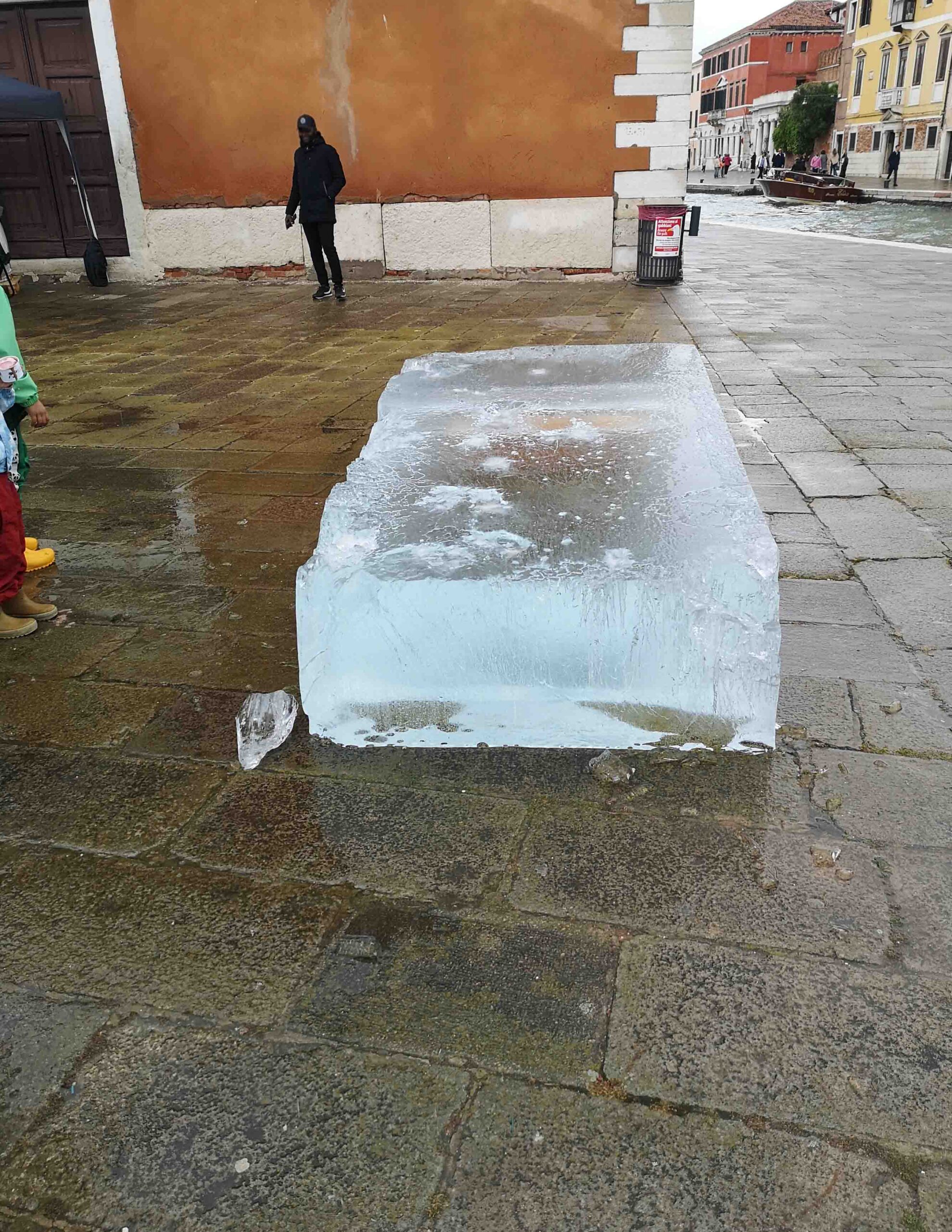 A.G.: Already during the preview days, “AIM Inundated, Imagining Life After Land” did not remain within the limits of the Spazio Castello 3683. Within sight of the Arsenale, on the Riva Ca’di Dio, Stefano Cagol installed ‘The Ice Monolith. After Land’, a melting block of ice that powerfully illustrates how quickly ice turns to water. Are there more activities taking place alongside the main exhibition and/or outside the pavilion?
P.J.B.: On the occasion of the Pavilion’s opening, numerous side events, meetings, and presentations were organized. Among these, on June 5, 2026, the exhibition “Signal from the Ground” was inaugurated at Castel Belasi – Center for Contemporary Art for Ecological Thought in Campodenno (Trento), as an official satellite event of the National Pavilion of the Republic of Nauru at the 61st International Art Exhibition – La Biennale di Venezia.
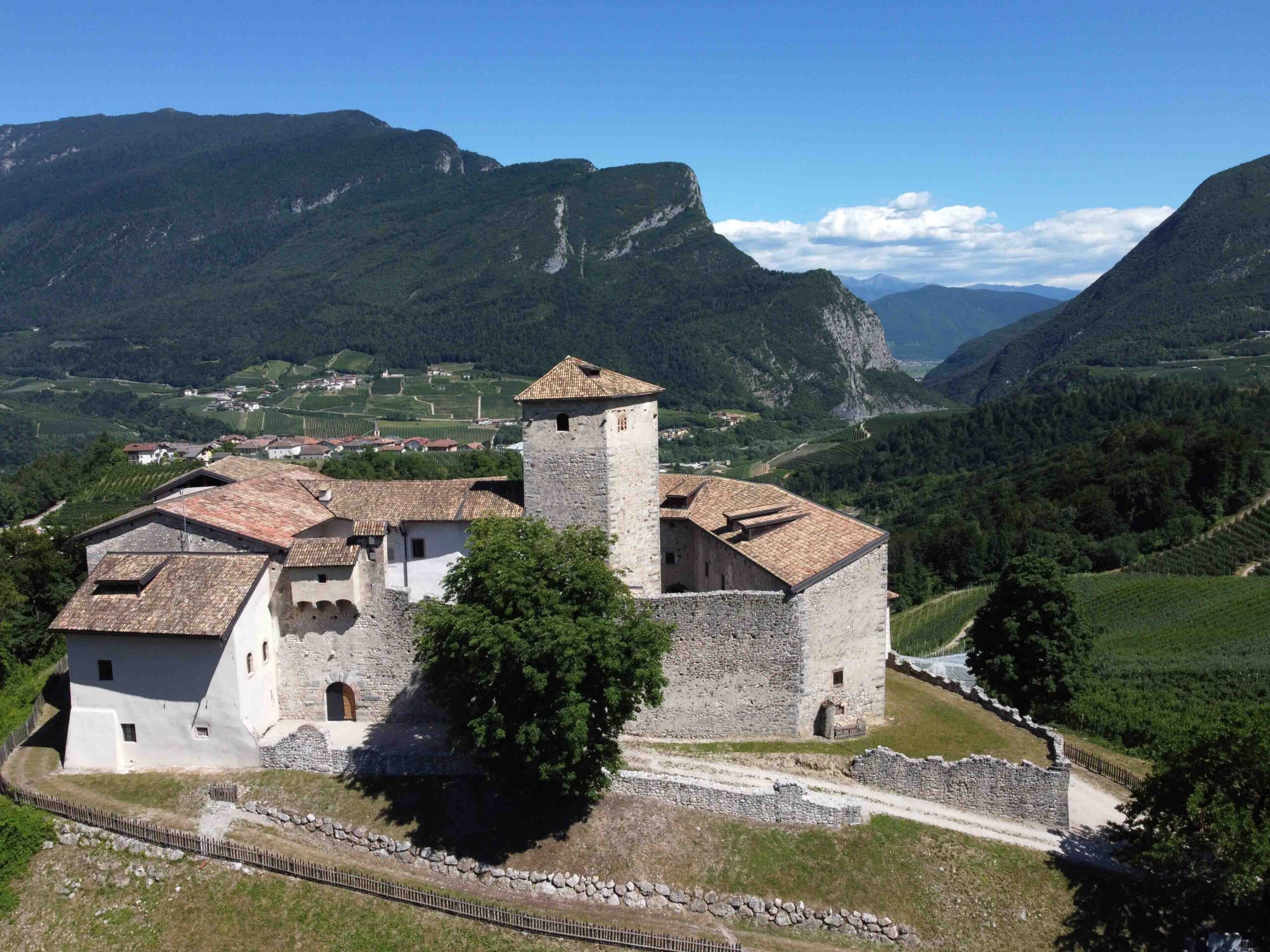
Creating an unprecedented dialogue between the Alps and Nauru; the world’s smallest island nation and a symbol of the consequences of colonial extractivism and ecological precarity, the exhibition, curated by Artistic Director Stefano Cagol, offers a reflection on the relationships between ecology, geology, and resource exploitation. The exhibition route invites visitors to engage with some of the most urgent issues of our time, including ecosystem degradation, urban sprawl and land consumption, rare earth extraction, and the growing impact these dynamics exert on global geopolitical balances.
A.G.: Dear Patricia, thank you very much for the interview!
Pavilion of the Republic of Nauru
AIM Inundated, Imagining Life After Land
Spazio Castello 3683
Calle Bosello 3683, Castello – Venezia
Vaporetto stop: San Zaccaria
Commissioning Authority: Ministry of National Heritage, Culture, and Tourism, Republic of Nauru, Hon. Isabella Dageago, M.P. (Republic of Nauru)
https://www.nauru-biennalevenezia.com
IG: @nauru_biennale_venezia
May 9 – November 22, 2026
Tue – Sun: free entrance
May – Sep: 11:00 – 19:00
Oct – Nov: 10:00 – 18:00
* Patricia Jacomella Bonola answered via e-mail, 11 June 2026.