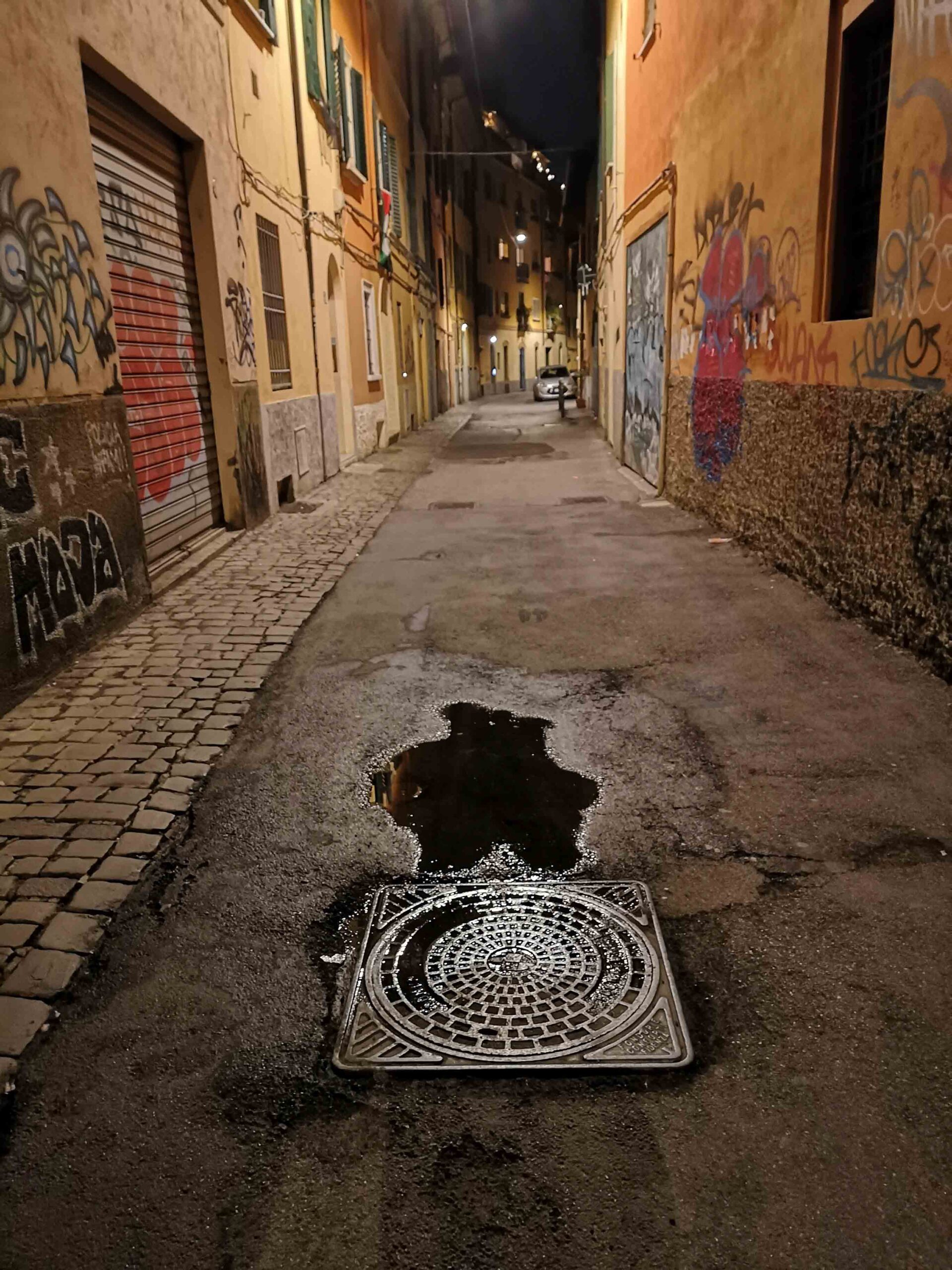
 Seven Bolognese exhibitions, the majority visible until the end of the year or even longer, are dealing with urban spaces or make particular approaches to the technique of painting. At the Galleria B4, P.H. Wert presents works, which seem to be traditional but have unconventional motives. The Otto Gallery invited four artists, who go beyond customary panel painting in their work. Attilio Melfi displays unusual cityscapes at the annexe of the Galleria Studio Cenacchi. With Marco Emmanuele’s “Palmo panorama”, the Labs Gallery invites us to discover a panorama with hidden details. Alternative Natures are on spot at the Galleria Studio Cenacchi. In the MAMbo’s Project Room Kipras Dubauskas shows urban interstices, marginal places like undergrounds and abandoned infrastructures in Vilnius and Bologna and at the Galleria Enrico Astuni the visitor can see Ugo La Pietra’s reflections on human interventions in urban spaces.
P.H. Wert: Architettura dell’Anima, Meccanismi del Pensiero – Galleria B4
Altrove o altre volte – Otto Gallery
Attilio Melfi: A1 – Galleria Studio Cenacchi annexe
Marco Emmanuele: Palmo panorama – LABS Contemporary Art
Nature alternative – Galleria Studio Cenacchi
Kipras Dubauskas. Pirogenia. Folla e demoni – MAMbo
Ugo La Pietra. La mia territorialità – Galleria Enrico Astuni
P.H. Wert – Architettura dell’Anima, Meccanismi del Pensiero
6 November – 29 November 2025
Galleria B4
Via Vinazzetti 4/b, Bologna
https://www.facebook.com/galleriaB4
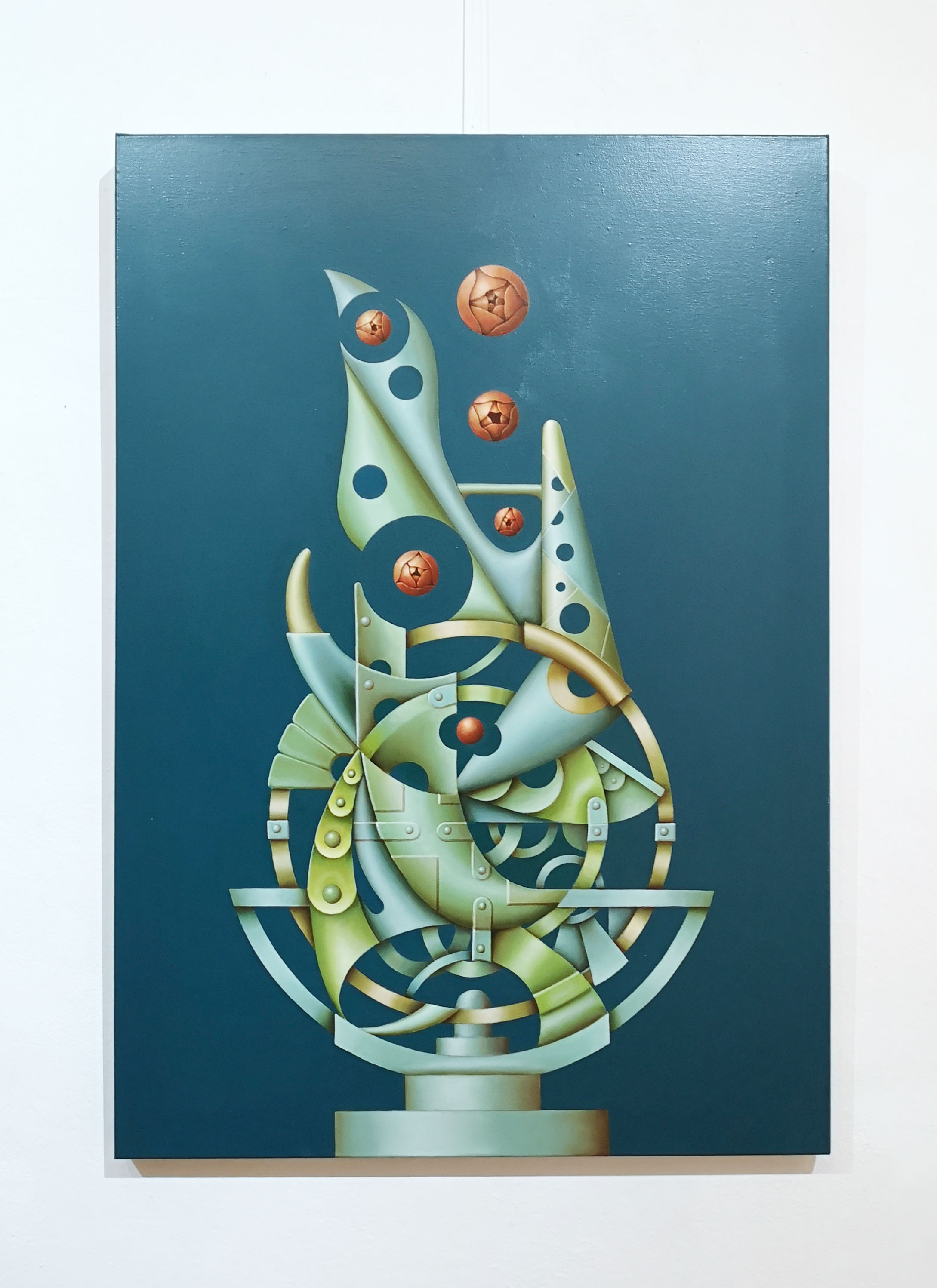
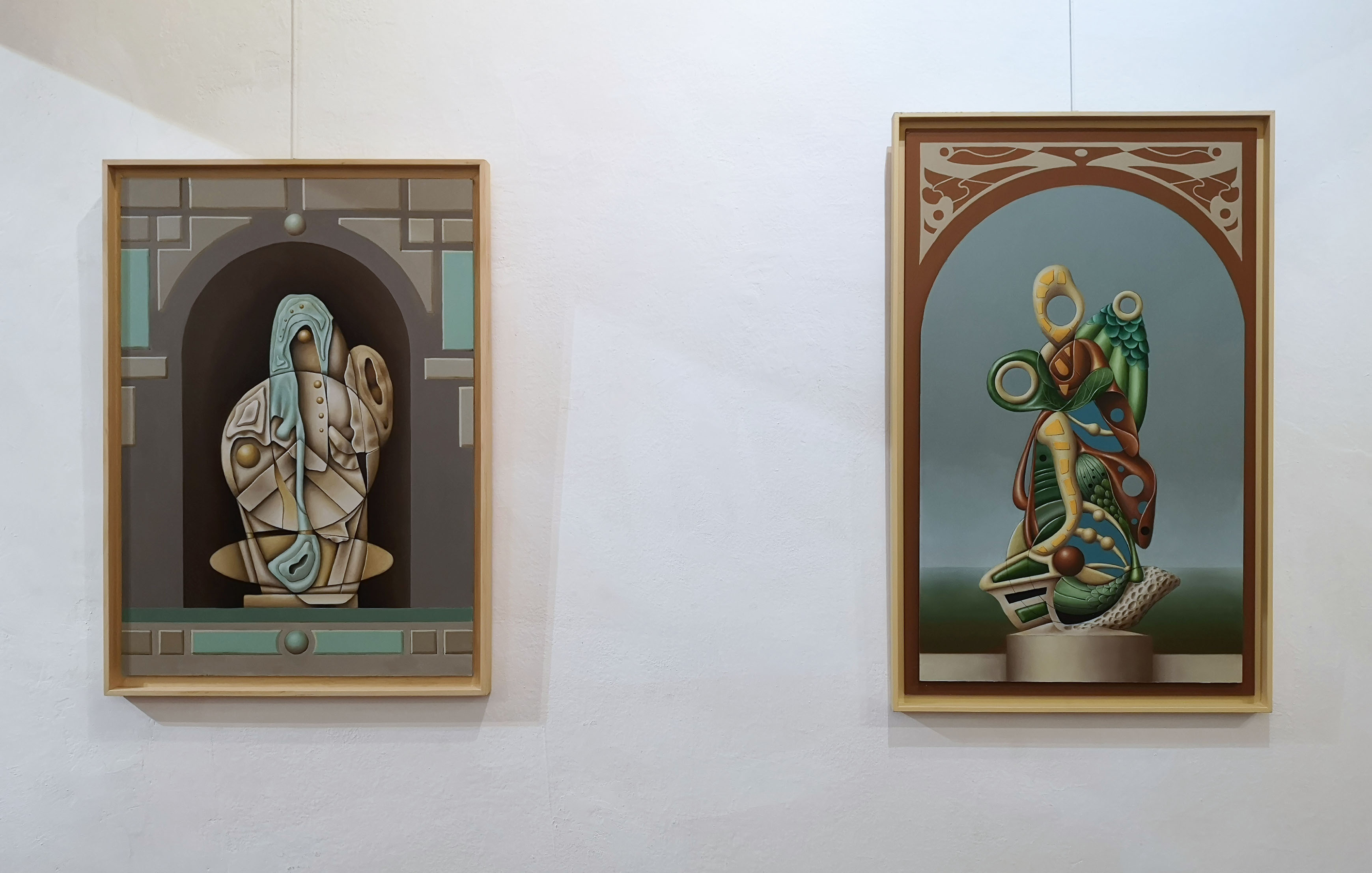
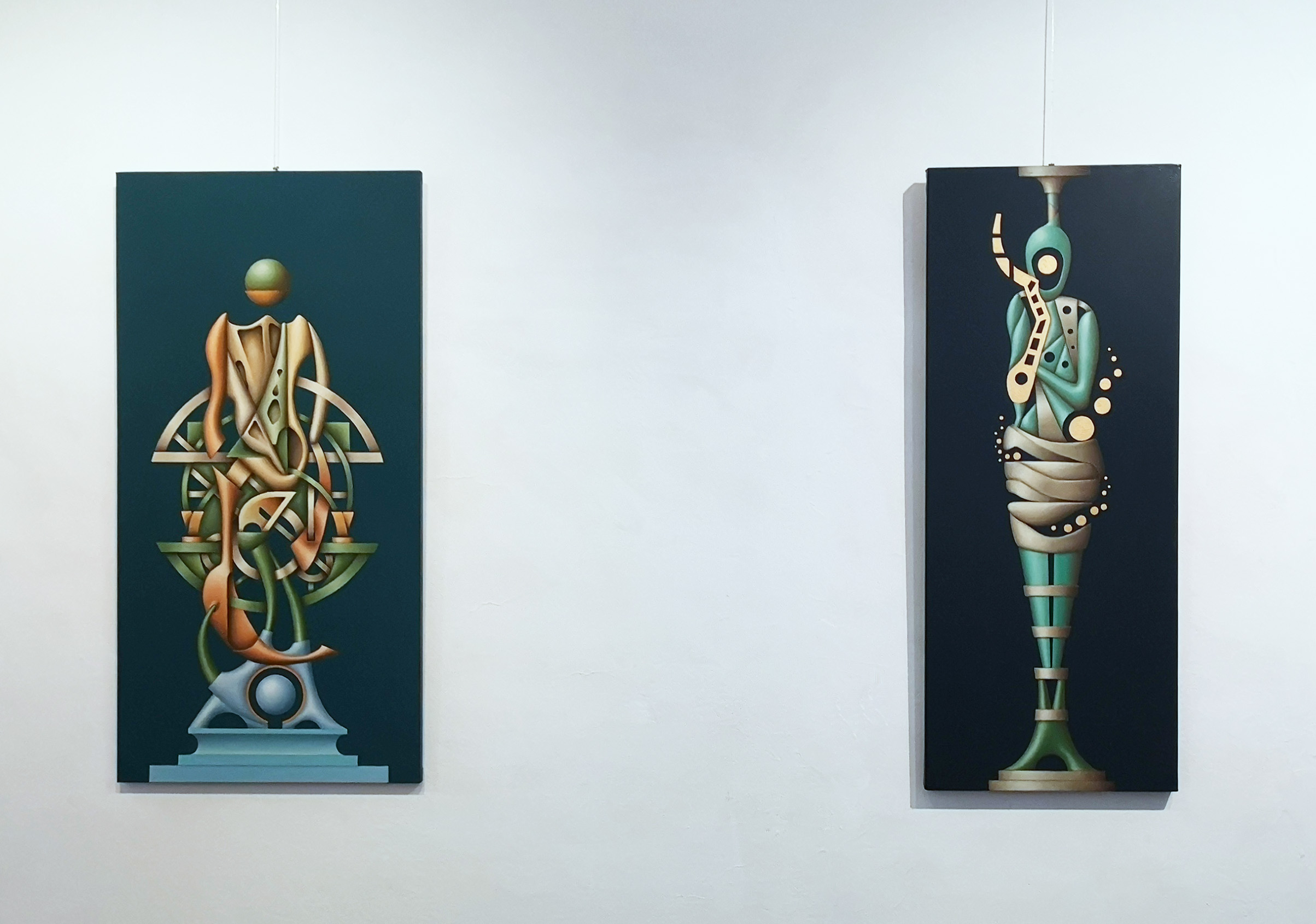
By the technique, oil and acryl on panel and the colour scheme, mostly muted green, yellow, orange and blue, the paintings of P.H. Wert seem to be very traditional. Also some of the decorative surroundings of the central compositions recall renaissance or Art Nouveau/Art Deco style window arches with their ornaments. However, the main protagonists are anthropomorph sculptures, which seem to be constructed from mechanical elements. They are far away to be conventional subjects.
Even the anthropomorphic impression is misleading, as clear references to the human body are difficult to identify. They are fantasy creatures, which, by the photorealistic style, approach reality. They could be mechanical allegories but seem to be also on the threshold of abstraction. These contrasts keep the paintings in a state of limbo.


Andrea Facco, Luca Pancrazzi, Lucio Pozzi, Sean Shanahan
11 October – 20 December 2025
Otto Gallery
Via D’Azeglio 55, Bologna
www.otto-gallery.it
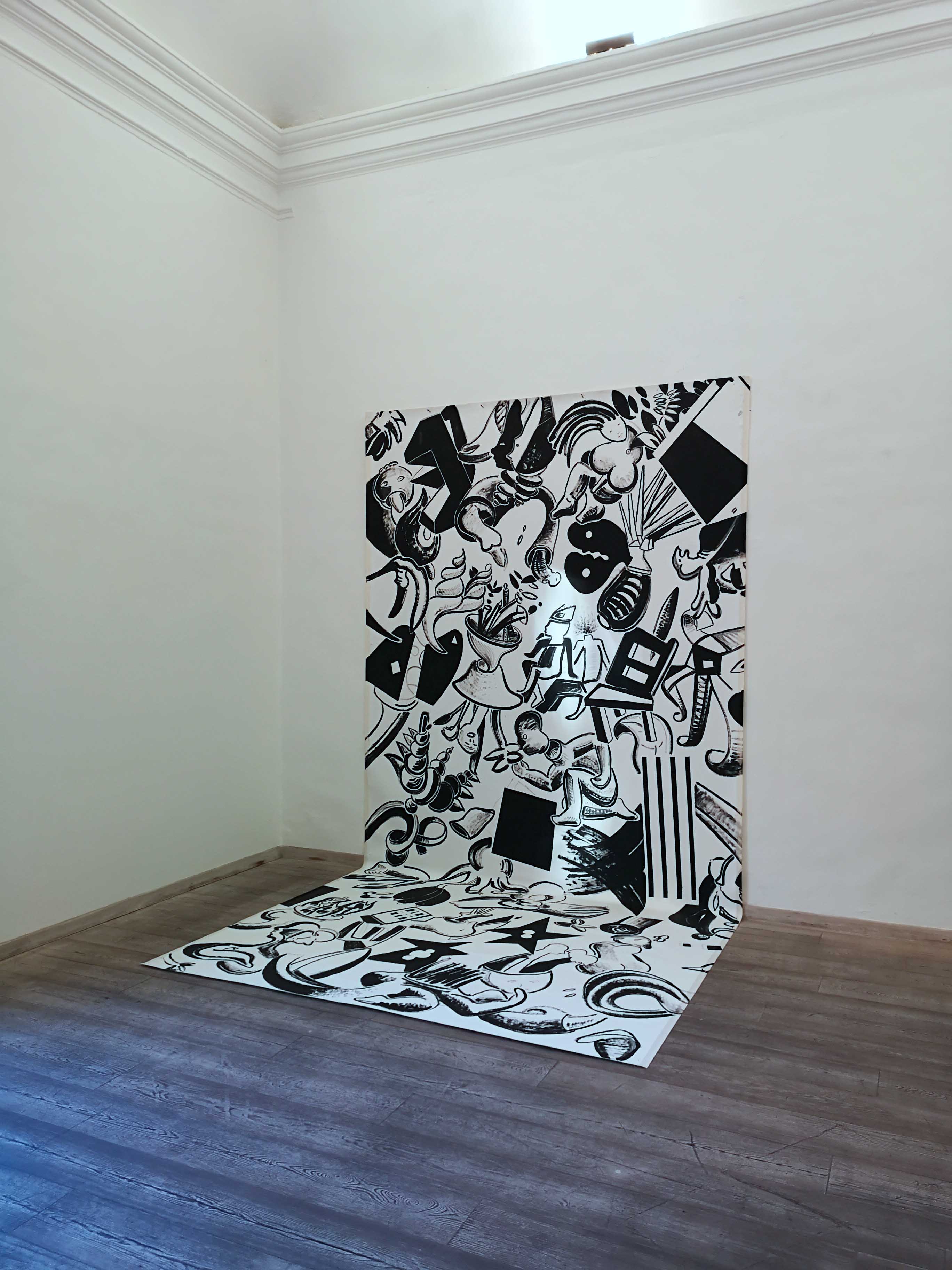
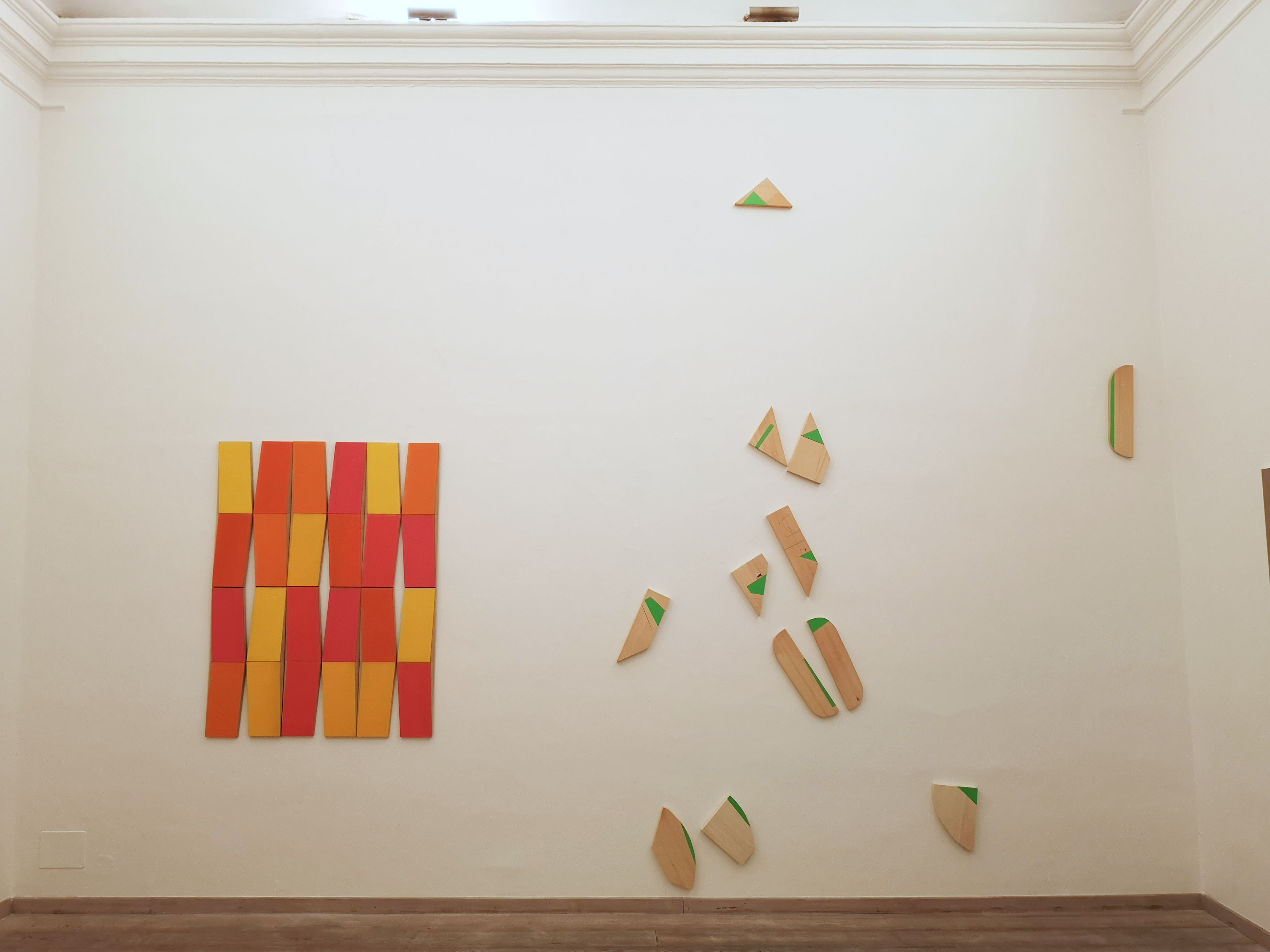
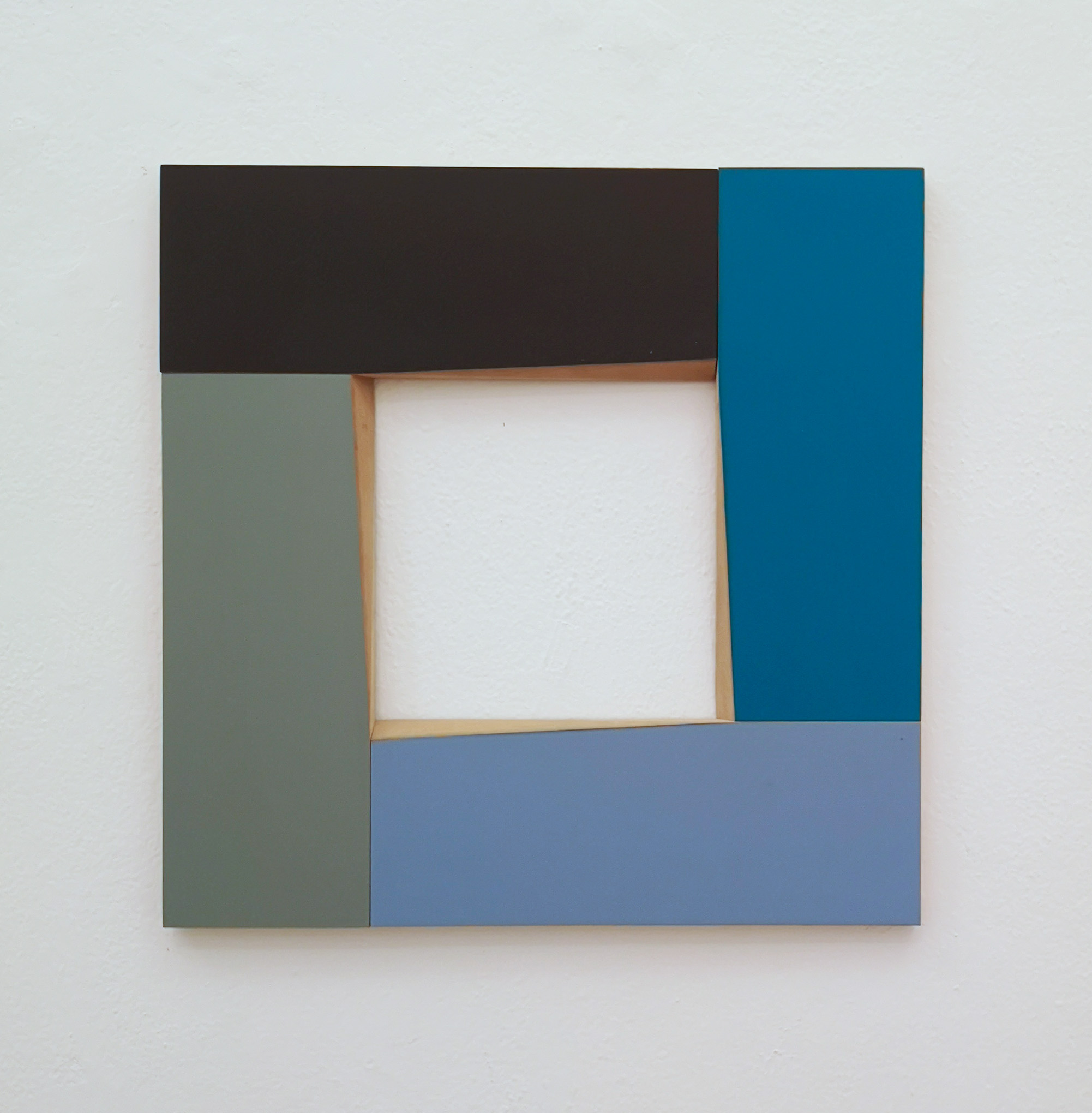
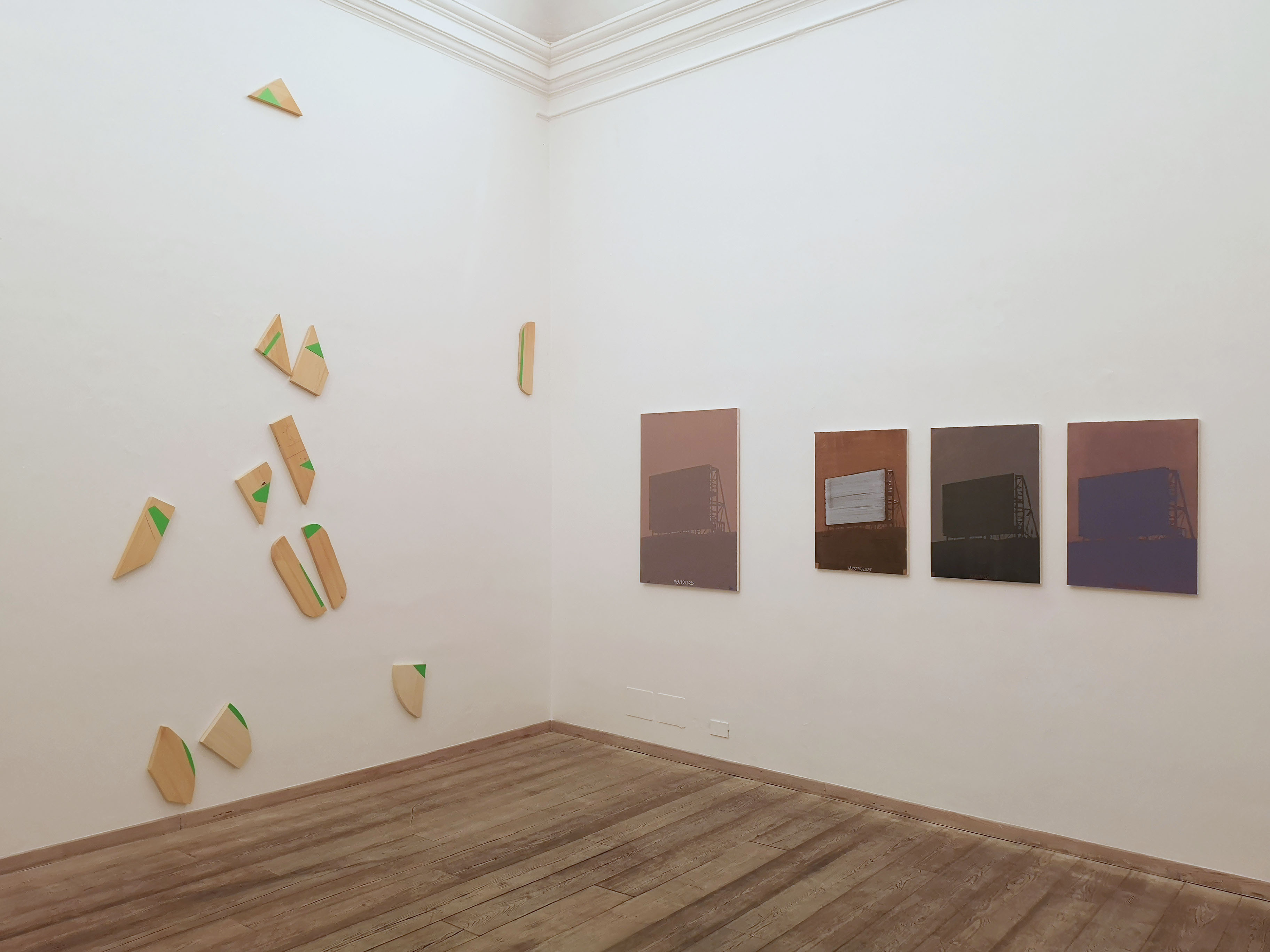
With the exhibition “Altrove o altre volte” (Elsewhere or at other times) the curator Alberto Zanchetta questions the norms of painting. He confronts four artists from different generations and backgrounds, who reinterpret painting in various ways and go beyond the traditional boundaries of this medium. Thus, there are only a few typical panel paintings in the show. “The Fleeting Moment” by Lucio Pozzi is only with its upper image part fixed at the wall and the lower half is lying on the floor. It seems to have fallen out of the frame and is sliding down the wall. His “Scattered Fields of Spring” takes the title literally: the painting’s pieces are spread out on the wall. Sean Shanahan also fragments his images but assembles the trapezoidal colour fields into rectangles. Moreover, he creates rectangles from painted MDF (Medium-density fibreboard), which could capture Pozzi’s capricious works as frames.
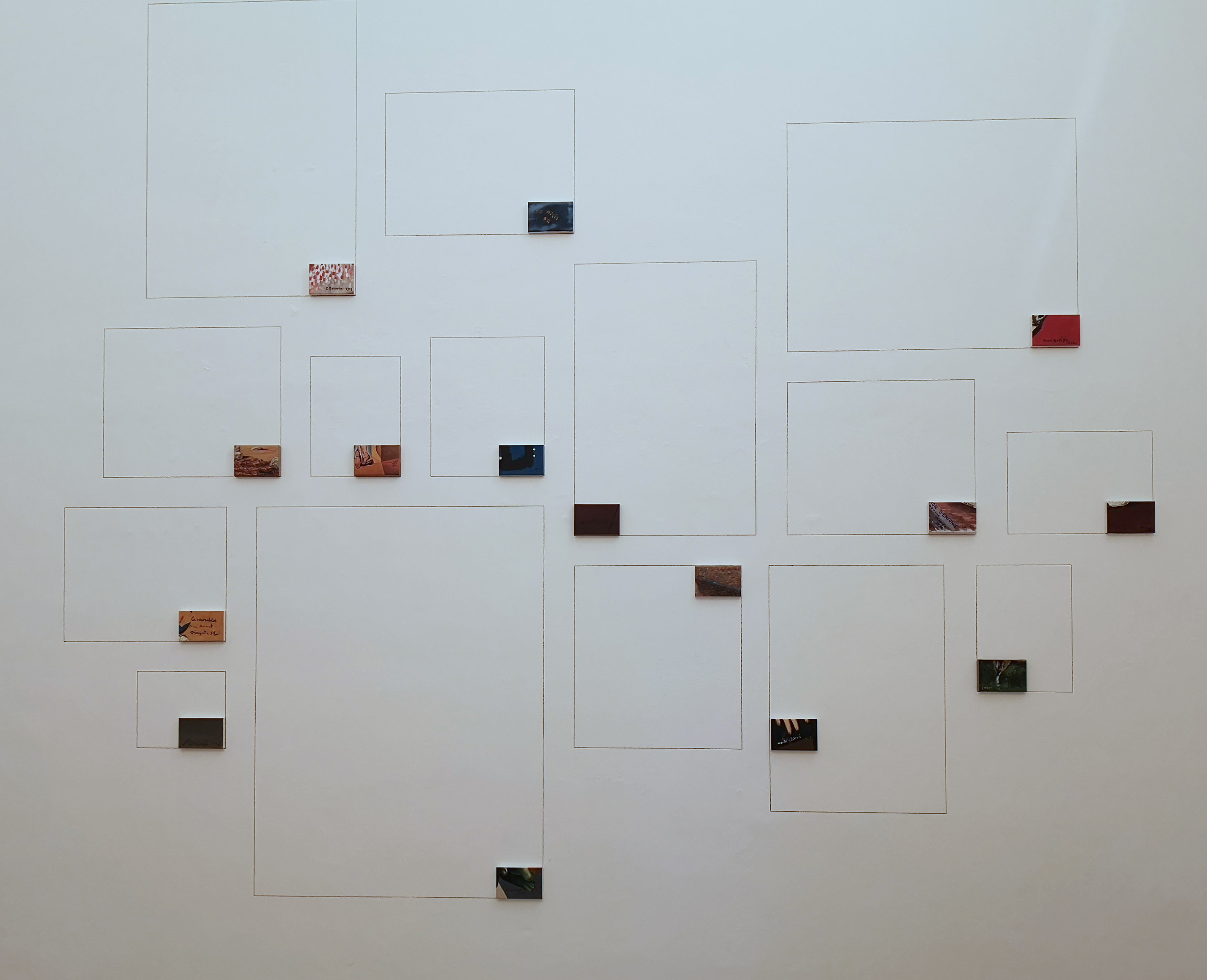
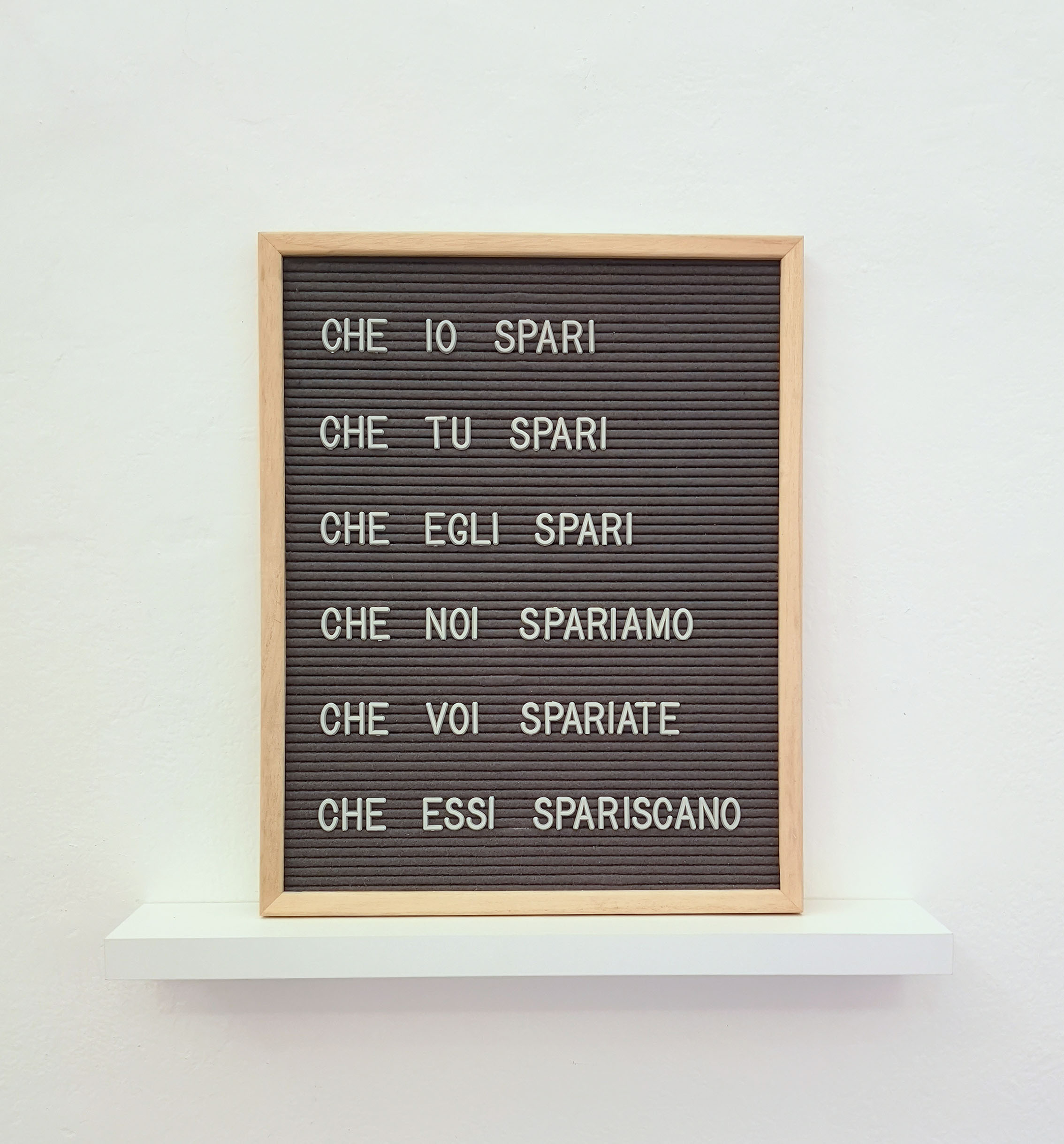
In “Brand Names”, by Andrea Facco the frames are not missing, but the paintings. His squares are outlined directly onto the wall and indicate the dimensions of well-known paintings. According to the works title, only cutouts of the signatures with their appropriate background are arranged in the proper position. Luca Pancrazzi paints classical frameless panel paintings. However, they thematise the projection surface and thus the canvas. In contrast, his two compositions named “Mira” completely renounce pictorial representation and brushes. Here he conjugates verbs in the subjunctive by using plastic letters like on analogue display boards.

24 October 2025 – 9 January 2026
Galleria Studio Cenacchi annexe
Studio Iusgate, Via Castiglione 81, Bologna
www.studiocenacchi.com
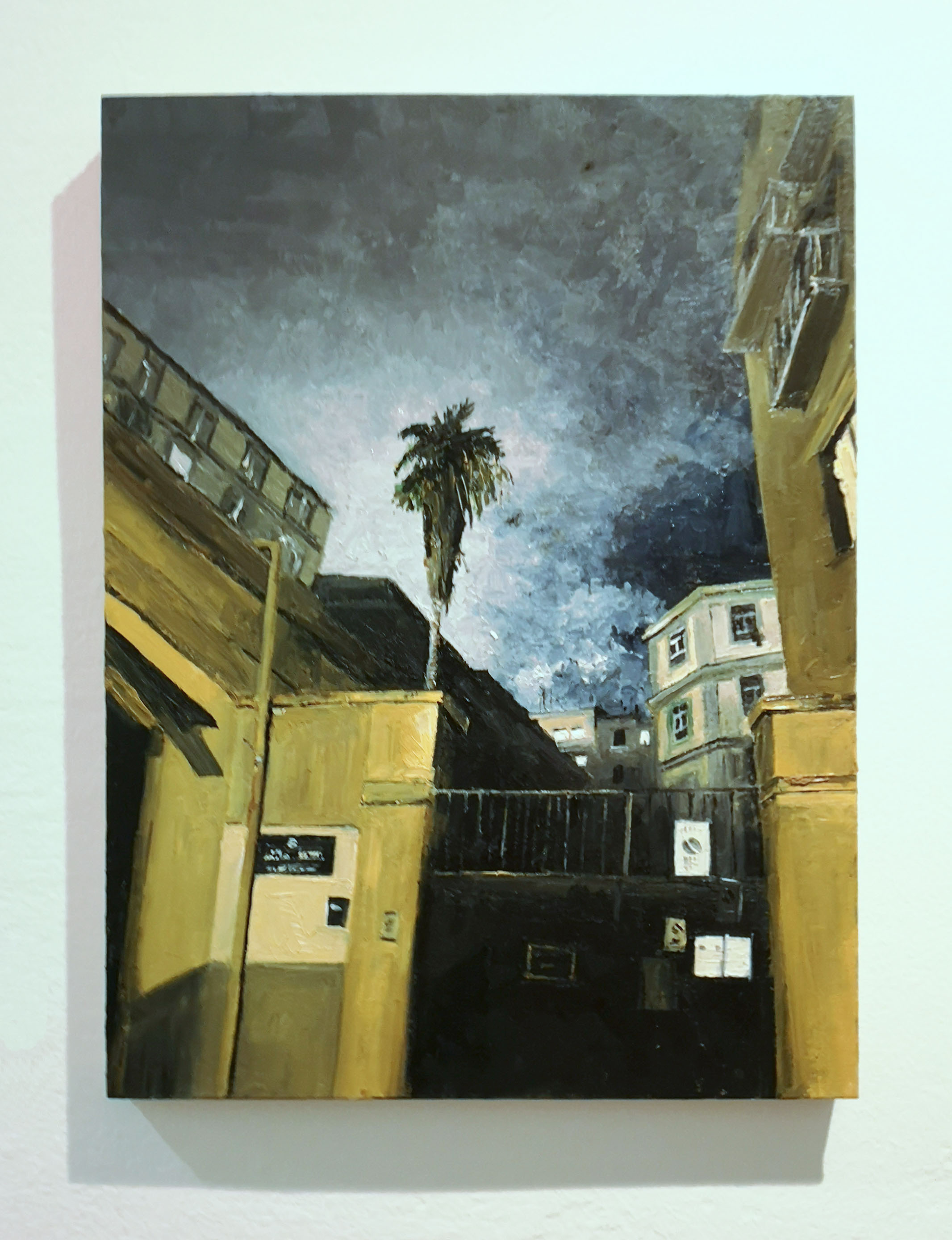
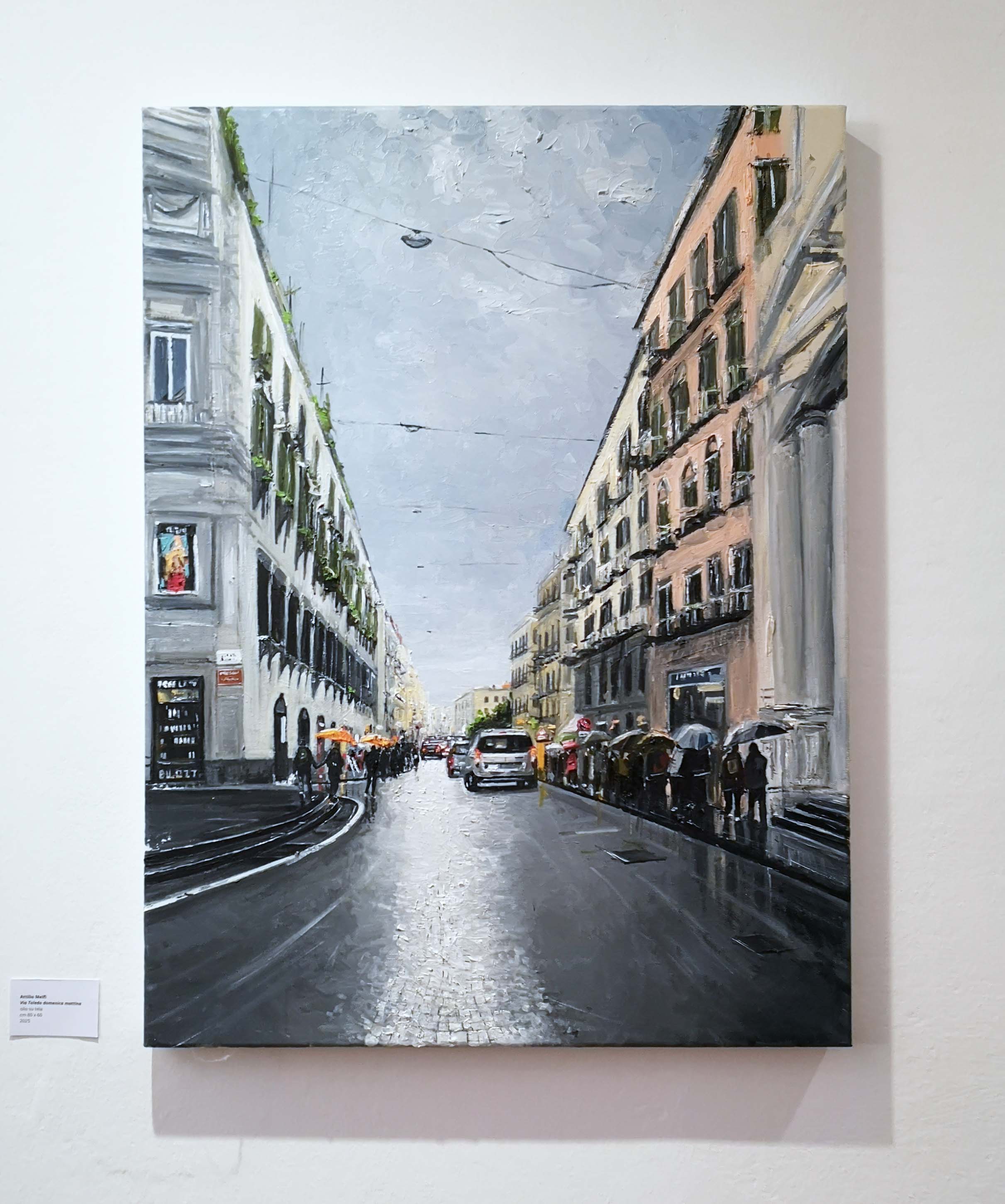
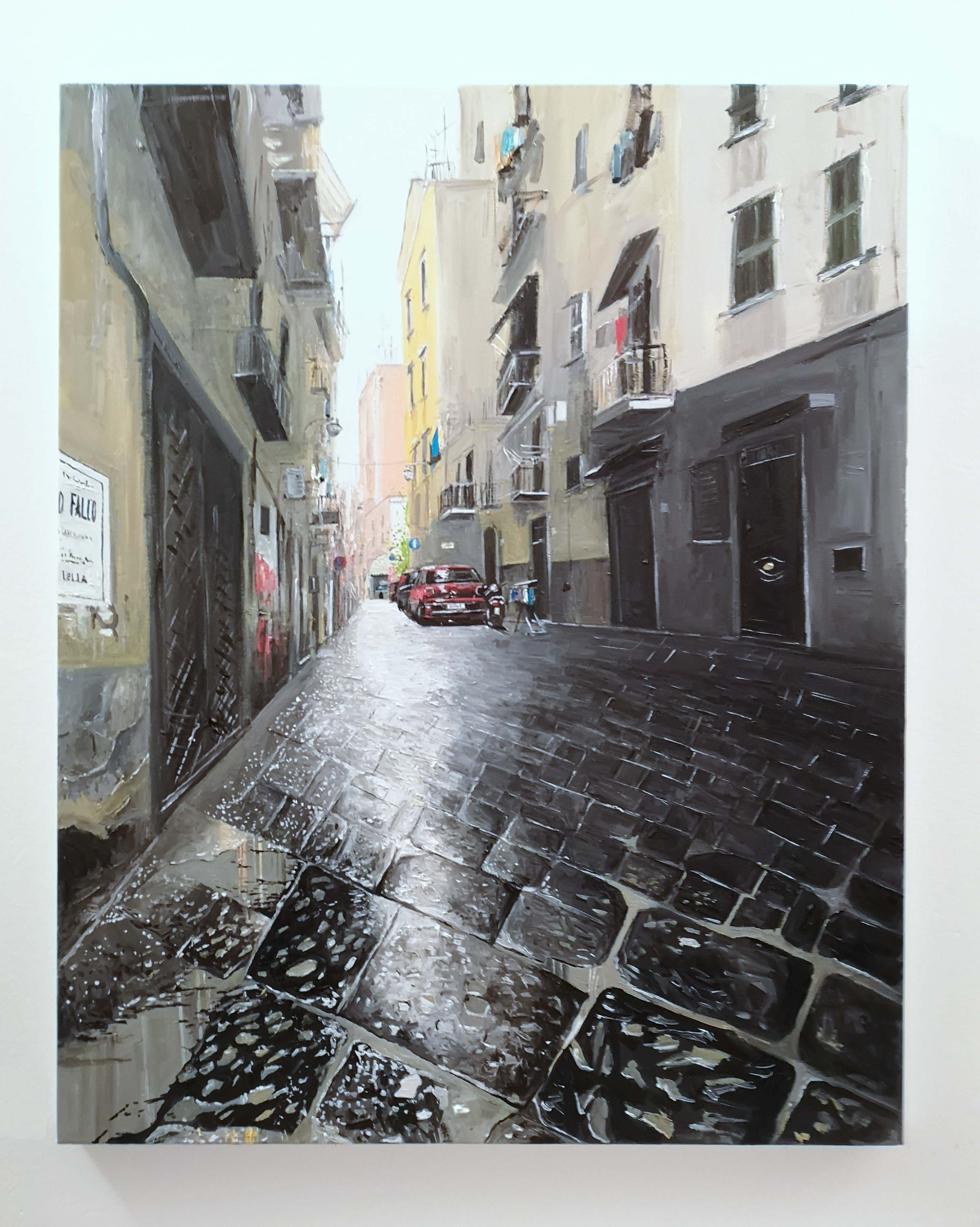
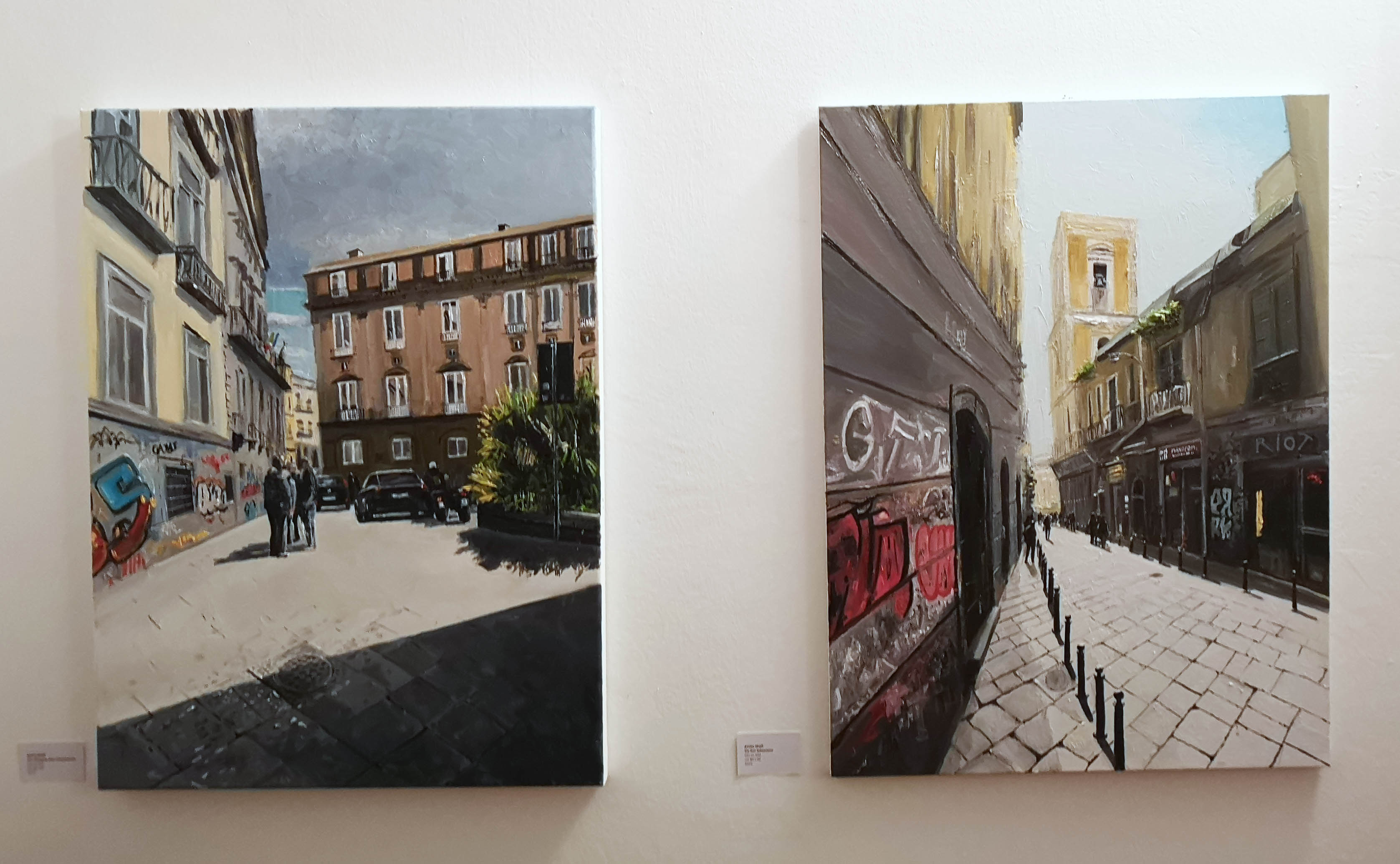
Attilio Melfi presents in his paintings urban spaces. His hyper realistic style reminds photographic snapshots. This goes hand in hand with the fact that the places depicted can be identified by the image titles. Anyone who knows the places and streets will recognise them. Nevertheless, this pretended realism has a flaw: the cities are deserted. There are few images that hint at human presence, and when they do, it is rather indirect, through laundry on the balcony, cars, buses. When people appear directly, they are only shadows. At first glance, this is particularly surprising, as the exhibition ‘A1’ shows large cities: Naples and Bologna.
Although real spaces and herewith architecture is depicted, it is rather the light, the time of day, the season, or the weather that is the main protagonist. The sun has passed its zenith and now only illuminates the upper floors of the buildings. The street lies in shadow. It is already almost dark, and the streetlights and car headlights only dimly illuminate the asphalt. A thunderstorm is brewing and darkens the sky. After a rain shower, the returning sun makes the streets sparkling.

15 November 2025 – 10 January 2026
LABS Contemporary Art
Via Santo Stefano 38, Bologna
www.labsgallery.it
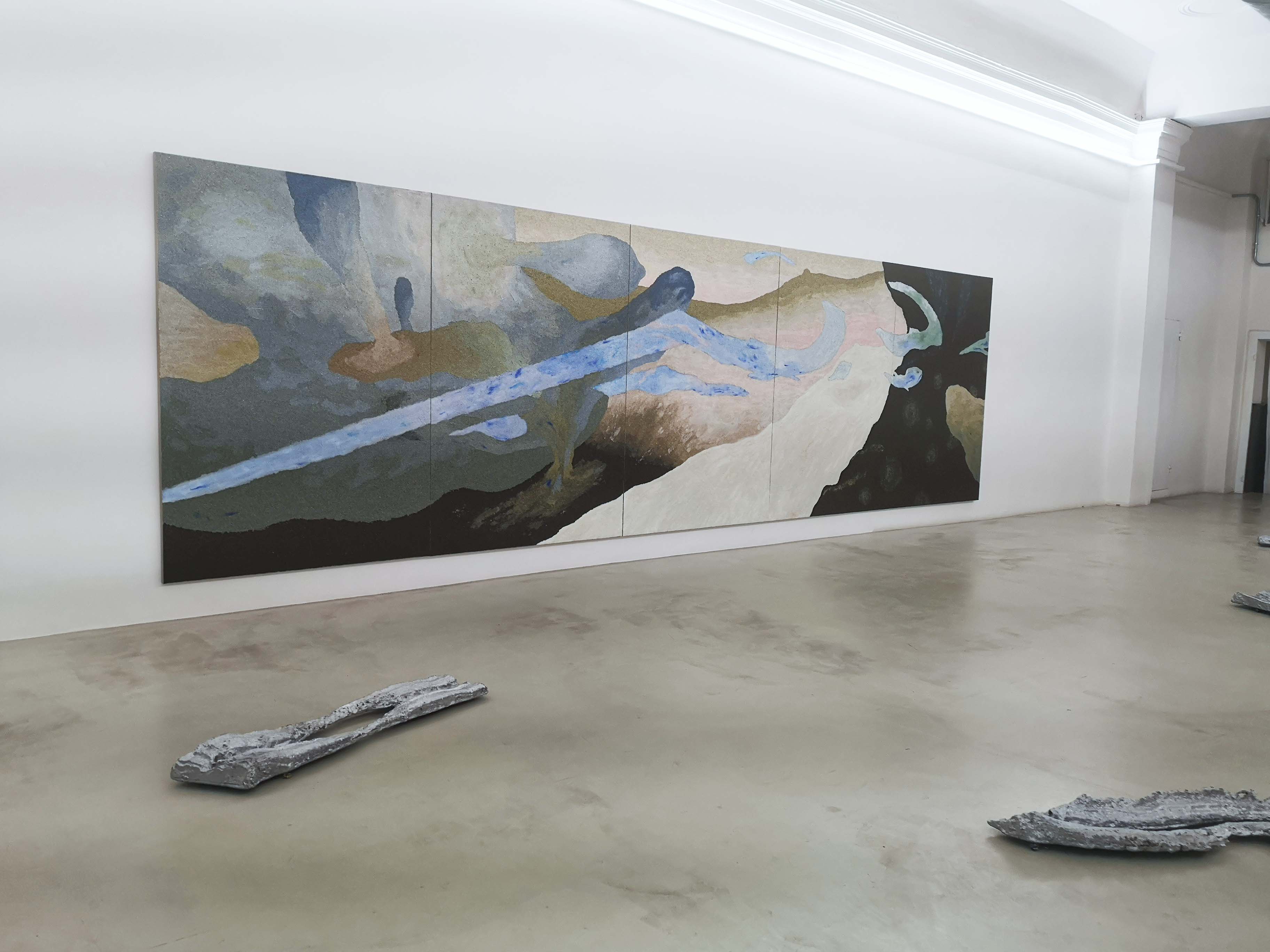
At first glance, Marco Emmanuele’s solo exhibition is dominated by the monumental image ISO #220. “Painted” with glass powder and sand the artist created a huge abstract surface, which could be interpreted as a landscape. In front of it on the floor, strange shapes are floating. They have peculiar names like “Ruscente Insana”, “Ruscente Caproni” and “Ruscente Zeichen”. A closer look could reveal the origin of the titles. While the surface is marked by the process of production, aluminum imprints, which were cast into sand, the flat cut surface depicts a human profile. Every profile is dedicated to a poet. Hence the second part of the title is the surname of the respective author. Due to the positioning of the sculptures on marbles they seem to float slightly above the floor.
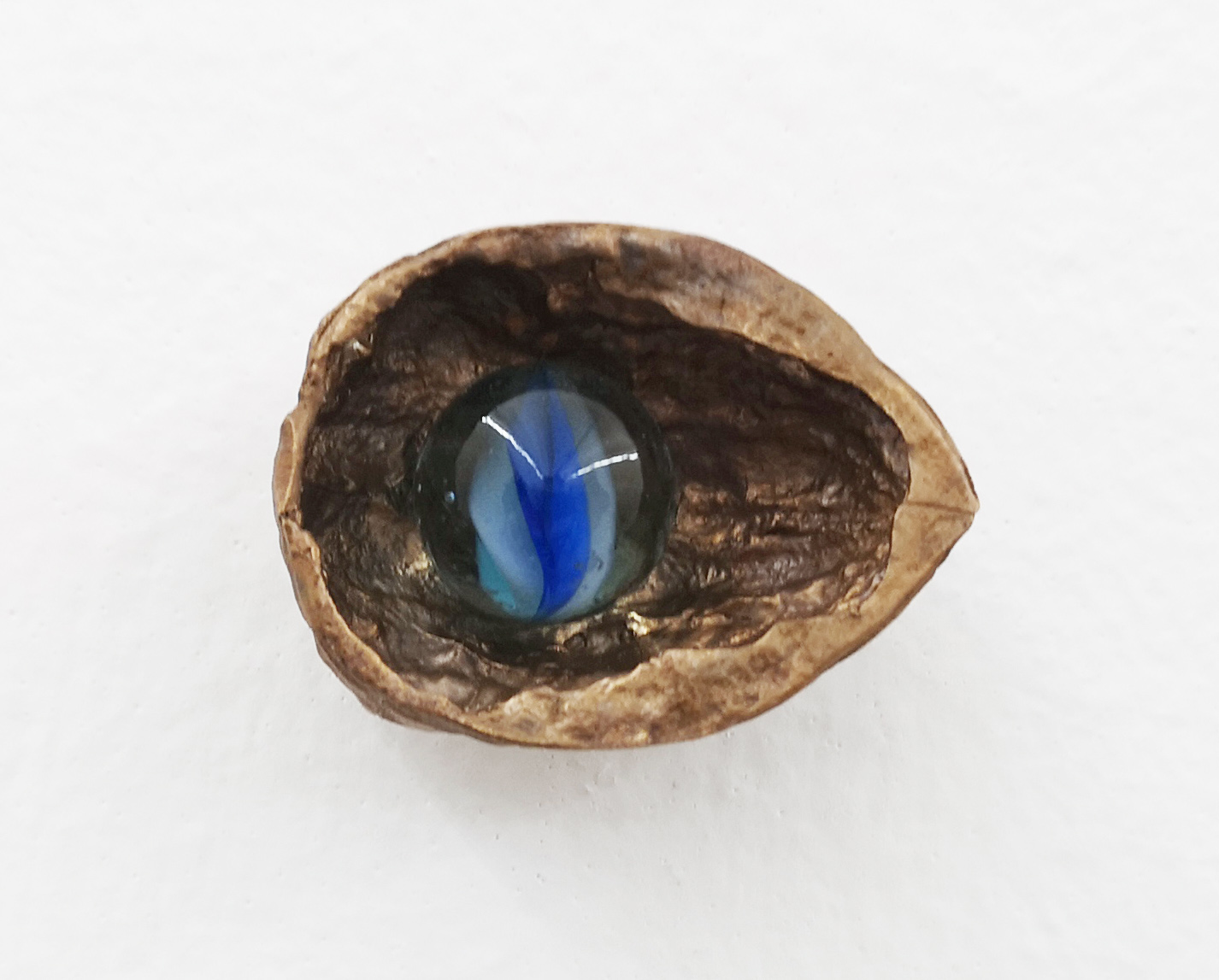
In view of this enigmatic panorama, the title giving small drawing could be easily overlooked. “Palmo panorama” shows two hands barely touching, like the curator Saverio Verini describes it. However, perhaps it is only one hand approached something finger like, small snakes or even fishes. A last, even smaller artwork could be a hint to snakes: “Occhio di bimbo viperino” (Child Viper’s eye): a walnut shell with a marble as pupil.


8 November 2025 – 10 January 2026
Galleria Studio Cenacchi
Via Santo Stefano 63, Bologna
www.studiocenacchi.com
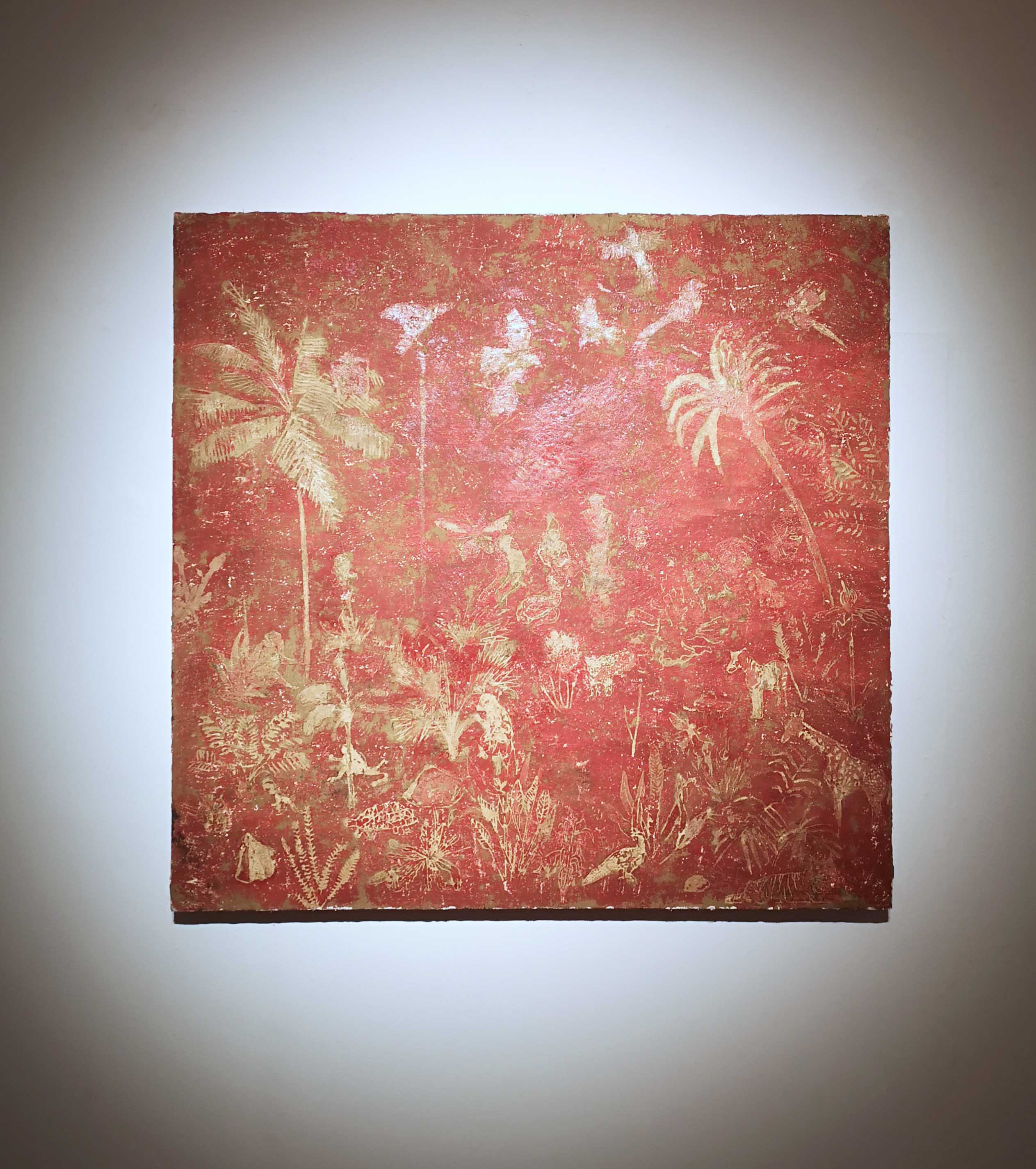
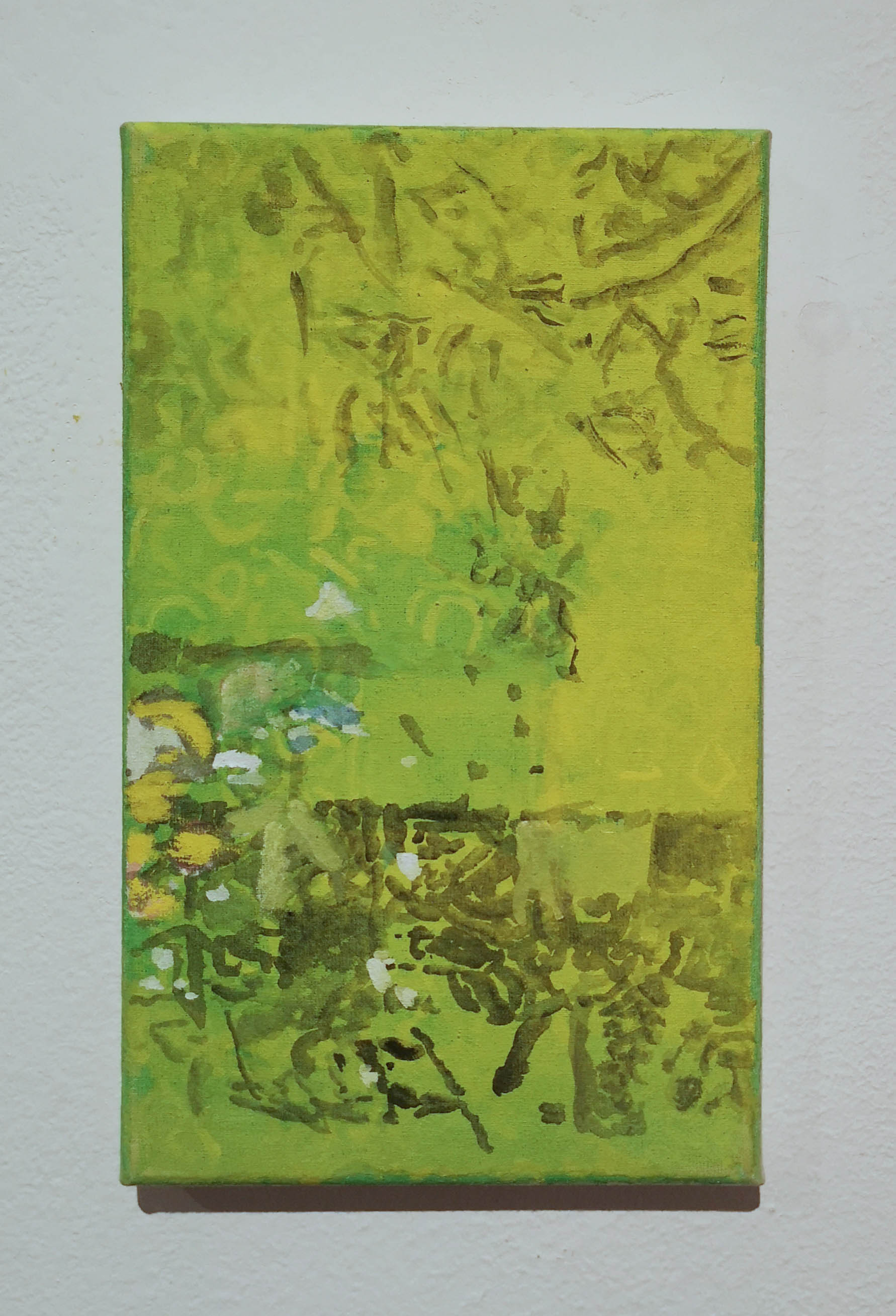
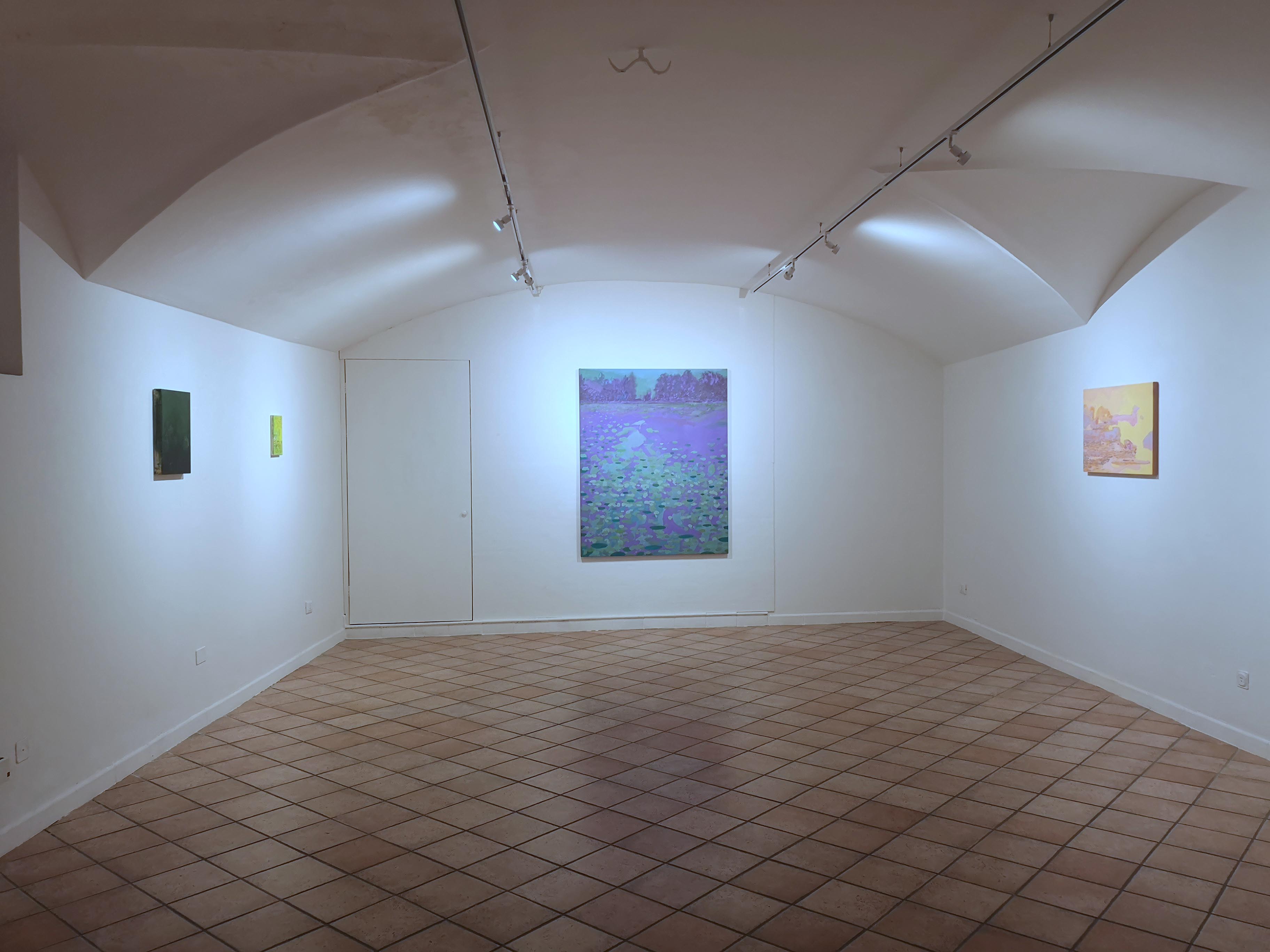
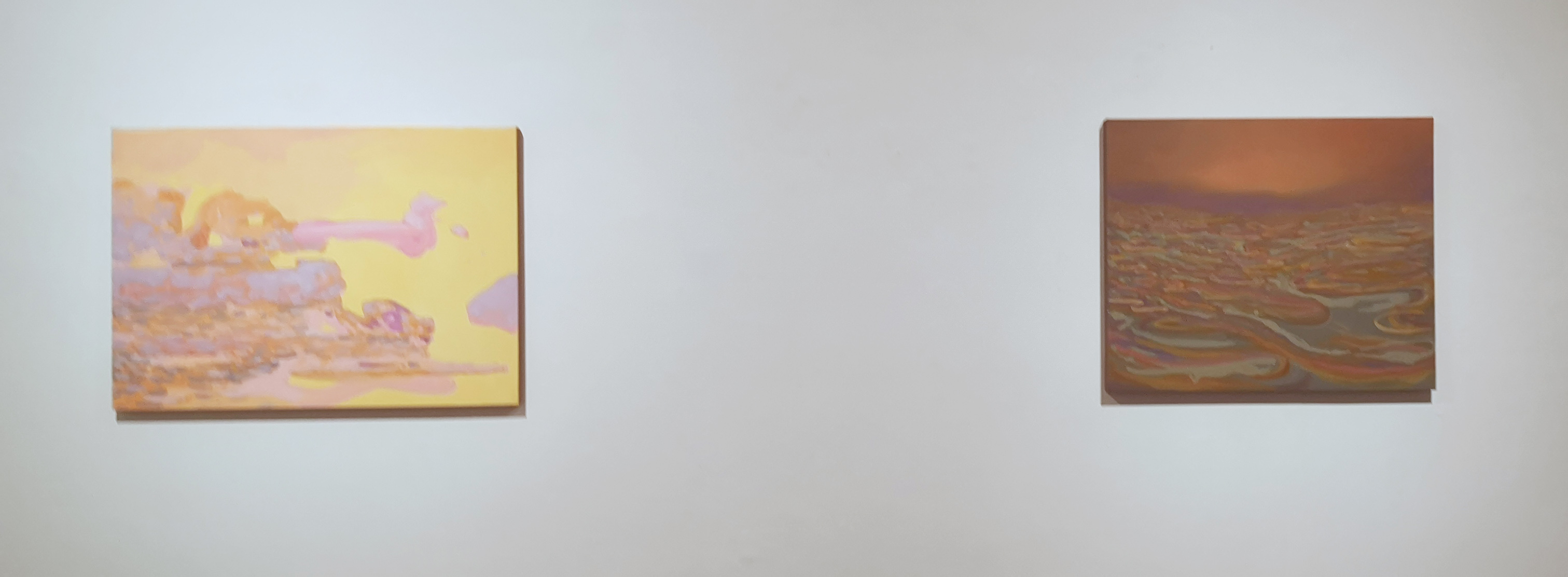
Instead of depicting urban environments, the presented paintings seem to approach nature. Pietro Caponetti’s jungles are quite clear in their approach. His technique with lime, pigment and resin on canvas gives the effect that the images come from centuries long ago. Domenico Grenci’s titles refer to flowers, without showing them accurately. These are rather impressions of flowers, but they are vaguer than in Impressionism. It is similar with Giorgio Zucchini. Even though the first optical impression goes in the same direction with Alessandro Saturno, the second glance reveals that the compositions are more far from a naturalistic motive: “I serpenti” (The Snacks) could also be a wetland; The nice day (La bella giornata) is transmitted by the pleasant colours, without concrete references. Still, one could agree with the title due to the image’s aura.
Besides, on the upper floors, Francesco Bocchini and Zeno Bertozzi approach the theme of nature in a sculptural way with their individual artistic language in ceramics, plaster and coated iron.

(Kipras Dubauskas. Pyrogenia. Crowd and Demons)
16 October 2025 – 11 January 2026
MAMbo – Museo d’Arte Moderna di Bologna, Project Room
Via Don Giovanni Minzoni 14, Bologna
www.museibologna.it/mambo
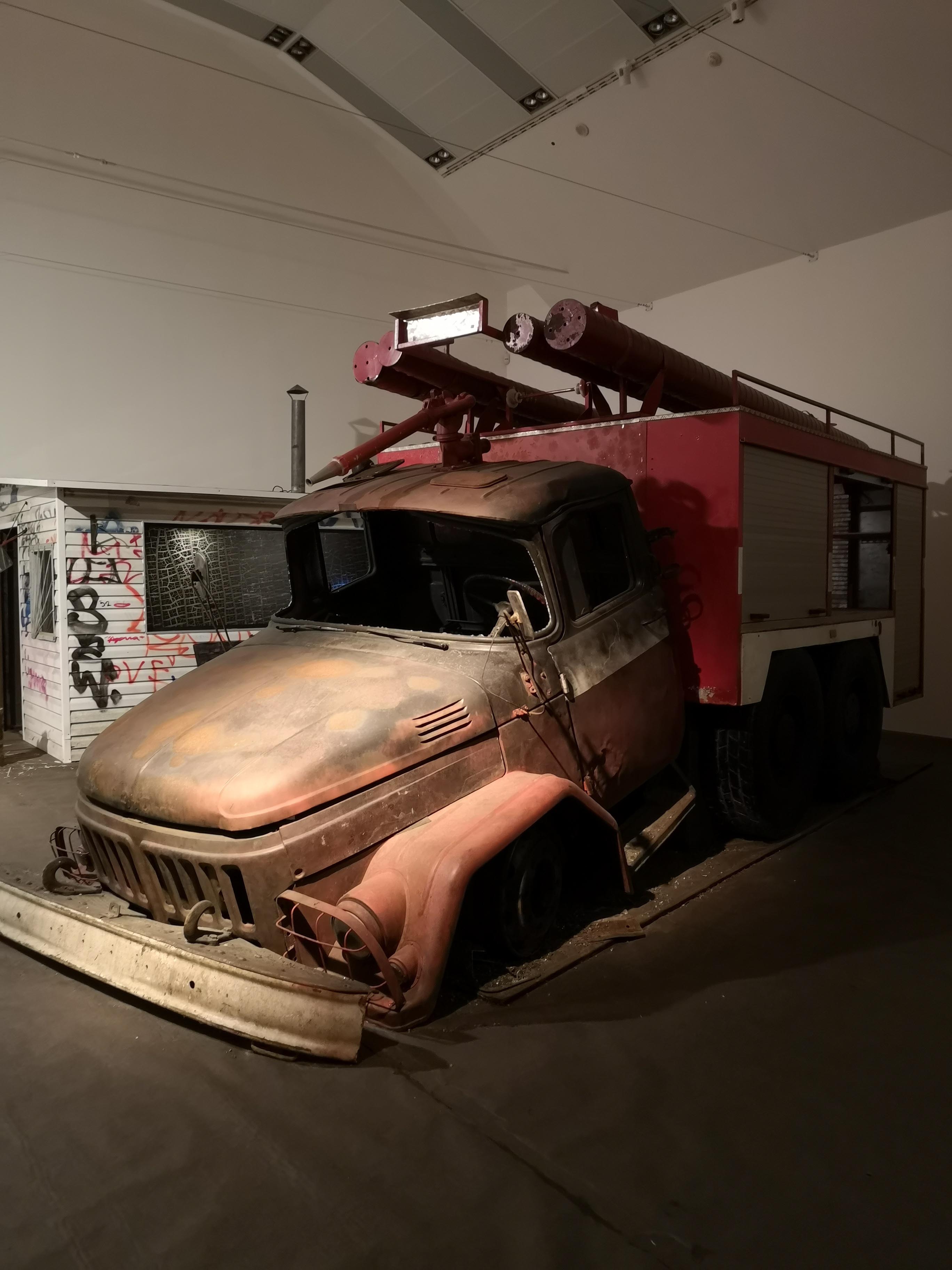
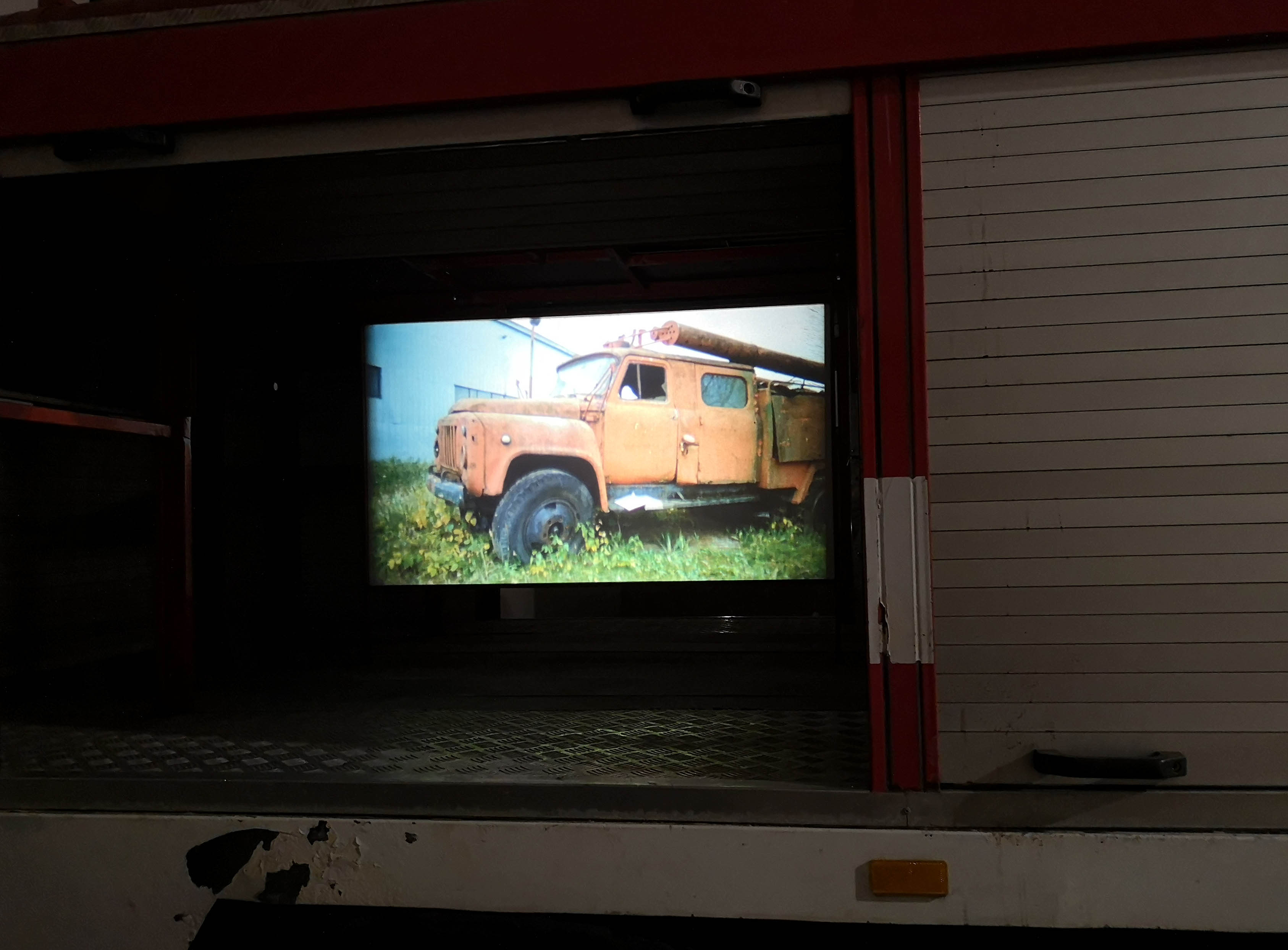
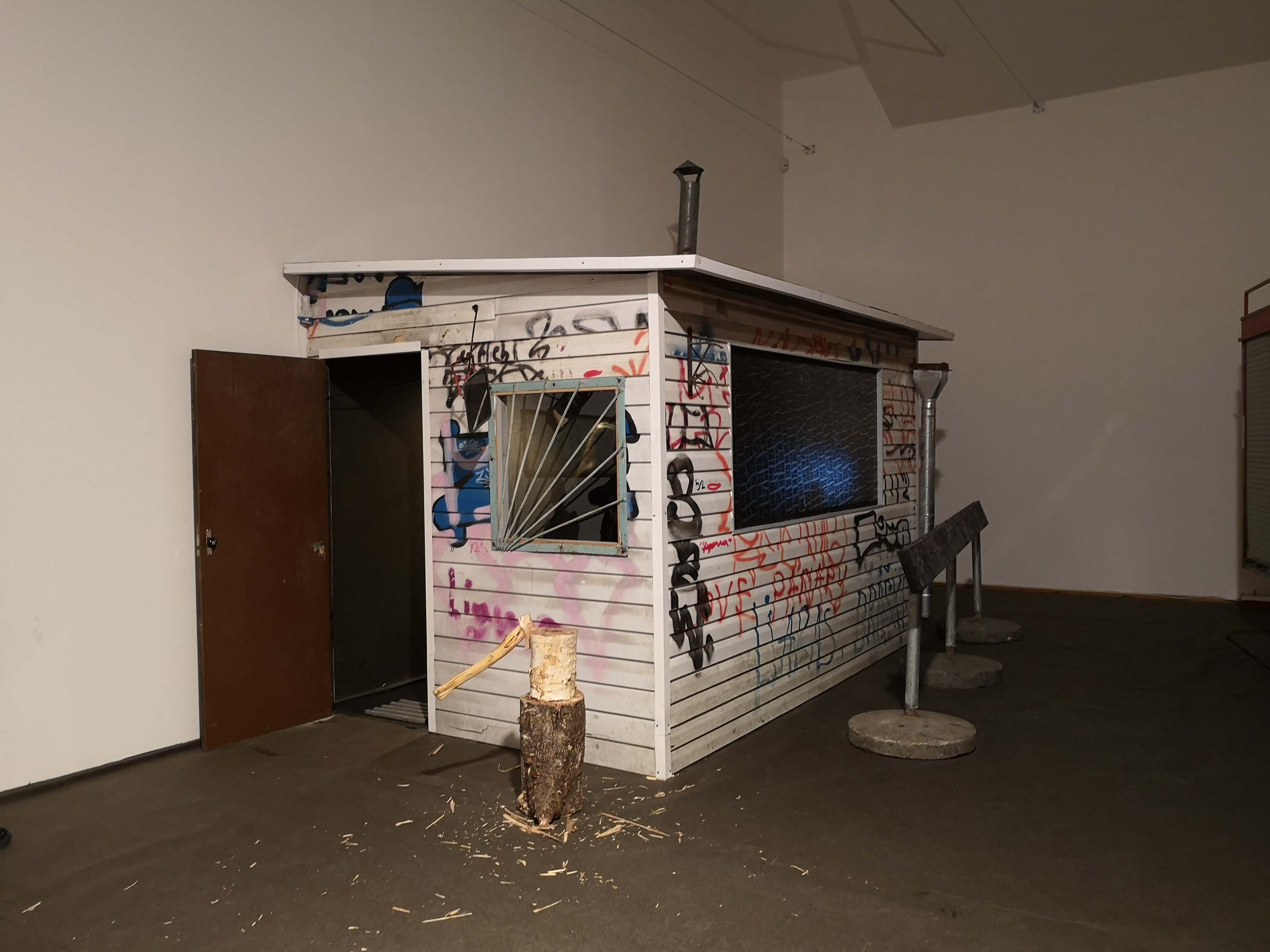
In his first solo exhibition in an Italian institution, the Lithuanian artist Kipras Dubauskas transforms the MAMbo’s Project Room into a large-scale installation. The centrepiece is a burnt-out fire engine, where the 15 minutes film ‘Firestarter’ is projected. This video was created starting in 2021 as part of a research residency in Bologna and is part of a trilogy. While the first two chapters concentrate on “land” and “water”, the third part focusses on fire. Recorded in Bologna and Vilnius, the film depicts urban interstices, marginal places like undergrounds and abandoned infrastructures, which even connoisseurs of the cities cannot easily identify. In particular, the recordings of the underground canals of the Italian city reveal new perspectives. Here, the water flowing through the canals can be seen as a countermeasure to uncontrolled fire. However, the film not only highlights the destructive power of fire, but also its healing power. In this way, the work also refers to Saint Anthony. Accordingly, there are also sequences of a procession in his honour in Macerata. In addition, there are scenes from training films from the London Fire Station.
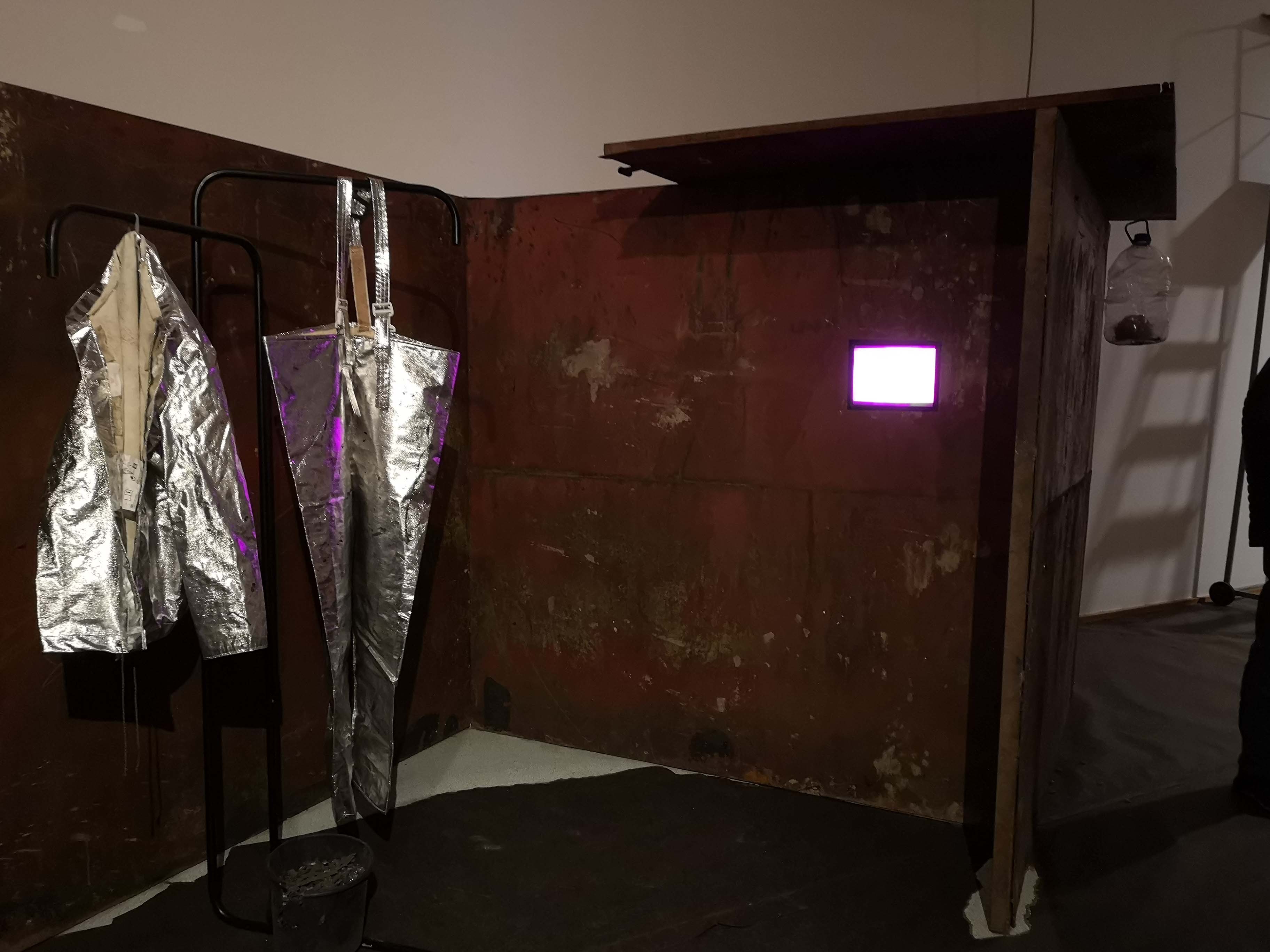
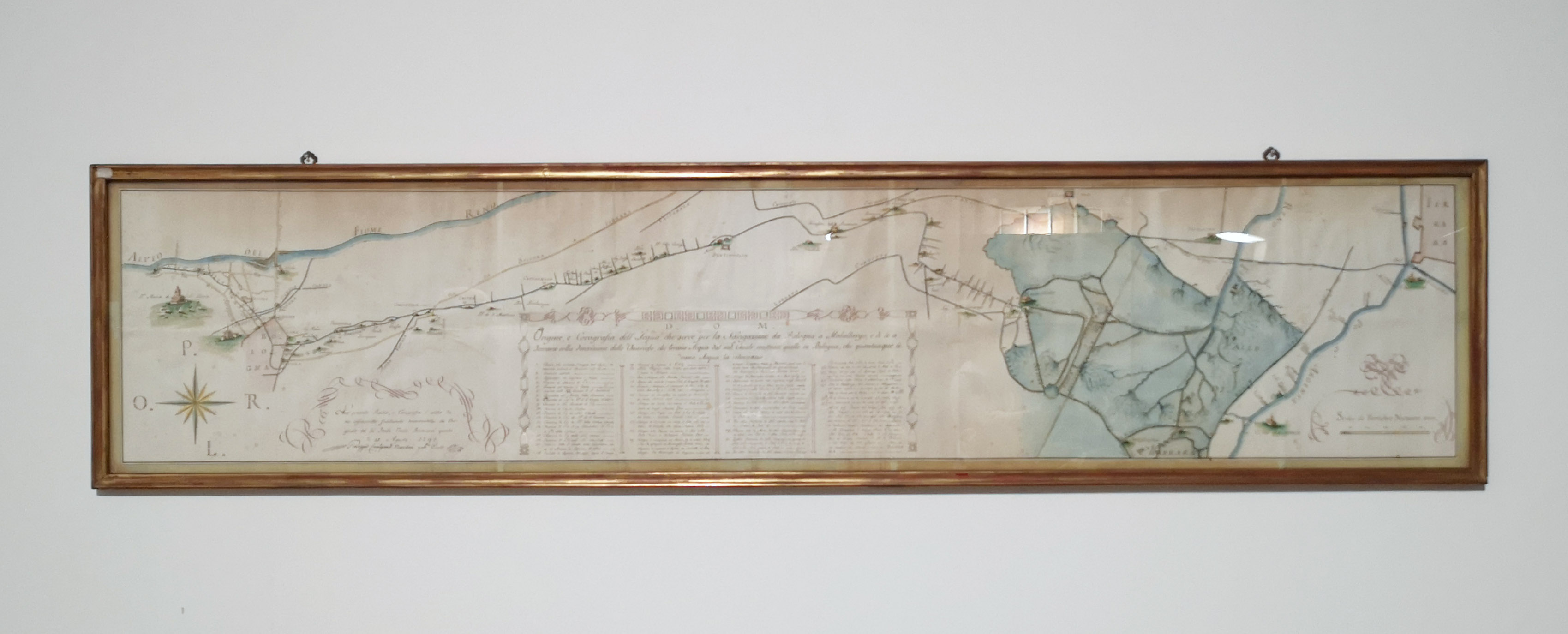
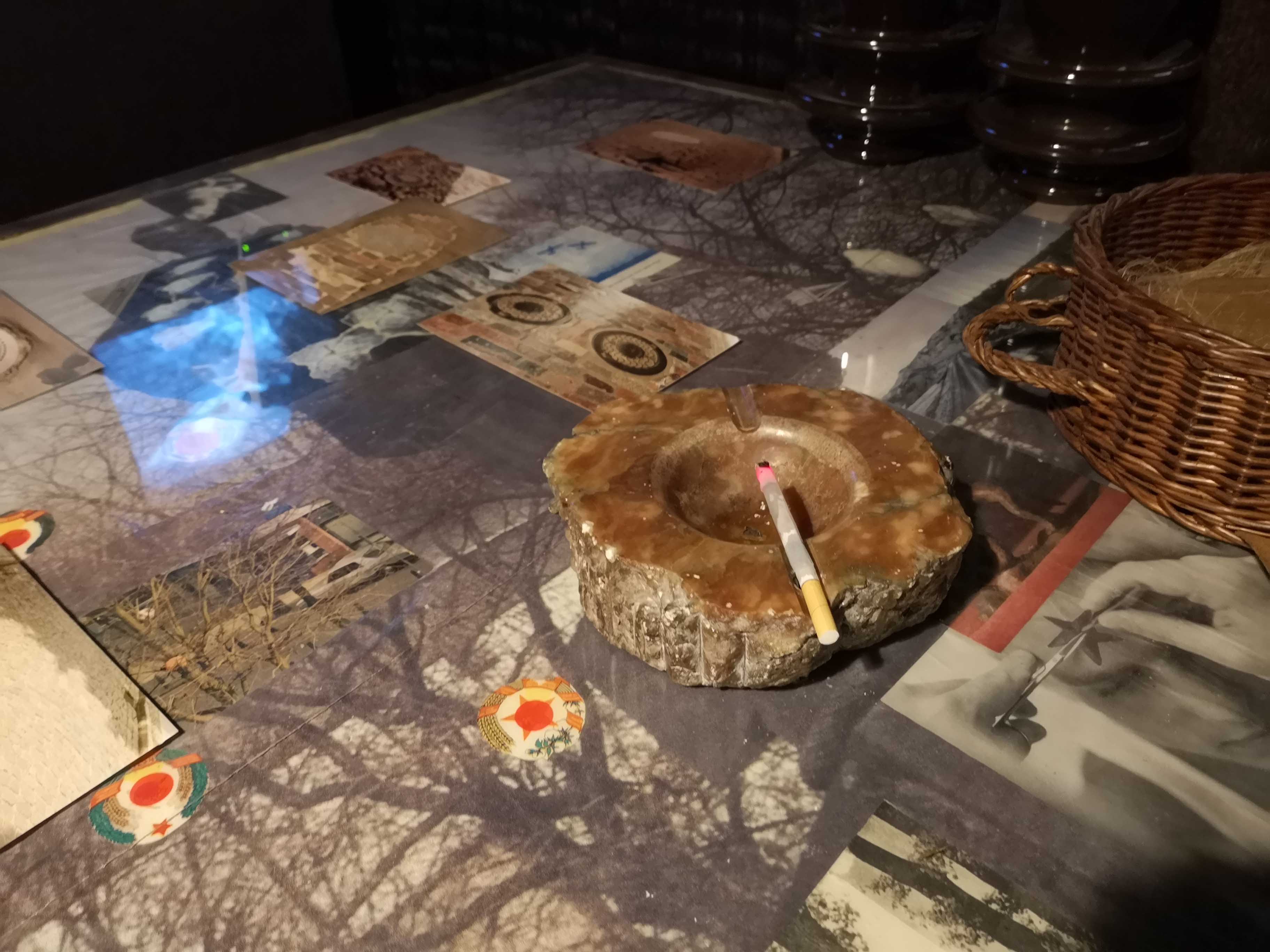
Grouped around this kaleidoscope, which explores rescue possibilities in our societies, are sculptures, drawings, collages, and small hidden works by artists from Kipras Dubauskas circle. There is also a kind of fire watchtower, a heat-resistant uniform, a map of the Bologna canal system and a hut where another video can be viewed. A cigarette smoulders on the table inside.
18 October 2025 – 14 February 2026
Galleria Enrico Astuni
Via Iacopo Barozzi 3, Bologna
www.galleriaastuni.net
With „La mia territorialità” the Galleria Enrico Astuni offers an extensive exhibition of Ugo La Pietra’s work and his exploration of urban space. The artist’s credo “Living means feeling at home anywhere” is manifest in around 70 works of various techniques from 1966 to 2025.
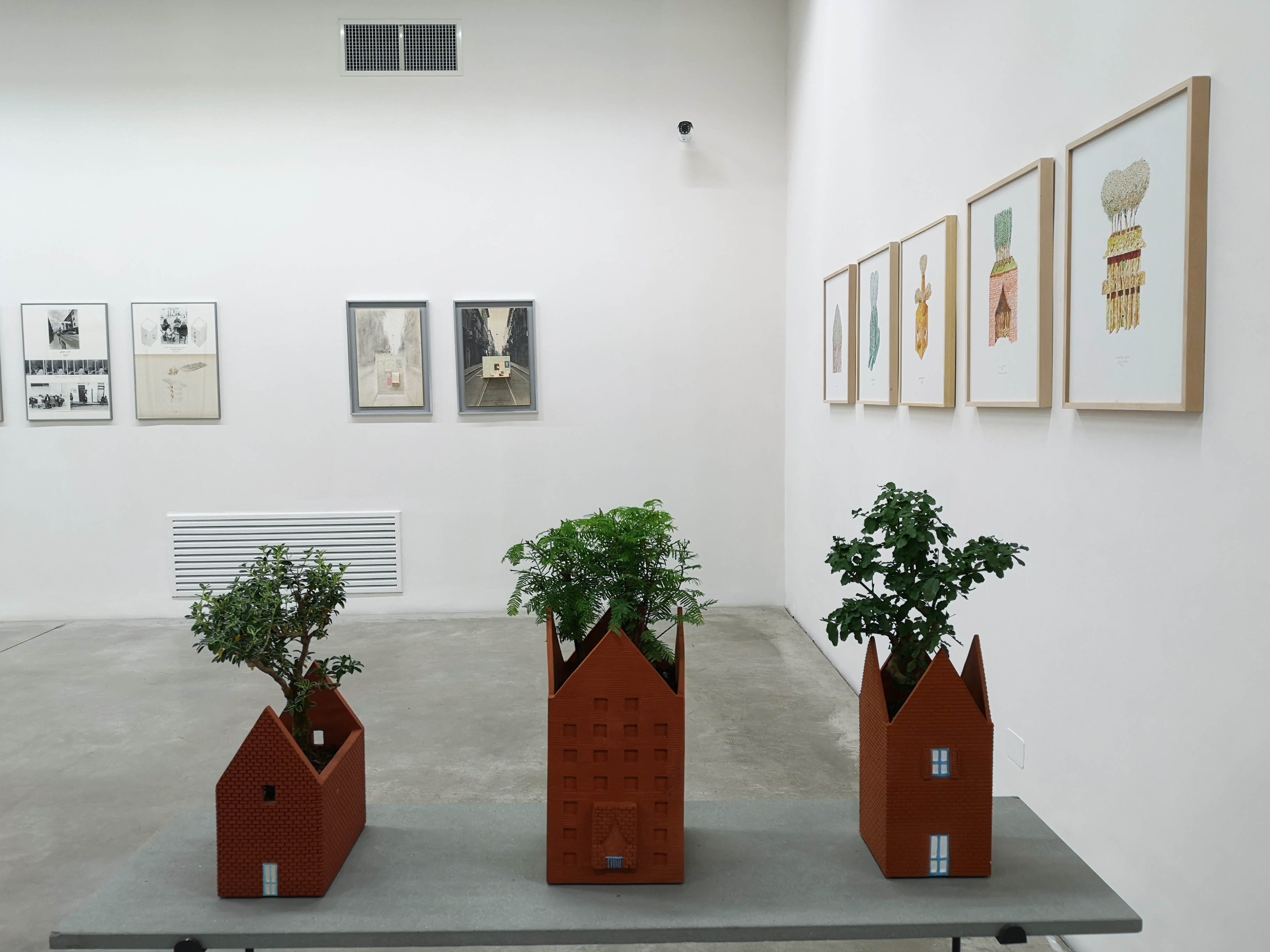
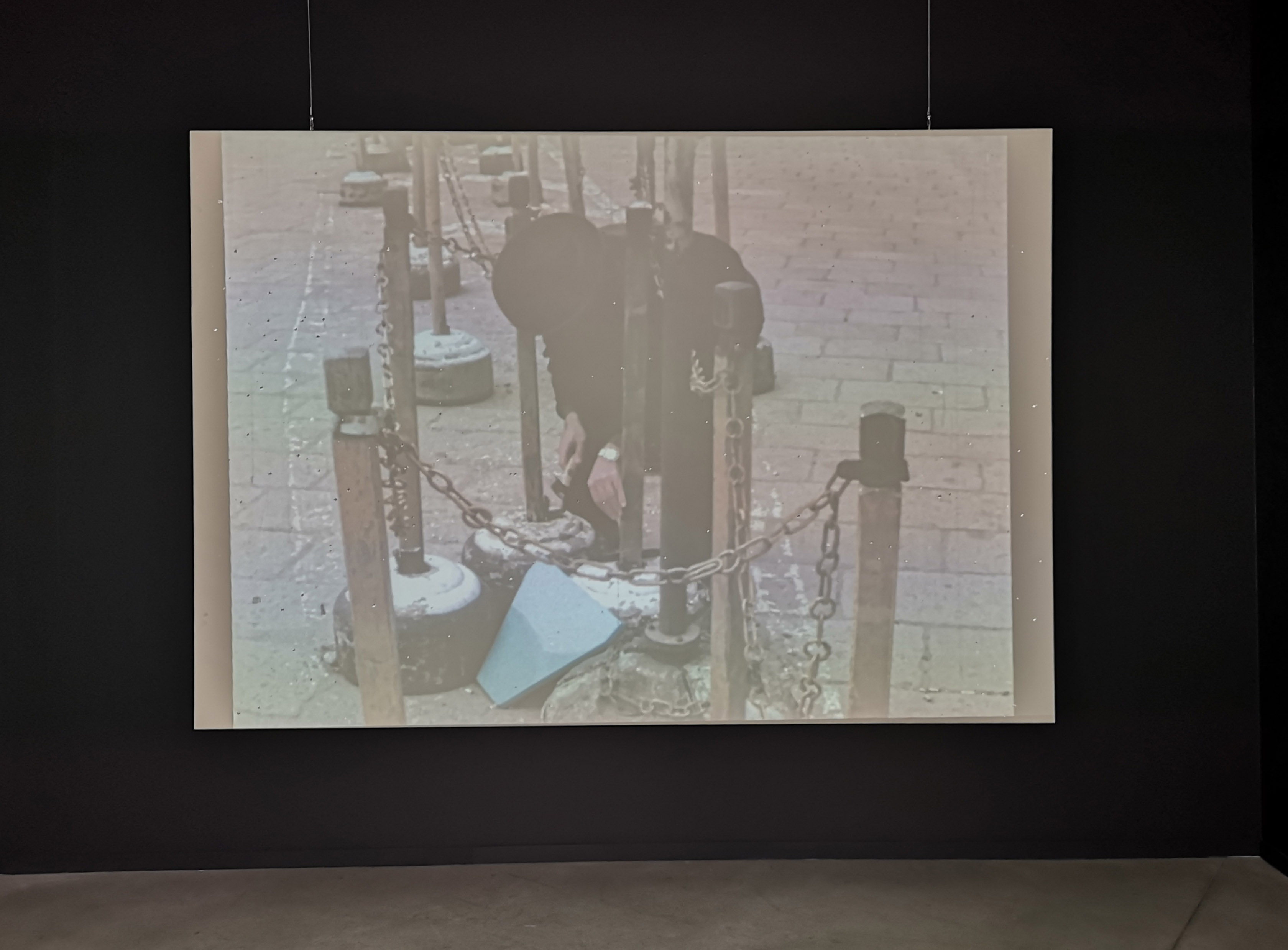
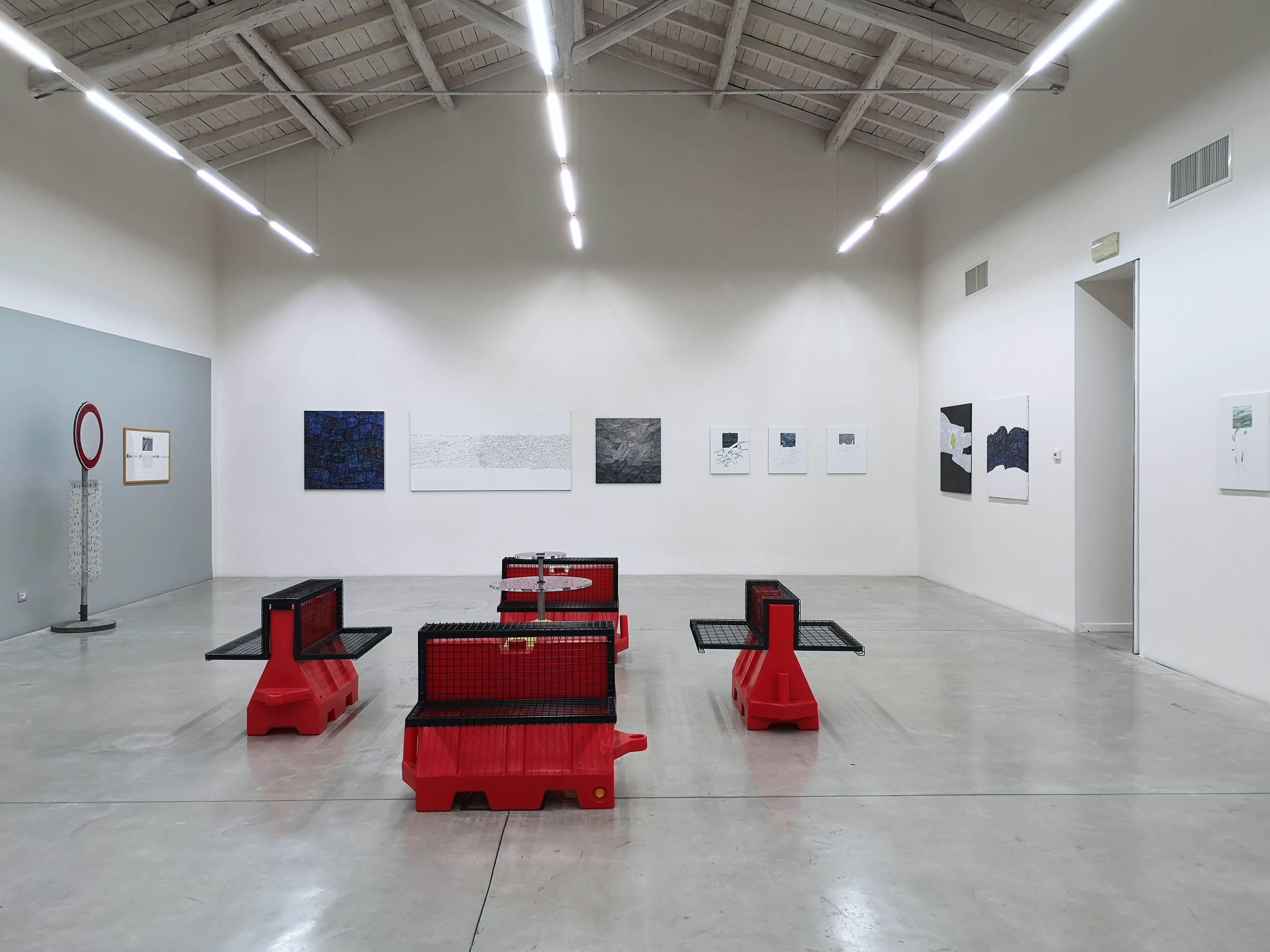
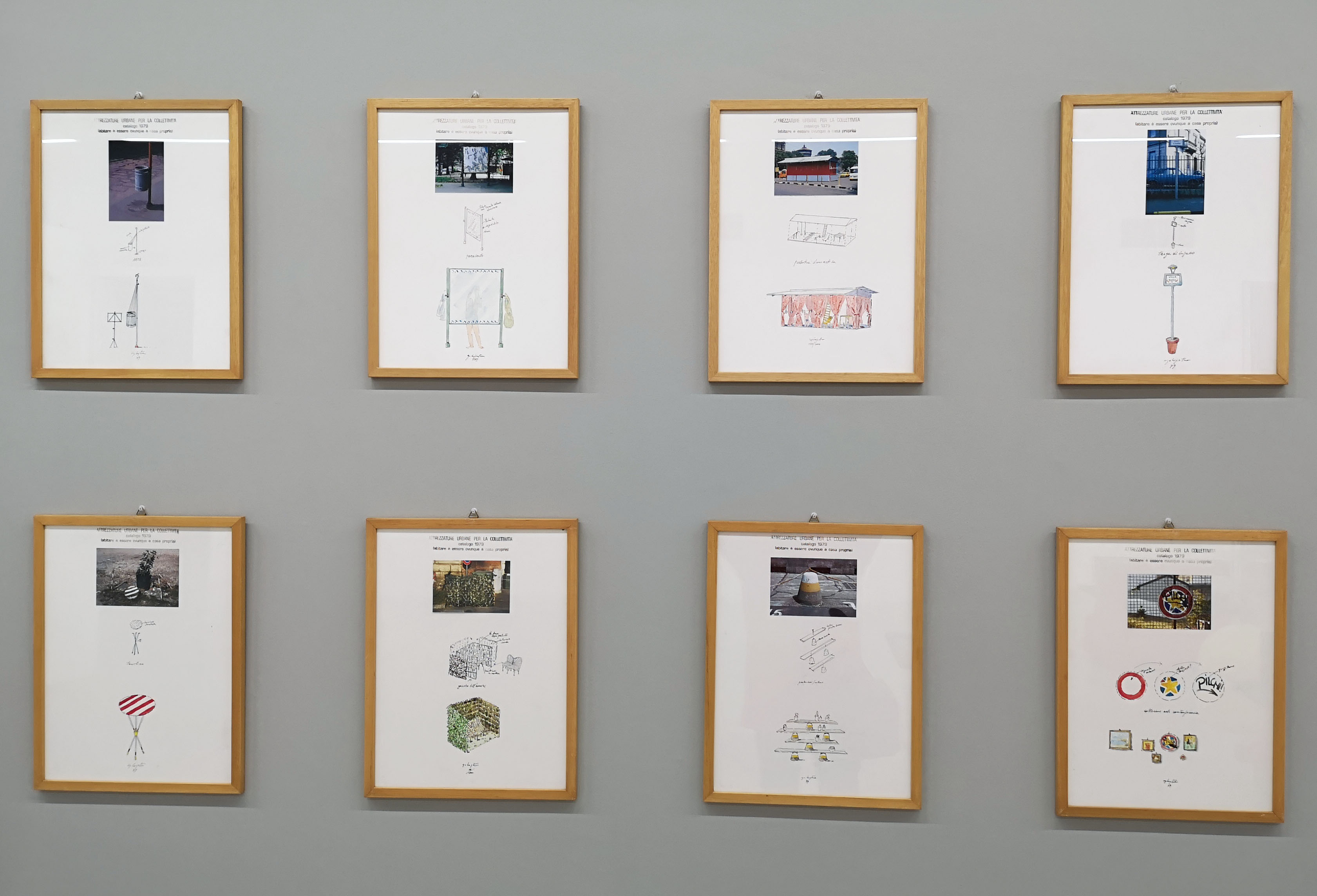
In numerous drawings and collages from the 1970s and early 1980s La Pietra spread out how to take possession of cities. This could be photos from people extending their houses to the street by putting their chairs out, like it is/was customary in Italy. Furthermore, he collages living spaces onto streets and designs buildings with floral elements. Green ceramic houses illustrate these drawings. Two films show actions in urban space. In “Interventi pubblici per la città di Milano” (1979) he utilises street inventory like barriers and road signs to construct furniture. Whereas “La riappopriazione della città” (1977) shows how to use material found on a fallow. Refreshed models from the first film are installed as a seating area and further design drawings point out more possibilities to transform street inventory for practical or decorative purposes. More recent works, also deal with landscapes and the relation between city and country.
From the earlier projects of appropriation of the urban space, La Pietra analysed in the 1980s and 90s society with regards to its transforming relationship with the urban environment. More recently, even the connection between individual and society in a specific geographical area considering also the globalisation is focussed.